Chargement...

Chargement...


In West Cameroon, each chiefdom has its palace, its great house and often its museum. The Chiefdoms Route links several of these places around Bafoussam, Dschang and Foumban. Here is a day-by-day itinerary of 3 to 5 days, with distances, entrance fees and visiting rules.
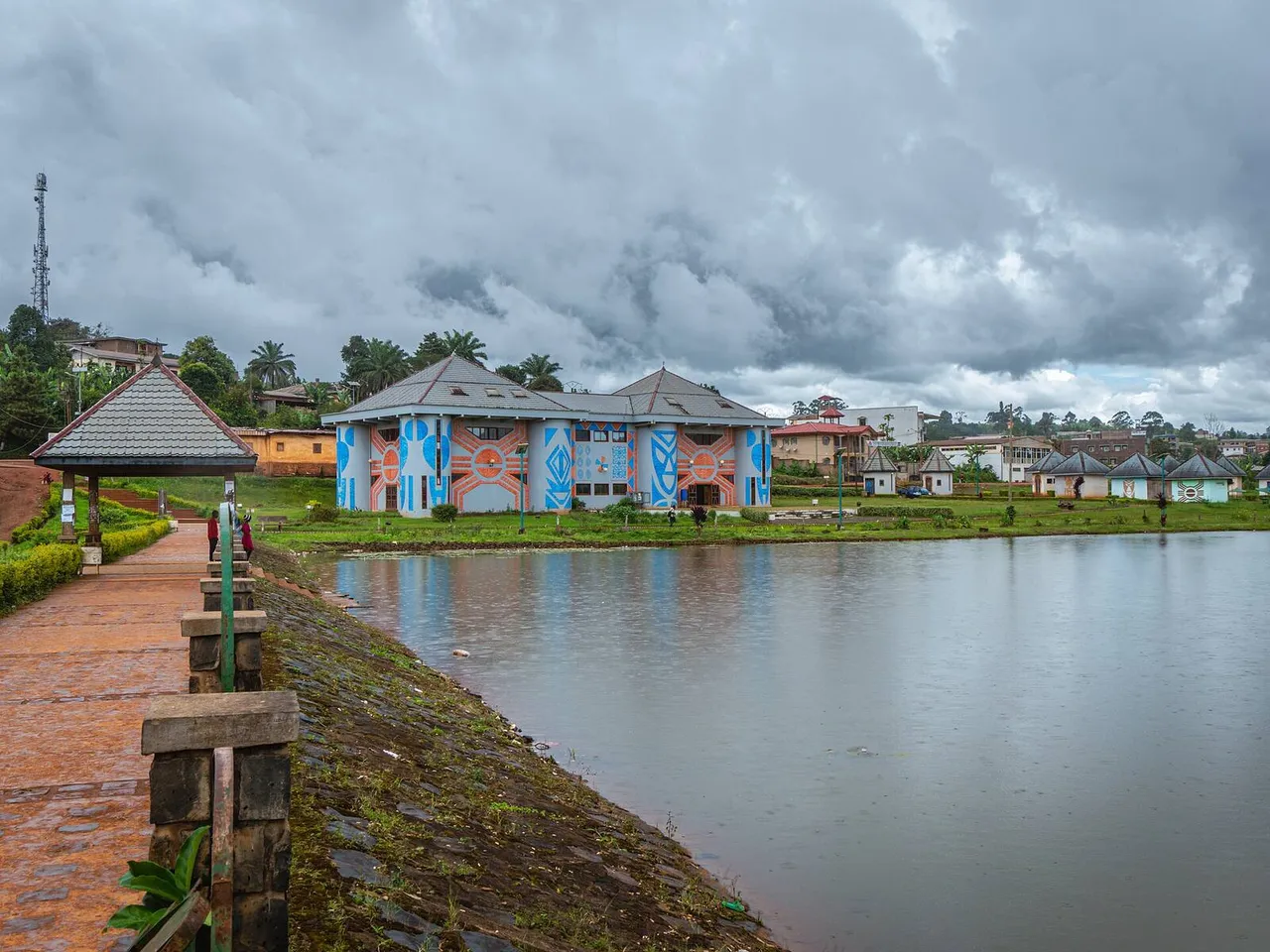
The Chiefdoms Route (Route des chefferies) is a heritage programme for the Grassfields, the highlands of the West and North-West regions. It was started by the Pays de la Loire-Cameroun Association, which brings together the Cameroonian diaspora in Nantes, France, and has been run since 2006 with the traditional chiefs. The organisation is now based in Bafoussam. Since April 2020, the French Development Agency (AFD) has supported the programme (2 million euros over three years) to restore sites, develop visits and train the region's tourism players.
In 2022, the exhibition "On the Road to the Chiefdoms of Cameroon: from the Visible to the Invisible" showed nearly 300 works at the musée du quai Branly in Paris, from 5 April to 17 July, including about 260 treasures lent by the chiefdoms.
The programme helped create heritage houses, small museums inside the chiefdoms, and the Dschang Museum of Civilisations, opened in November 2010 through a partnership between Dschang and Nantes. To understand what you will see, also read our guide to West Cameroon's chiefdoms.
Start in Bafoussam, capital of the West region and a good base. The great house of the Bafoussam chiefdom is one of the 14 great houses Cameroon put on UNESCO's Tentative List in 2018.
In the afternoon, go up to Lake Baleng, a crater lake about ten kilometres north of town. It is a sacred place for the Baleng chiefdom: you explore it on a loop hike, following the site keepers' instructions.
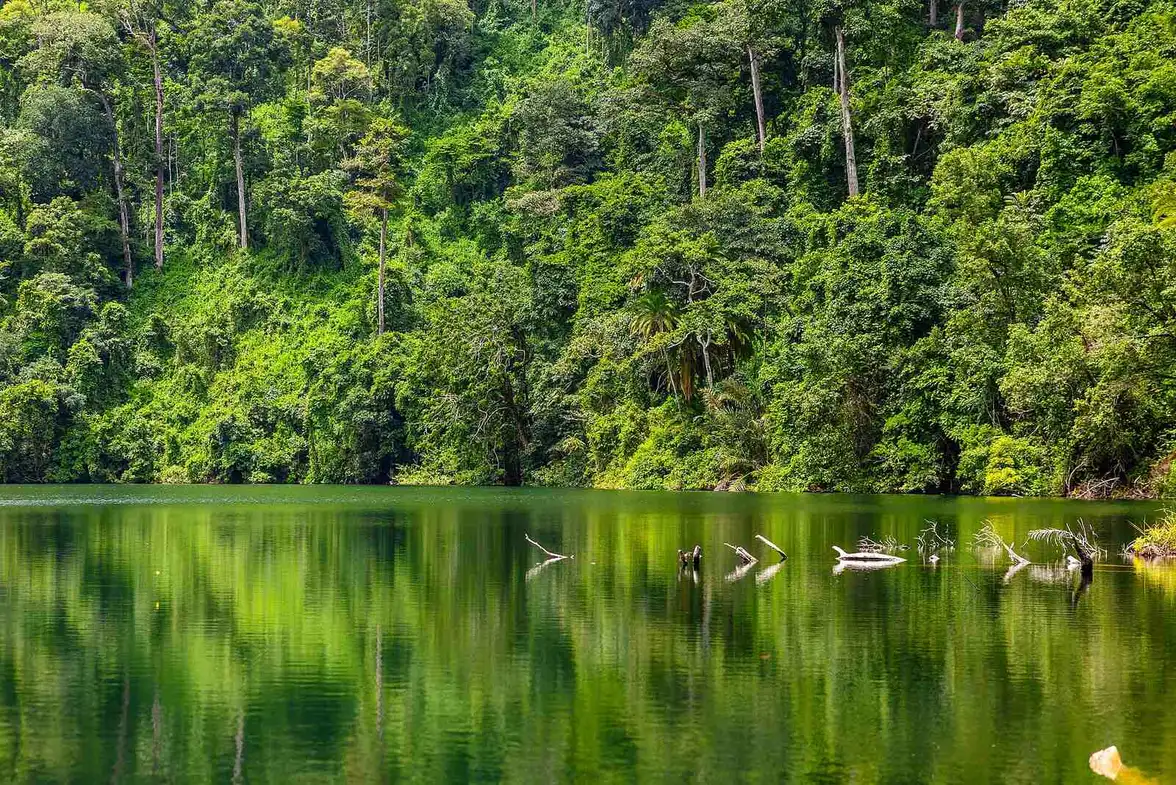 Lake Baleng. Photo: Sid Mbog, CC BY-SA 4.0, via Wikimedia Commons.
Bandjoun is about 17 km south of Bafoussam. The Bandjoun chiefdom has a 17-metre great house built of bamboo and raffia cords, and a museum of nearly 400 objects. The sacred forest is closed to visitors. Next door is Bandjoun Station, the contemporary art centre founded by artist Barthélémy Toguo, open to the public since 2013.
Continue to the Baham chiefdom and its art museum, then to the Batoufam chiefdom, whose palace with maze-like courtyards is an open-air museum. Batoufam also offers guest rooms, according to the sources.
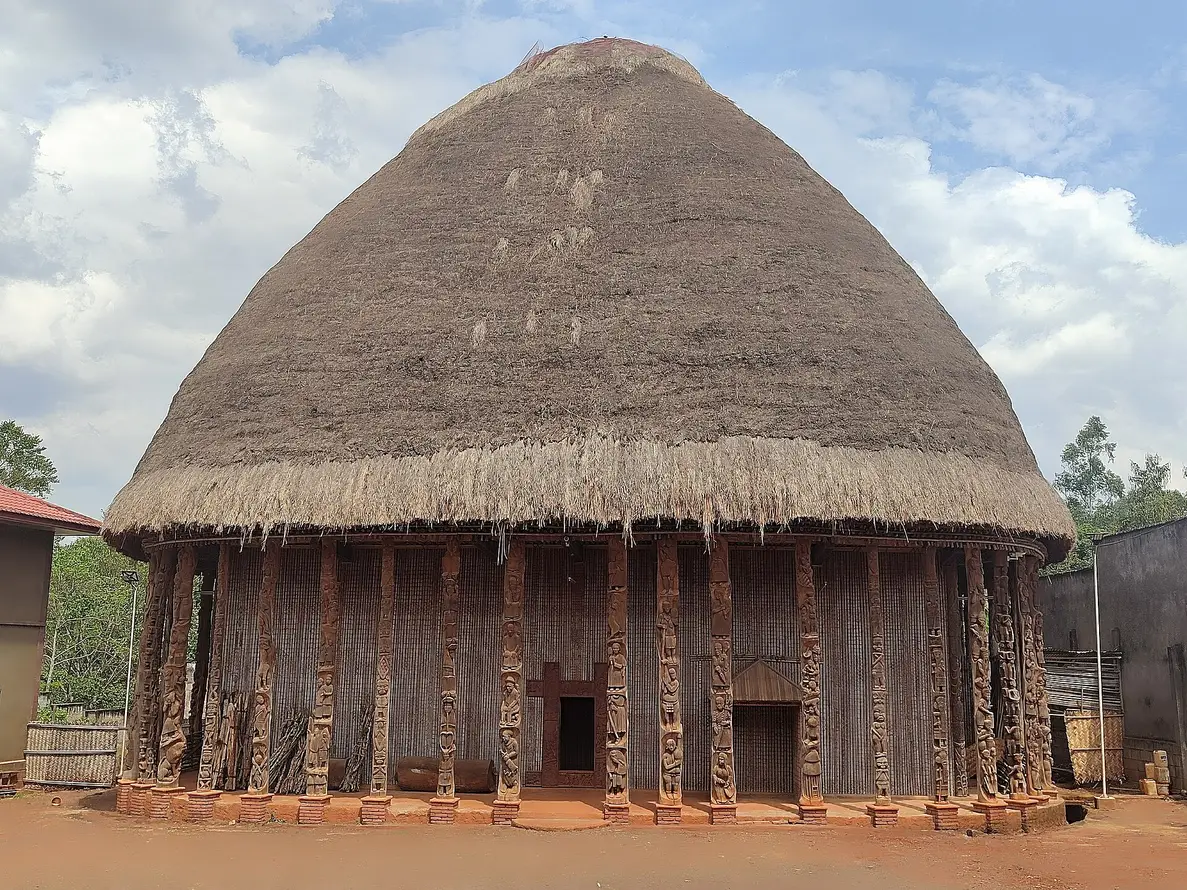 Bandjoun great house. Photo: Harouna674, CC0, via Wikimedia Commons.
Drive to Dschang, about 50 km from Bafoussam. The Museum of Civilisations, on the municipal lake, presents the history of Cameroon and the Grassfields chiefdoms in five spaces: it is a good introduction to the whole route.
In the afternoon, the Bafou chiefdom, about ten kilometres away, rebuilt its heritage house after it was looted during the independence struggle. For more around town, see things to do in Dschang.
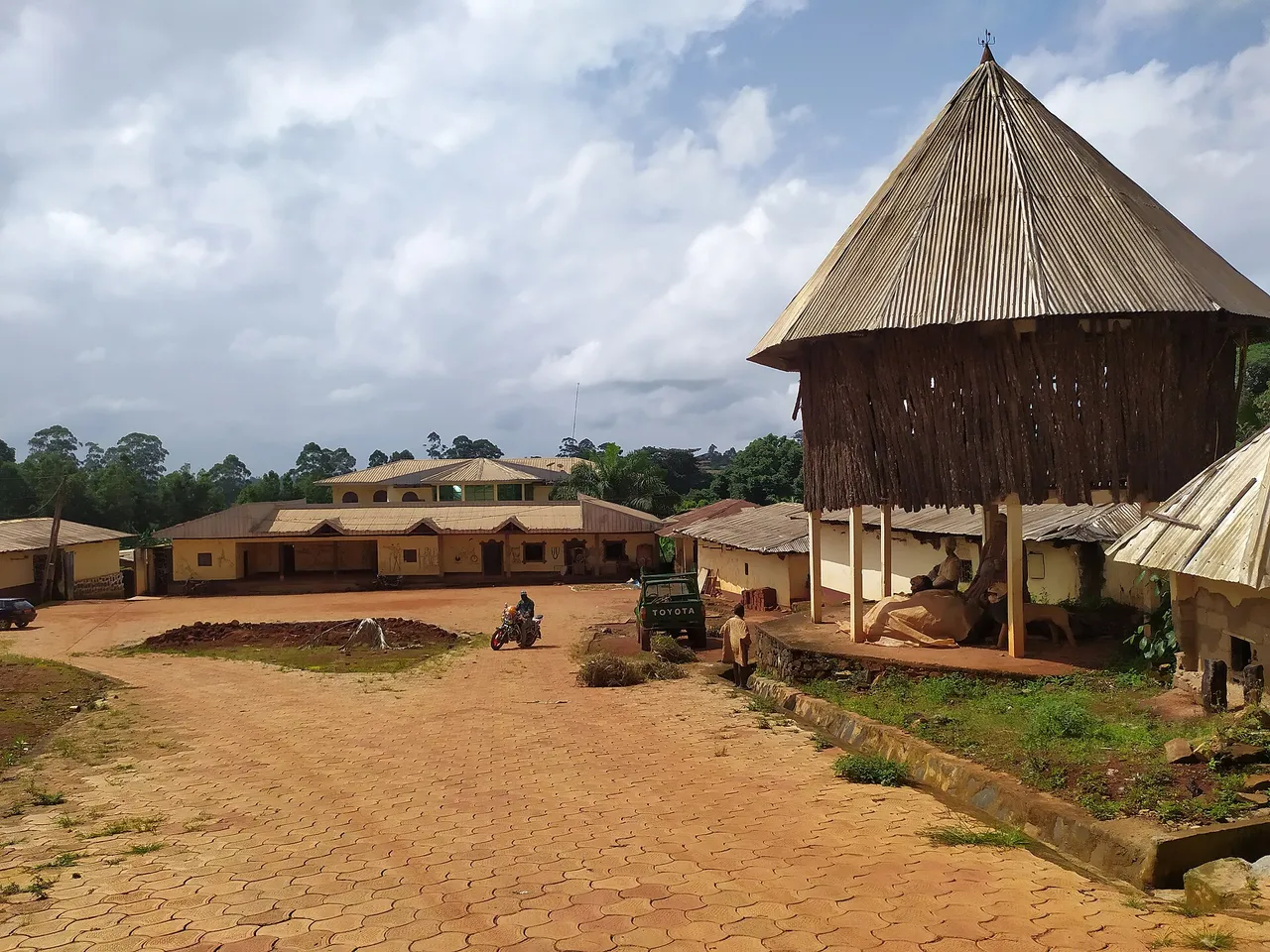 Bafou great house. Photo: Serieminou, CC BY-SA 4.0, via Wikimedia Commons.
Foumban is about 70 km from Bafoussam. This is no longer Bamileke country but the Bamoun kingdom, a neighbouring and different people. Visit the Bamoun kings' palace and museum: the palace dates from 1917, and since April 2024 the royal collections have been shown in a new building, separate from the palace. The Grand Mosque is close by.
The road goes through Foumbot: check the French Foreign Ministry map before you leave and drive by day. For more, see things to do in Foumban and our article on the Nguon festival.
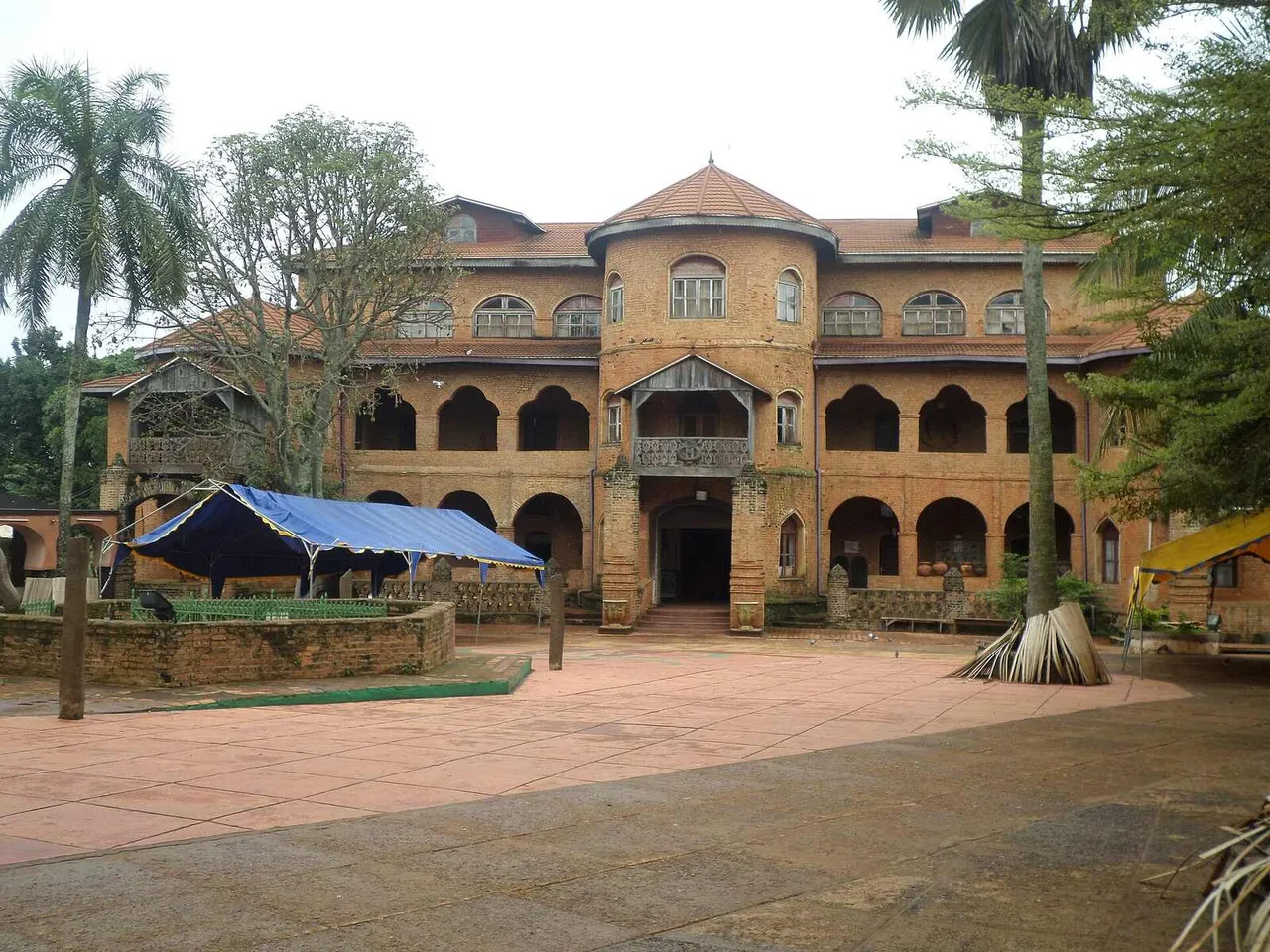 Bamoun kings' palace, Foumban. Photo: Njiderma, CC BY-SA 3.0, via Wikimedia Commons.
With one more day, head to Bangangté, about 50 km south-east of Bafoussam, capital of the Ndé department and home of the Medumba festival. Otherwise, keep this day to drive back to Douala or Yaoundé without rushing.
According to the French Development Agency, the Chiefdoms Route network includes fourteen museums. Those on this itinerary:
With three days, keep days 1 to 3; Foumban can also be a return trip from Bafoussam. Allow one to two hours per chiefdom, with the guide.
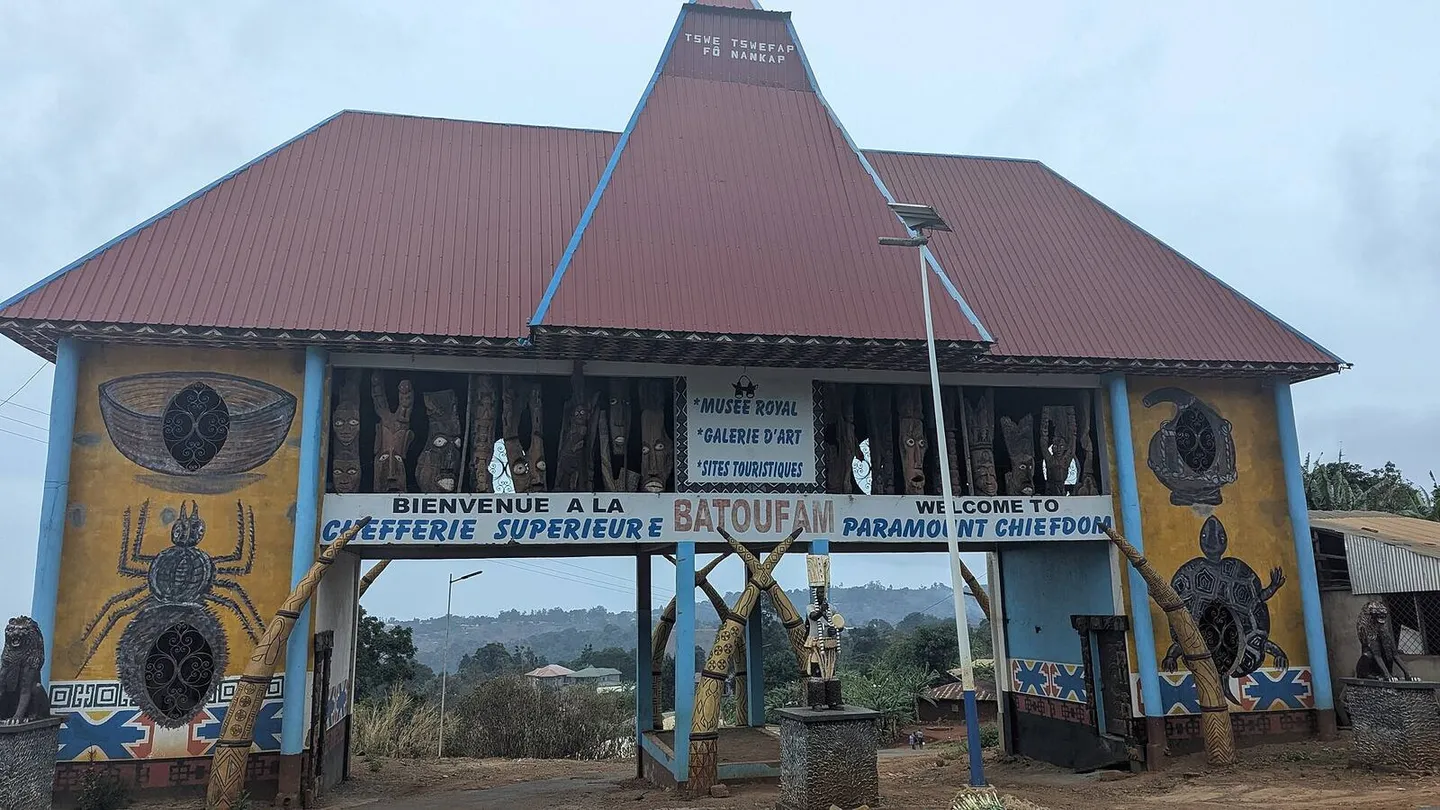 Batoufam royal museum. Photo: MELIH GLAGYS, CC BY-SA 4.0, via Wikimedia Commons.
The most pleasant time is November to February, in the dry season, when the roads to the chiefdoms are easier. See also the best time to visit Cameroon.
France's Foreign Ministry (updated 05/11/2026, read 16/11/2026) advises against travel, unless strictly necessary, to the parts of the West bordering the North-West and South-West regions, the surroundings of Lake Bamendji (20 km from the shore) and the D66 road between Kouomboum and Kouhouat. The itinerary above stays outside these areas; the Bamboutos mountains and Fongo-Tongo are inside them. Drive by day and check the map before each trip; see travel safety in Cameroon.
For this itinerary, stay in Bafoussam and then Dschang: most stops are less than an hour's drive away. To prepare day two, read things to do in Bandjoun, and learn more about the culture behind these places in our article on Bamileke country.
How many days do you need for the Chiefdoms Route?
Three days cover Bafoussam, Bandjoun, Baham, Batoufam and Dschang. Allow four or five days with Foumban and Bangangté.
How much does it cost to visit a chiefdom?
About 2,000 to 5,000 CFA francs depending on the site and the visitor category, plus a camera fee in some chiefdoms. Fees are to be confirmed on site.
Can you take photos in the chiefdoms?
Only with the chiefdom's permission. Some areas, such as sacred forests, are closed to visitors.
When is the best time to go?
The dry season, from November to February.
Is the Chiefdoms Route safe?
The suggested stops are outside the areas the French Foreign Ministry advises against. Avoid the areas near the North-West and South-West regions and around Lake Bamendji, and drive by day.
What was the "On the Road to the Chiefdoms of Cameroon" exhibition?
An exhibition at the musée du quai Branly in Paris, from 5 April to 17 July 2022: nearly 300 works, including about 260 treasures lent by the chiefdoms.
How many museums are on the Chiefdoms Route?
Fourteen, according to the French Development Agency, which has supported the programme since April 2020.
Ces articles peuvent vous intéresser
Guides
Réf: BGB0F0E
Avis (0)
Laisser un commentaire
Incluez l'indicatif pays, ex: +237 612345678