
The Nguon in Foumban: the Day the Bamoun King Is Judged by His People


Every two years, in early December, Foumban becomes the heart of the Bamoun kingdom. During the Nguon, ritual leaders gather the people's views on the state of the kingdom in the villages, then the Mfon, the king, steps down from his throne to be judged in public. He can be fined and, as a last resort, deposed; if he is reconfirmed, the celebrations break out, up to the great march on Sunday.
In December 2023, UNESCO inscribed "Nguon, rituals of governance and associated expressions in the Bamoun community" on the Representative List of the Intangible Cultural Heritage of Humanity: it is Cameroon's first element on the list. This article draws on the official nomination file, the national inventory record and the Committee's decision to explain the Nguon, its actors, its values and how to attend it.
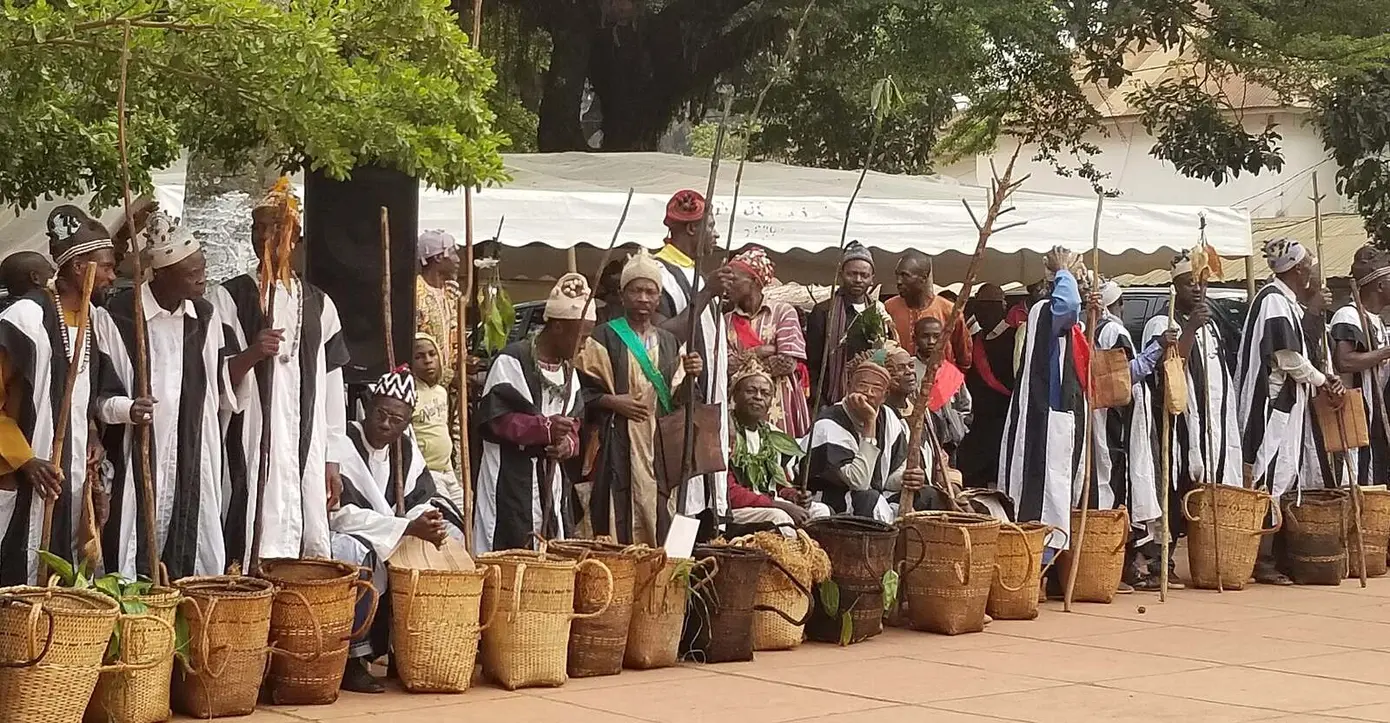
What UNESCO recognized in December 2023
Meeting for its 18th session in Kasane (Botswana), the Intergovernmental Committee for the Safeguarding of the Intangible Cultural Heritage decided, on December 5, 2023, to inscribe the Nguon on the Representative List (decision 18.COM 8.B.25, file No. 01955 submitted by Cameroon). It was Cameroon's first inscription; the Ngondo of the Sawa followed in 2024.
The Committee found all five criteria met. It describes the Nguon as a unifying ritual that serves to manage governance in the community and gives the Bamoun a sense of identity and continuity, whatever their origin, religion or opinions. It also commended the choice of an element that addresses social and development issues, such as HIV/AIDS and poverty reduction.
The official record is online on UNESCO's intangible cultural heritage website.
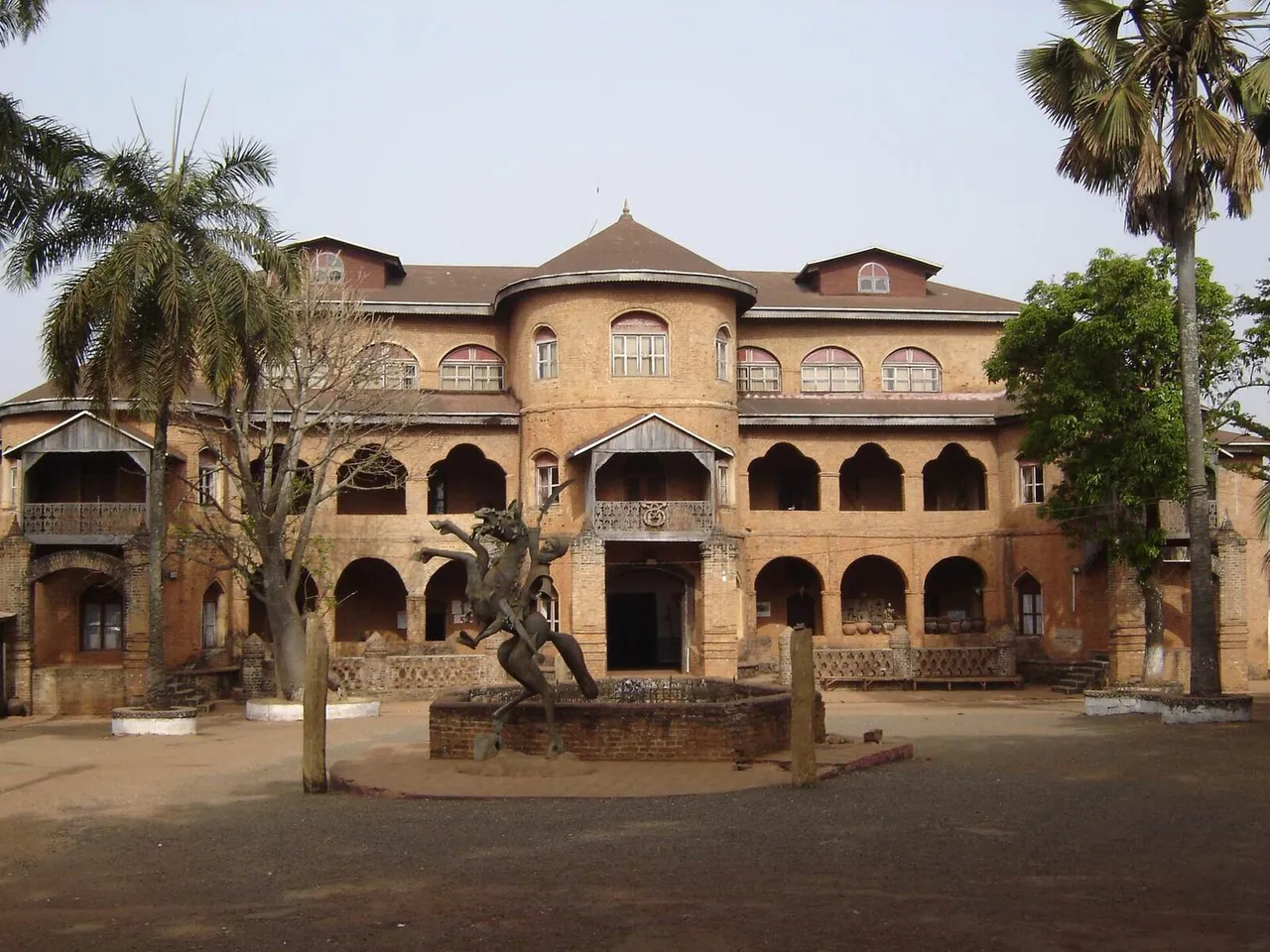 The palace of the Bamoun kings in Foumban, the heart of the Nguon. Photo: Elin, CC BY 2.0, via Wikimedia Commons.
The Bamoun kingdom and its unifying ritual
According to the file, the Nguon dates back to the founding of the Bamoun kingdom in 1394. The community now numbers more than 800,000 people from about a hundred tribes, all of whom recognize the Nguon as their heritage. The kingdom covers the Noun department in the West region: 7,687 km², 17 groupings and 266 villages, home to 138 units of the secret society that leads the Nguon.
The Nguon culminates at the kings' palace in Foumban, the kingdom's capital, a town known for the invention of the Shümom script in 1896 and for its renowned crafts. Each edition brings together several hundred thousand people: Bamoun from the kingdom, the rest of Cameroon and the diaspora, as well as other communities from the country, Africa and the world.
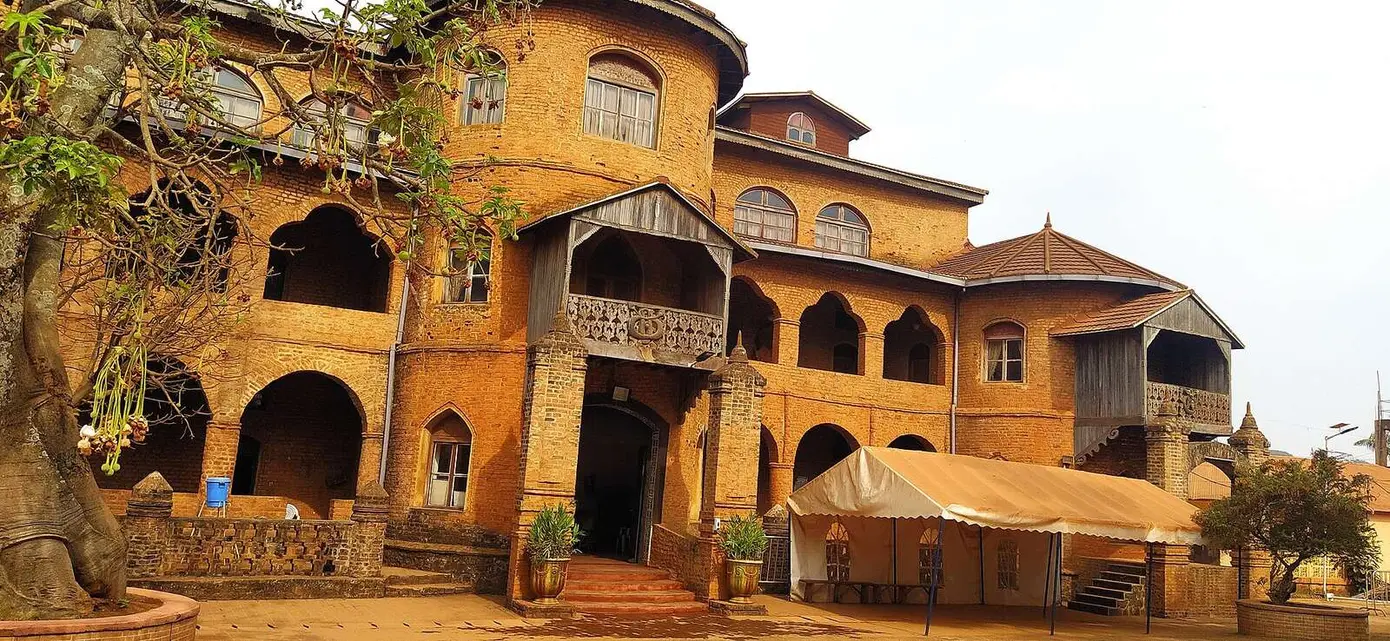 The royal palace in Foumban, capital of the Bamoun kingdom. Photo: EbelleMarcel, CC BY-SA 4.0, via Wikimedia Commons.
How it unfolds: from the villages to the palace
The Nguon takes place every two years in early December. Its main rituals last three days, from Friday to Sunday, but preparations begin as soon as the Mfon officially announces it.
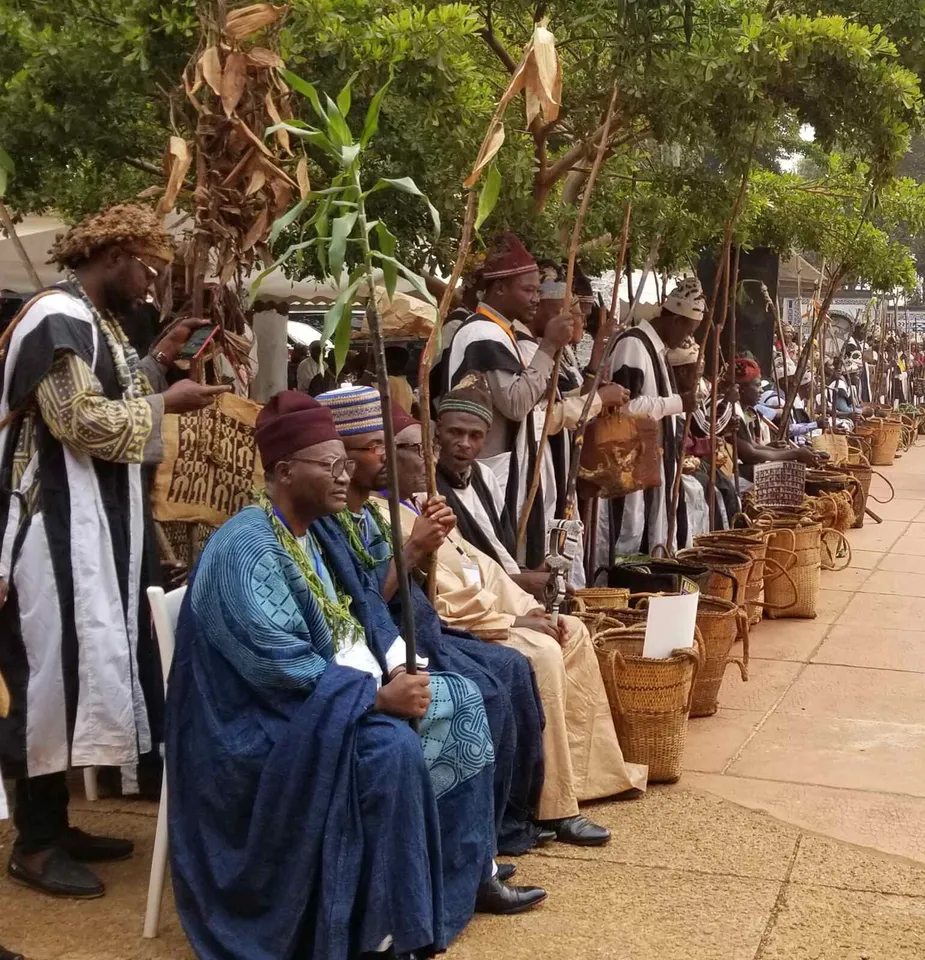 The roll call of the chiefs during the December 2018 Nguon. Photo: Heather Powell, CC BY-SA 4.0, via Wikimedia Commons.
The offerings of the trades
As soon as the Nguon is announced, members of the various trades come to the palace to present and offer the Mfon their best agricultural and craft products. Part is redistributed, part is stored for hard times, and the best producers receive awards.
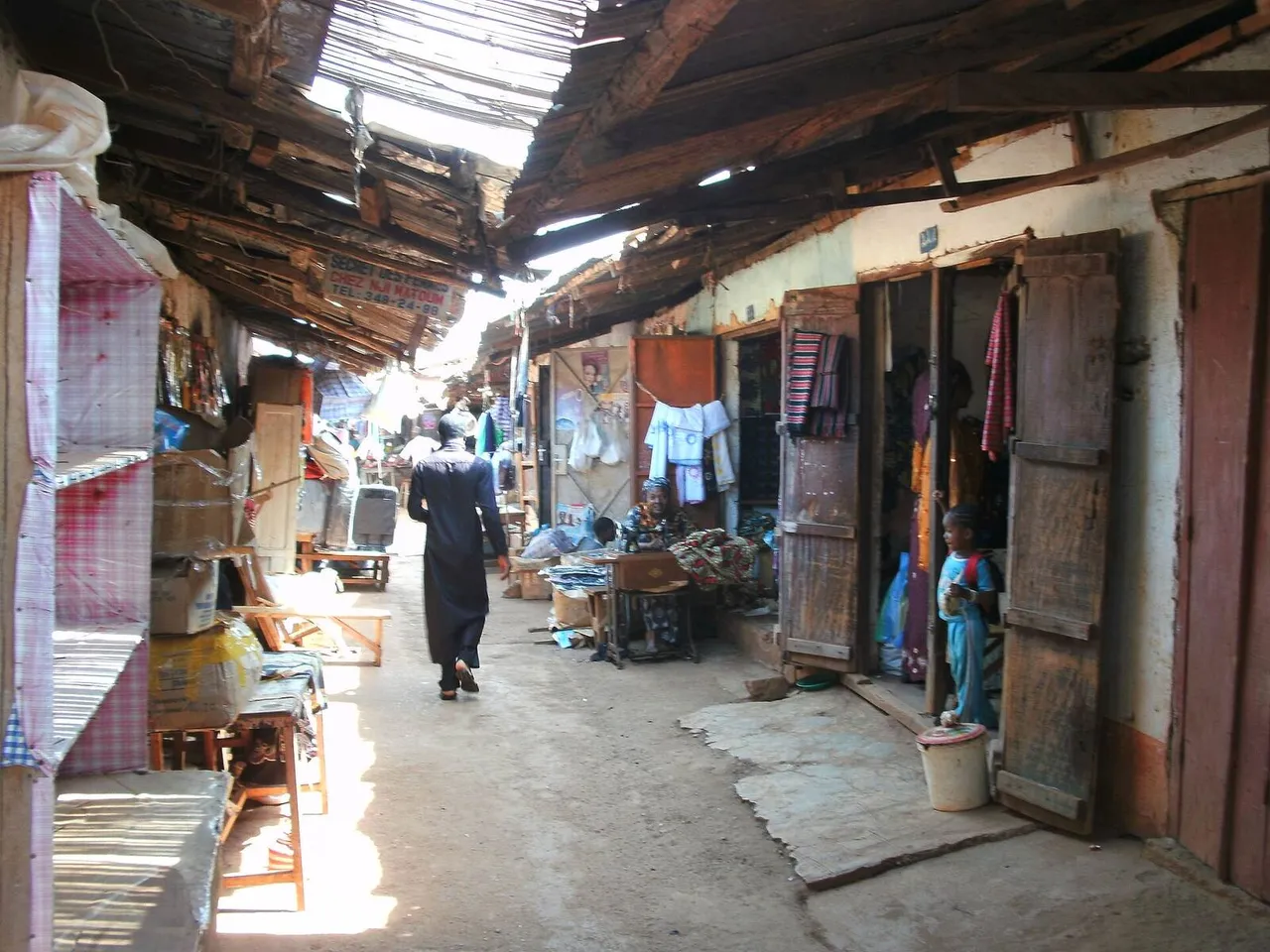 The Foumban market: farmers and craftsmen offer the Mfon their best products during the Nguon. Photo: WILLAV-FR, CC BY-SA 4.0, via Wikimedia Commons.
Consulting the people
At the same time, in the villages, the Nguon ritual leaders, the Fonanguon, and their young assistants, the Pon-Pekâ, gather people's views on the state of the kingdom, as well as the kingdom's traditional medicines.
Friday: the secret entry into the palace
On the agreed Friday, at nightfall, the units of the secret society enter the Foumban palace in secret, carrying the views they have gathered. The Fonanguon hold council with the Mfon in the middle of the night. This moment is reserved for initiates.
Saturday: the king's public trial
On Saturday, the Mfon first receives the traditional medicines gathered on behalf of the community. Then he submits to a public trial of his governance. Before the throne and the whole assembly, the Tâ-Ngu, the kingdom's justice-keeper, plants two spears: the royal immunity is lifted. The king leaves his throne and stands. The Fonanguon deliver the indictments drawn from the people's views, often harsh; the verdict is entrusted to the Kom, the notables who enthrone the king. The Mfon can be fined; deposition remains the ultimate sanction. The heart of the trial lies elsewhere: lifting the king's immunity, making him hear his people's criticism and renewing the pact that binds them.
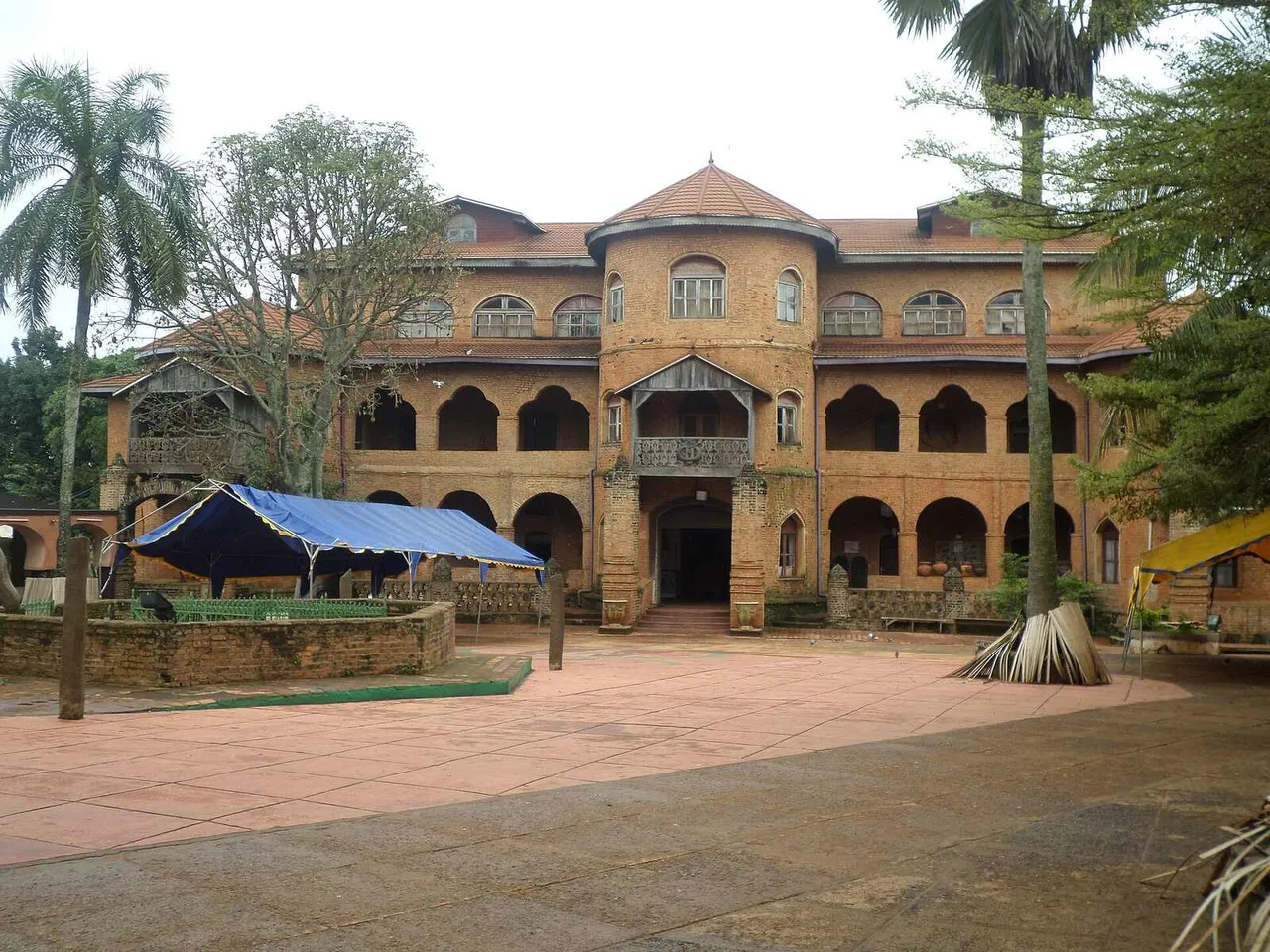 The courtyard of the Foumban palace, where the Mfon's public trial takes place. Photo: Njiderma, CC BY-SA 3.0, via Wikimedia Commons.
Reinvestiture
If the sentence grants him a new mandate, the Mfon gives a reinvestiture speech and receives renewed pledges of allegiance. The Kom walk around the palace with him, ending with rites at the royal vault; this part is reserved for initiates.
Sunday: the great Sho' Melue march
The popular celebrations peak on Sunday with a great carnival-like march, the Sho' Melue, toward the trench gate, followed by the Mfon's triumphant return to the palace.
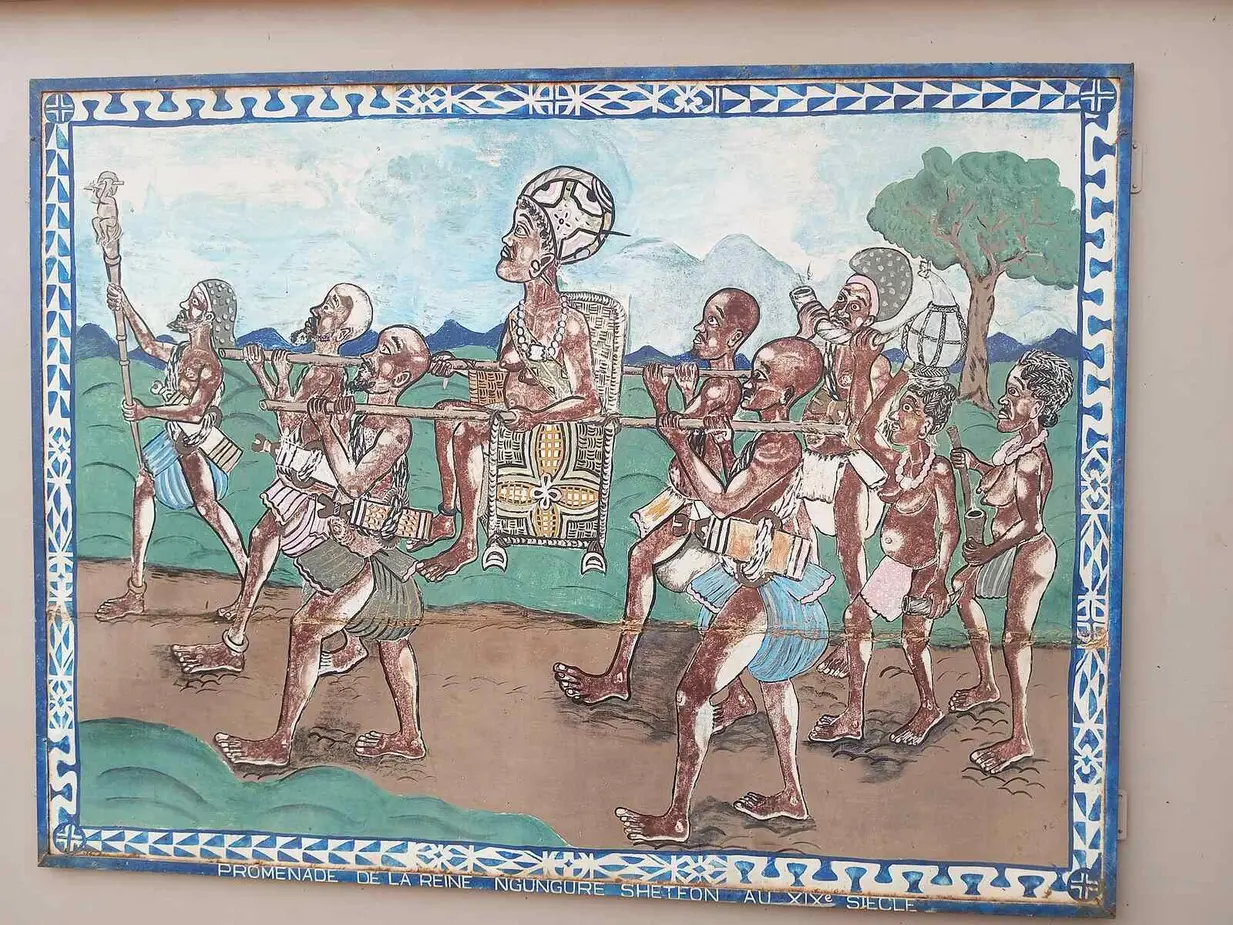 Mural of a royal procession on the wall of the Bamoun kings' museum in Foumban. Photo: Devane NDONNANG NANGA Zenas, CC BY-SA 4.0, via Wikimedia Commons.
Who does what: the roles of the Nguon
The whole Bamoun community carries the Nguon, but the file describes specific roles.
| Actor | Political and ritual role | Effect on the community |
|---|---|---|
| The Mfon (king) | Convenes the Nguon, receives the offerings and the traditional medicines, submits to public judgment, appoints the Nguon office-holders. | Power is held to account; offerings are redistributed or stored for hard times, and the best producers are rewarded. |
| The Tâ-Ngu | The kingdom's justice-keeper: plants the two spears that lift the royal immunity, leads the trial, pronounces the sentence, performs purification rites. | Ensures the king is judged like any defendant; interprets the ancestors' message for the community. |
| The Titâ-Nguon and the Fonanguon (men and women, 138 pairs) | Each Titâ-Nguon ("father of the Nguon") has a Fonanguon ("chief of the Nguon"); the Fonanguon gather the kingdom's views and medicines and deliver the indictments. | Carry the villages' voice to the palace: freedom of expression in action. |
| The Pon-Pekâ | Young assistants of the Fonanguon during the consultation of the villages. | Prepare the next generation: they learn the offices by assisting. |
| The Kom | The notables who enthrone the king: they carry out the sentence and, in case of reinvestiture, pledge allegiance. | Ensure the continuity and legitimacy of the throne. |
| The people | Give their views on the state of the kingdom, offer their best products, join the Sho' Melue march. | Benefit from redistribution and food reserves; renew their bond with the king. |
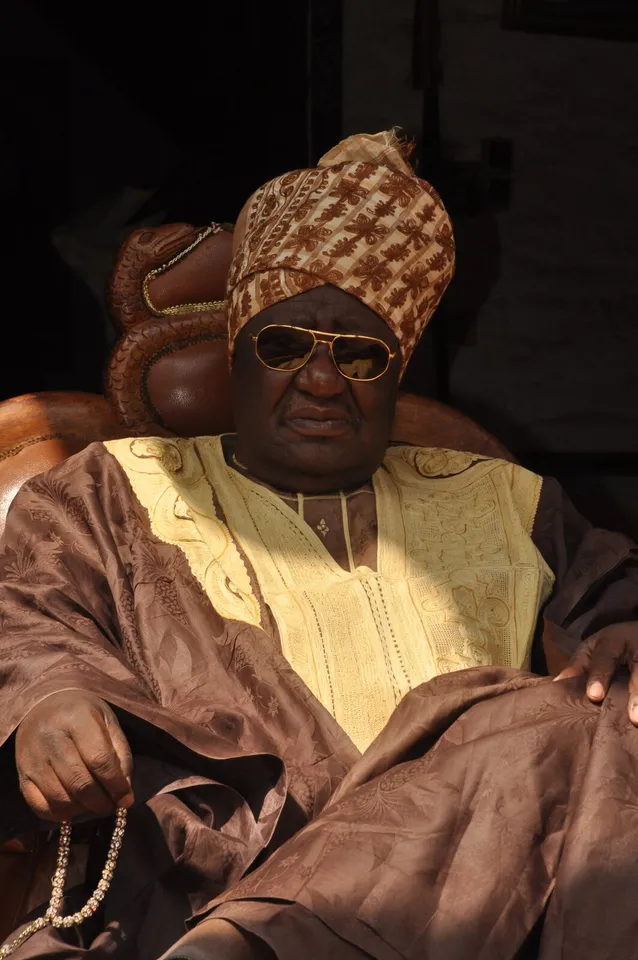 Sultan Ibrahim Mbombo Njoya, King of the Bamoun from 1992 to 2021, in Foumban in 2014. Photo: Photokadaffi, CC BY-SA 4.0, via Wikimedia Commons.
Good governance, freedom of speech and humility
The file presents the Nguon as good governance in action. It holds dignitaries, the king included, accountable to the people; it guarantees freedom of expression, both for residents who criticize the running of the kingdom and for the Fonanguon, whose tone can be harsh; and it teaches humility, since the king becomes an ordinary defendant standing before his community.
The Nguon also carries solidarity and resilience, through the redistribution of offerings and food security reserves, and intercultural dialogue, since sister communities from Cameroon, Africa and the world take part. UNESCO links it to the Sustainable Development Goals on gender equality and on peace, justice and strong institutions.
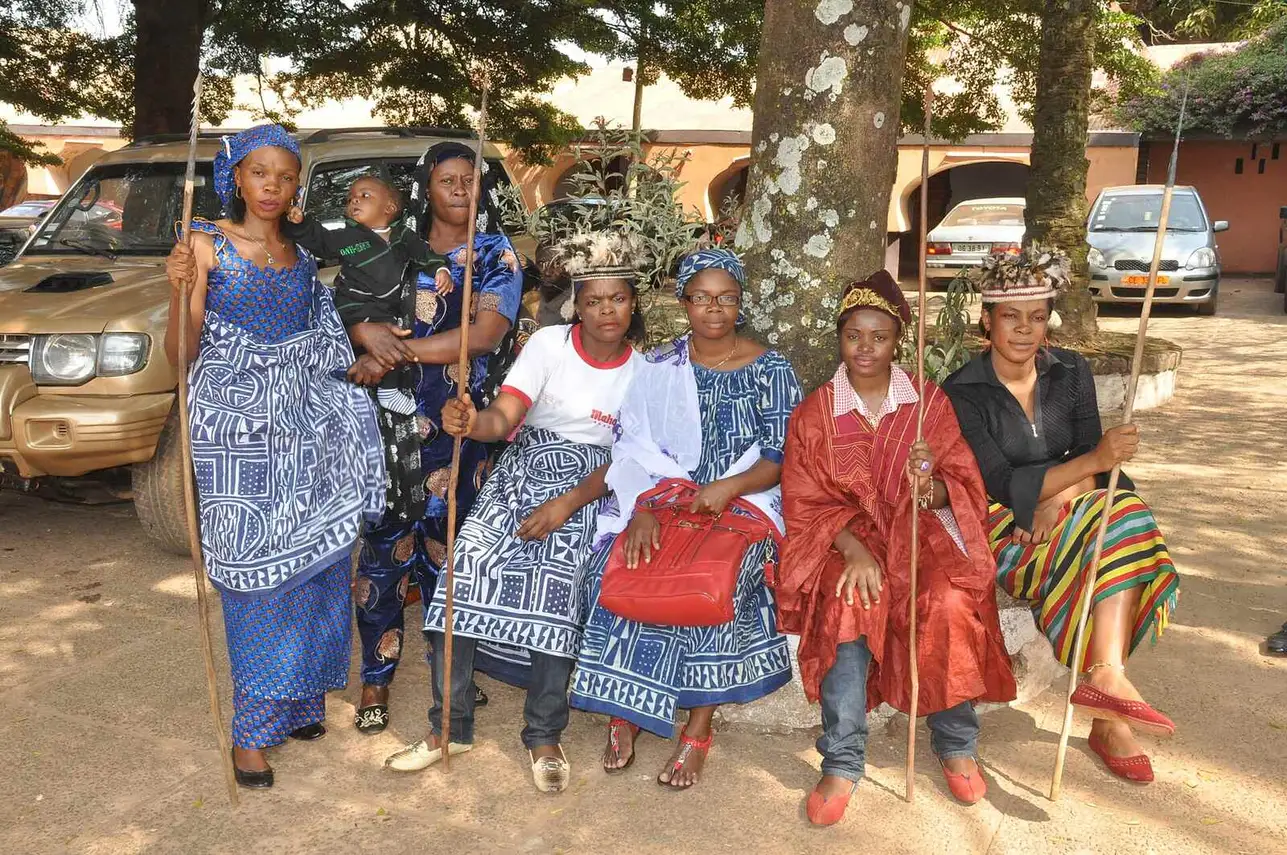 Women in traditional dress at the Foumban palace: men and women both hold Nguon offices. Photo: Photokadaffi, CC BY-SA 4.0, via Wikimedia Commons.
Traditional medicine, forests and development
The traditional medicines gathered by the Fonanguon have a long history: according to the file, King Ibrahim Njoya (1889-1933), the 17th Mfon, used them to write a pharmacopoeia and create a botanical garden. In 2002, following the Nguon's resolutions, about 500 hectares of forest were replanted in the kingdom (Maloure, Njimom).
The Nguon is also a platform to mobilize the community: editions have been dedicated to the fight against HIV/AIDS, the fight against poverty and local development.
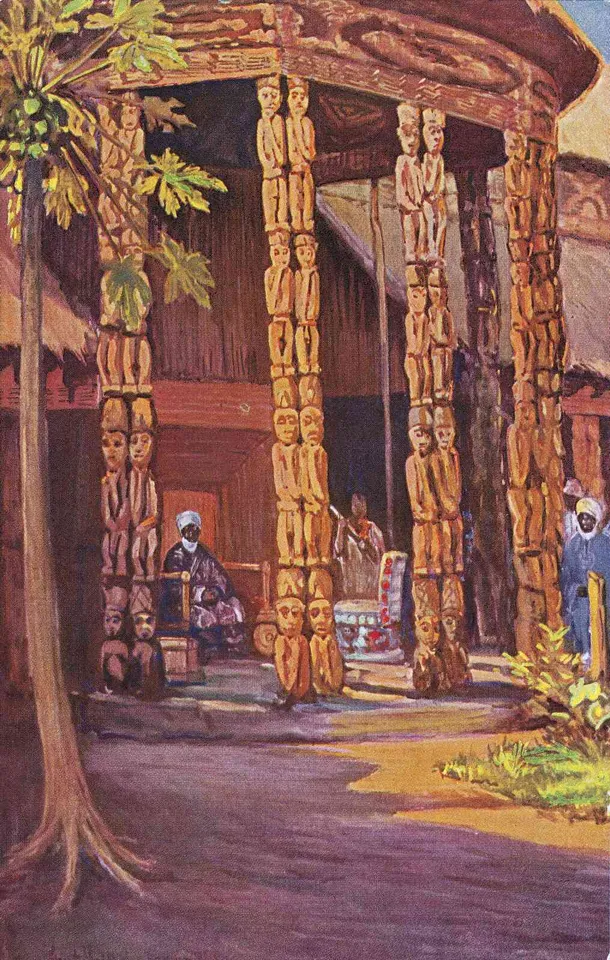 King Ibrahim Njoya in his palace, around 1912 (old postcard, public domain).
How the knowledge is passed on
Transmission is first informal, within families, groups and secret societies. The heirs to the offices, who are not necessarily the children of the holders, are prepared from an early age: they watch, are initiated, then gradually take on responsibilities. Evening gatherings around the fire, the Mue, pass on tales, legends, songs and dances linked to the Nguon, and the Noun community radio in Foumban broadcasts programs about it.
Transmission is also formal: Cameroon's schools and universities teach national cultures, the Nguon included. Planned safeguarding measures include teaching materials and comics on the Nguon, a documentation center at the palace's House of Culture, conferences, a charter and code of ethics for the celebration, richer collections in Foumban's two museums, and reviving heritage schools in the villages.
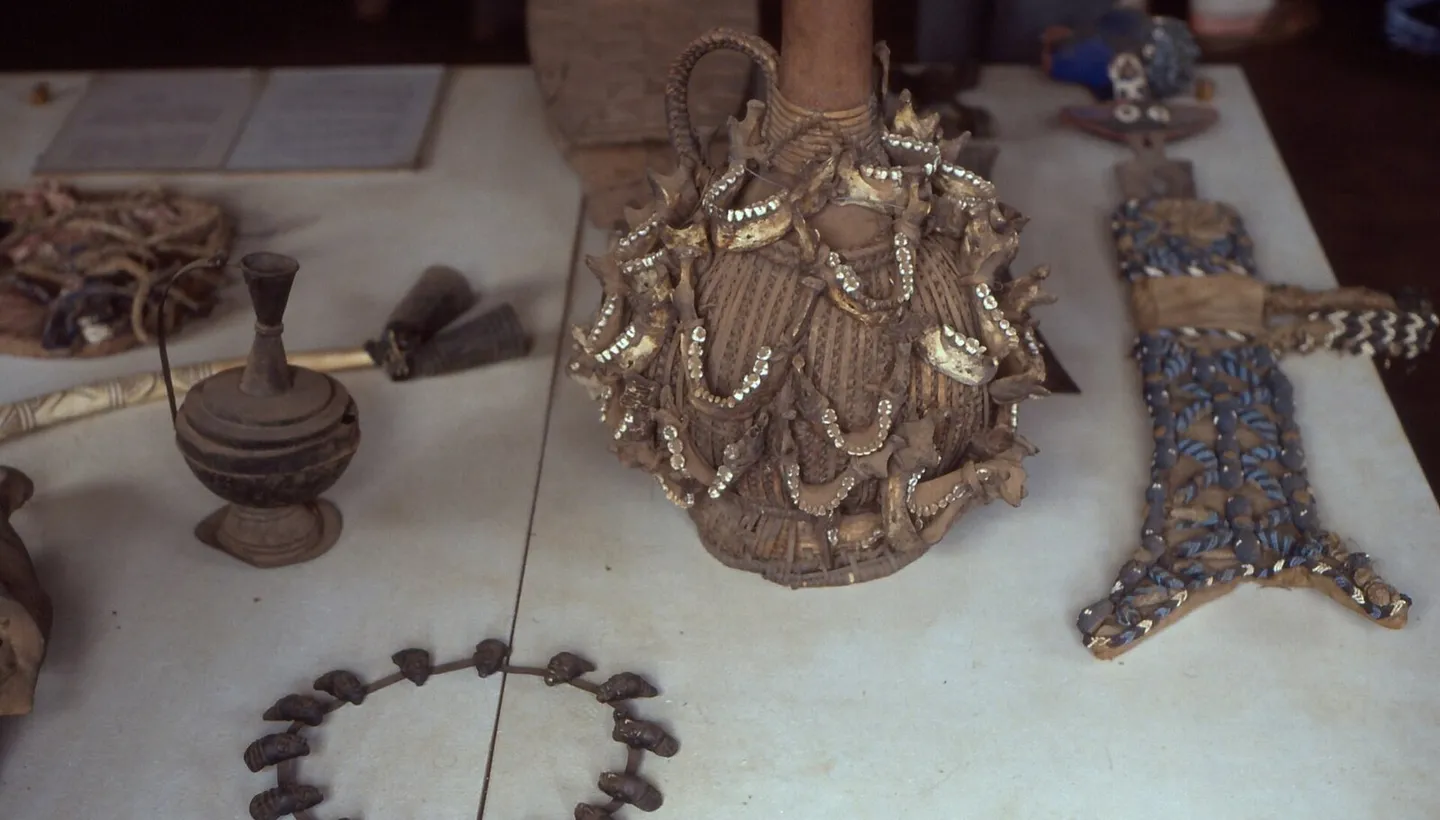 Objects on display at the Foumban palace museum. Photo: Albert Backer, CC BY-SA 3.0, via Wikimedia Commons.
Six centuries of history, a ban and a revival
According to the file, the colonial administration banned the Nguon in 1924. Its holders nevertheless celebrated it in secret, without large gatherings, and the secret society remained active. The Nguon reappeared in public in 1958, 1963, 1976 and 1985, then was fully restored in 1993, after the 1990 freedom laws. The celebration then became biennial.
Since then, the community has created a traditional ministry in charge of the Nguon, restored the ritual sites (royal palace, ceremonial courtyard, trench gate), kept the Kû Mutngu judicial spears in the kings' museum, and laid out an 8-hectare "Nguon village" at the southern entrance of Foumban for the festivities. In 2020, because of the pandemic, the celebration was symbolic.
The UNESCO nomination came out of a general assembly of the Nguon in 2018. A first file for the 2020-2021 cycle did not succeed; the community relaunched the work on December 18, 2021, around the Mfon, with consultations in the 17 groupings, the 266 villages and the 138 units of the secret society, and a workshop in Foumban from March 8 to 12, 2022. The Convention's concepts were then translated into Shüpamom, the Bamoun language.
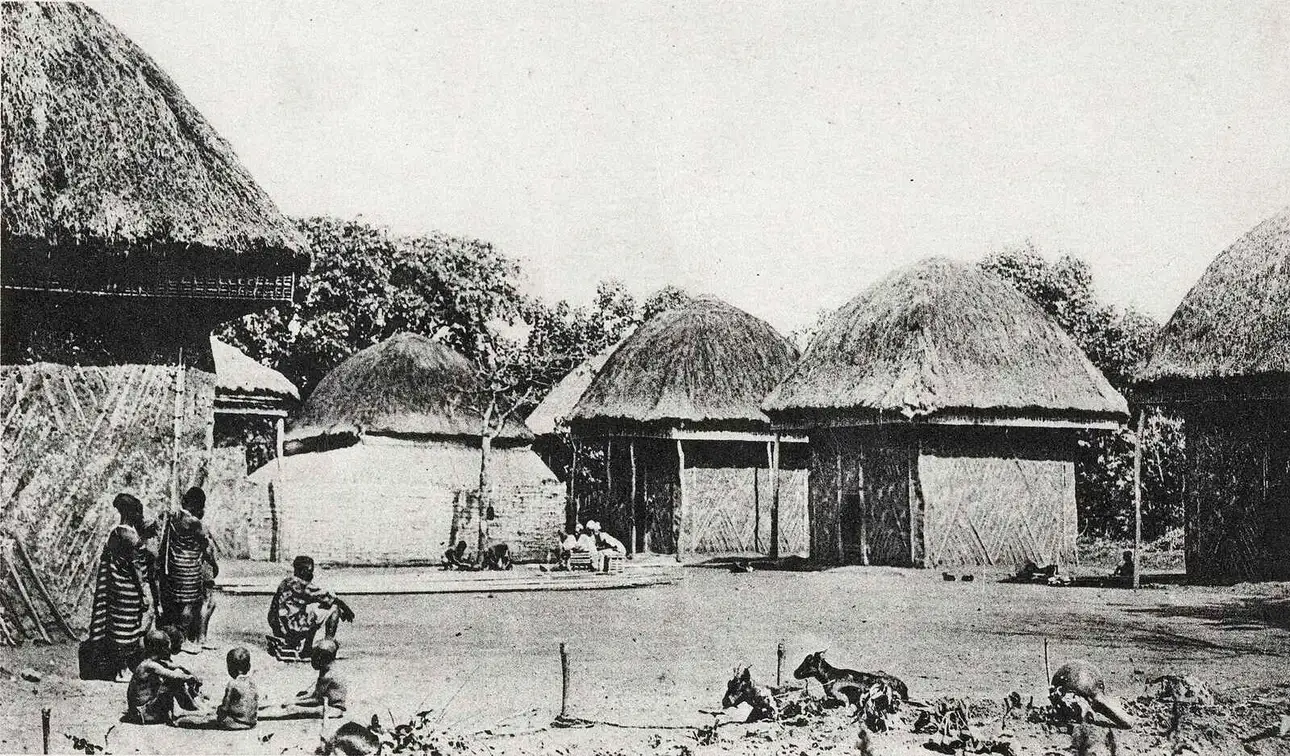 Foumban in the early 20th century (old postcard, public domain).
The 2026 edition
The 2024 edition was held from November 29 to December 8, 2024 (Journal du Cameroun). The 549th edition is announced for December 4 to 13, 2026 in Foumban and nearby localities (Abidjan.net, May 9, 2026, invitation from the King of the Bamoun). The detailed program will be added here as soon as it is published.
Attending the Nguon respectfully
A few practical tips to enjoy the Nguon in good conditions:
- Accommodation: Foumban fills up during the Nguon, so book your accommodation in Foumban early. If it is full, stay in Bafoussam, about 1 to 1.5 hours away by road depending on traffic.
- Road: travel by day, from Bafoussam or Yaoundé.
- On foot: on Saturday and Sunday, some streets in the town center are closed to cars. Bring good walking shoes and water.
- Time: the festivities stretch over several days; Saturday's public trial and Sunday's Sho' Melue march are the main moments open to the public.
- Photos: never film or photograph Friday's night rites or the procession to the royal tombs. Otherwise, ask before photographing a person or a rite, and follow the notables' instructions.
- Must-see: take the opportunity to visit the palace and museum of the Bamoun kings and the craftsmen's street.
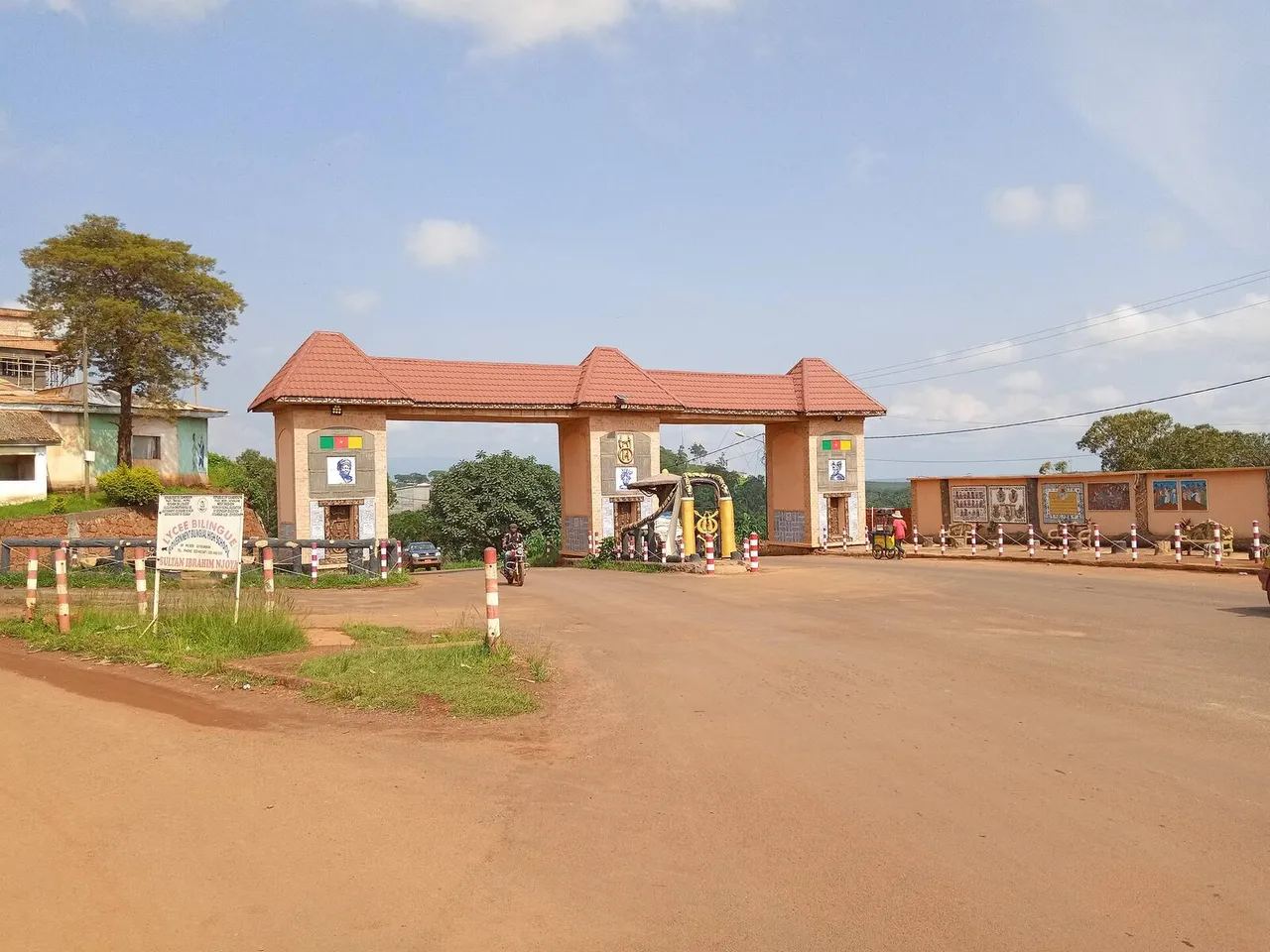 The entrance to the town of Foumban. Photo: Mndetatsin, CC BY-SA 4.0, via Wikimedia Commons.
The Nguon shows that a king can stand before his people to be held to account. For more than six centuries, it has bound the Bamoun to their history and to one another; its UNESCO inscription commits the community and Cameroon to passing it on, and every visitor to respecting it.
Questions Fréquemment Posées
What is the Nguon?
A series of governance rituals of the Bamoun people: consulting the people, offerings, the king's public trial, reinvestiture and a popular festival, in Foumban.
When does the Nguon take place?
Every two years, in early December. The 549th edition is announced for December 4 to 13, 2026.
Is the Nguon on the UNESCO list?
Yes, since December 2023, on the Representative List of the Intangible Cultural Heritage of Humanity (decision 18.COM 8.B.25). It was Cameroon's first element inscribed.
Can the king really be deposed?
Yes, according to the nomination file: it is the ultimate sanction. The trial mainly serves to lift the king's immunity, make him hear the people's criticism and, if he is reconfirmed, renew the pact that binds them.
What does Sho' Melue mean?
It is the great carnival-like march on Sunday toward the trench gate, followed by the king's triumphant return to the palace.
Can visitors attend the Nguon?
Yes, most moments are public. The night entry into the palace and some reinvestiture rites are reserved for initiates: they must never be filmed or photographed.
Mots-clés
Ces articles peuvent vous intéresser
Catégorie
Culture
Réf: BGC33E3
Avis (0)
Laisser un commentaire
Incluez l'indicatif pays, ex: +237 612345678