
Bamileke country: culture, chiefdoms and traditions of West Cameroon


Bamileke country is the highlands of West Cameroon, around Bafoussam, Dschang, Bandjoun and Bangangté. Around a hundred chiefdoms keep their palaces, great houses and festivals there. Here is what you need to understand this culture and where to discover it.
Where is Bamileke country?
The name Bamileke covers the peoples of seven departments of the West region: Bamboutos, Haut-Nkam, Hauts-Plateaux, Koung-Khi, Menoua, Mifi and Ndé. These are green, cool volcanic plateaus where farmers grow maize, taro and groundnuts, among other crops. The region's eighth department, the Noun, is the land of the Bamoun, a neighbouring people with their own kingdom in Foumban.
The main towns are Bafoussam, the regional capital, and Dschang. Many Bamileke also live in Douala, Yaoundé and abroad, and come back to their village for major ceremonies.
Where does the name "Bamileke" come from?
The Bamileke first identify with their chiefdom, or as people of the Grassfields. The name first appears in 1905, in the account of a German expedition to Mount Manengouba; it is said to come from an expression for the people of the valley. Today it covers peoples who speak related languages and share institutions.
The Bamileke are also known for migration: before colonial times and especially in the 20th century, many moved to the Moungo, the Littoral, the Centre and the South, building trade networks between home villages and cities. Arabica coffee, grown on the plateaus, long supported families.
Volcanic plateaus and hedged farmland
Bamileke country covers about 8,200 km² of plateaus, at an average altitude close to 1,450 m. To the north-west, the Bamboutos massif rises above 2,700 m; to the east, the Noun valley marks the transition to Bamoun country.
The landscape is hedged farmland: family compounds, fields and paths lined with living hedges of raffia palms, fruit trees and bamboo. The chiefdoms form tighter groups of buildings, with courtyards, squares and sacred woods.
The chiefdom, heart of Bamileke life
Each chiefdom is led by a hereditary chief, the fo. Around him, a court of notables and customary societies regulate village life, land and rites. The chiefdoms share many cultural features, but each has its own history and founding story.
A chiefdom is at once a palace, a place of memory and a museum. Several have opened theirs to visitors: Bandjoun, Baham, Batoufam and Bafou. Our guide to West Cameroon's chiefdoms presents them one by one.
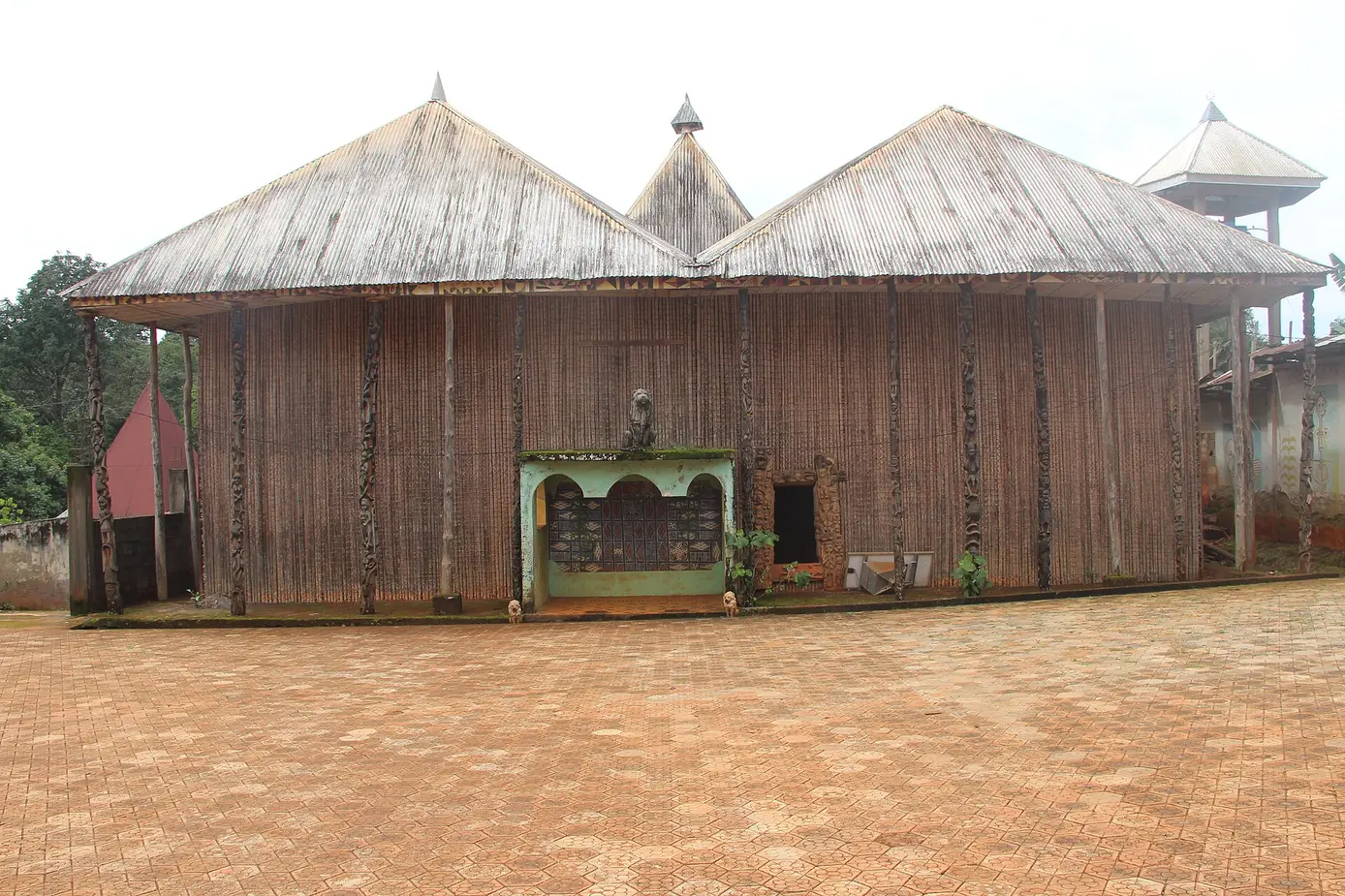 Sacred house, Baham. Photo: DILANE MIYO L'ANALYSTE, CC BY-SA 4.0, via Wikimedia Commons.
The great house, symbol of the Grassfields
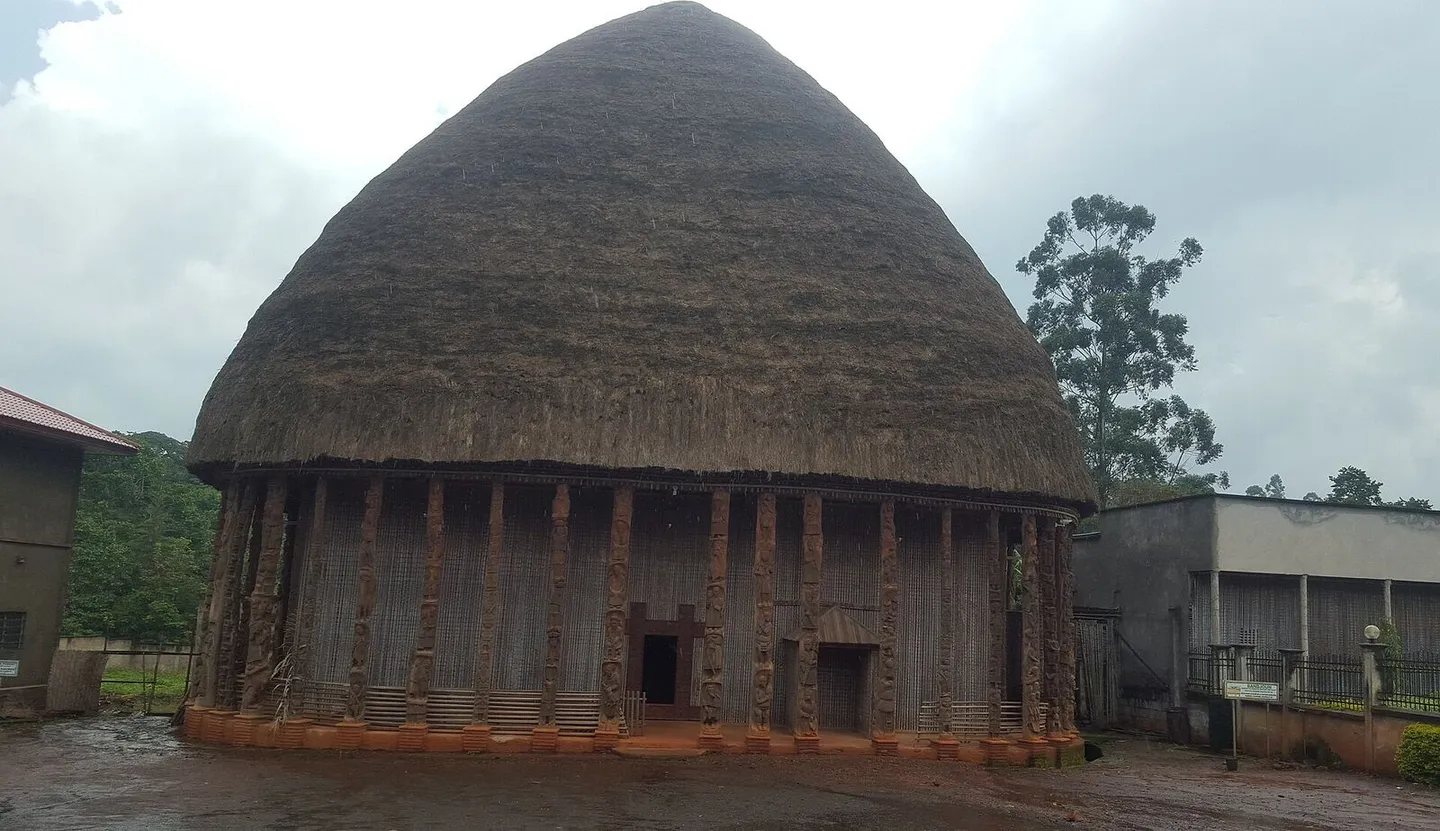
The great house is the most important building of a chiefdom: the chief meets his notables there and rites take place there. According to the file submitted to UNESCO, it stands 15 to 30 m high, with bamboo-raffia walls and a conical thatched roof; the whole community helps build it.
On 2 February 2018, Cameroon added "The Great House in the Traditional Chiefdom of the Grassfields" to the World Heritage Tentative List, a serial property of 14 great houses, including those of Bafoussam, Bandjoun, Baleng, Baham, Bamendjou, Batoufam, Bapa and Bamendjinda. The Tentative List is the step before a possible inscription.
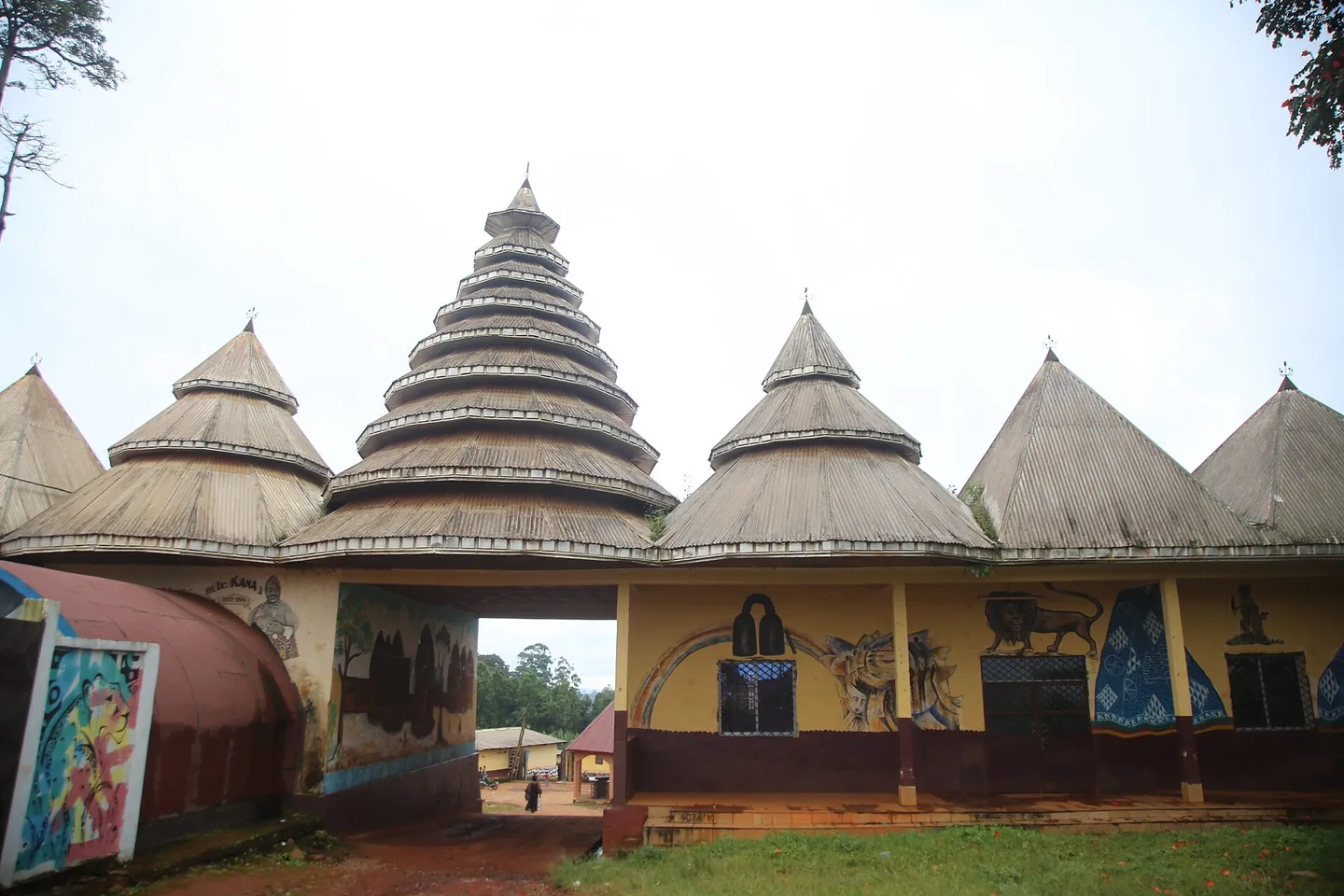 Bafou chiefdom houses. Photo: Simbanematick, CC0, via Wikimedia Commons.
Bamileke arts: ndop, beads, masks and thrones
Ndop is a cotton cloth dyed with indigo. Before dyeing, raffia threads protect parts of the fabric; once removed, they leave white geometric or figurative patterns. It is worn at funerals and chiefs' ceremonies; Bandjoun and Baham are among the places where it is made.
Chiefdom museums also show beaded thrones and statues, masks, headdresses and ironwork. The Bandjoun museum's theme is "Forge, Art and Power", and Baham shows the exhibition "Art, Memory and Power".
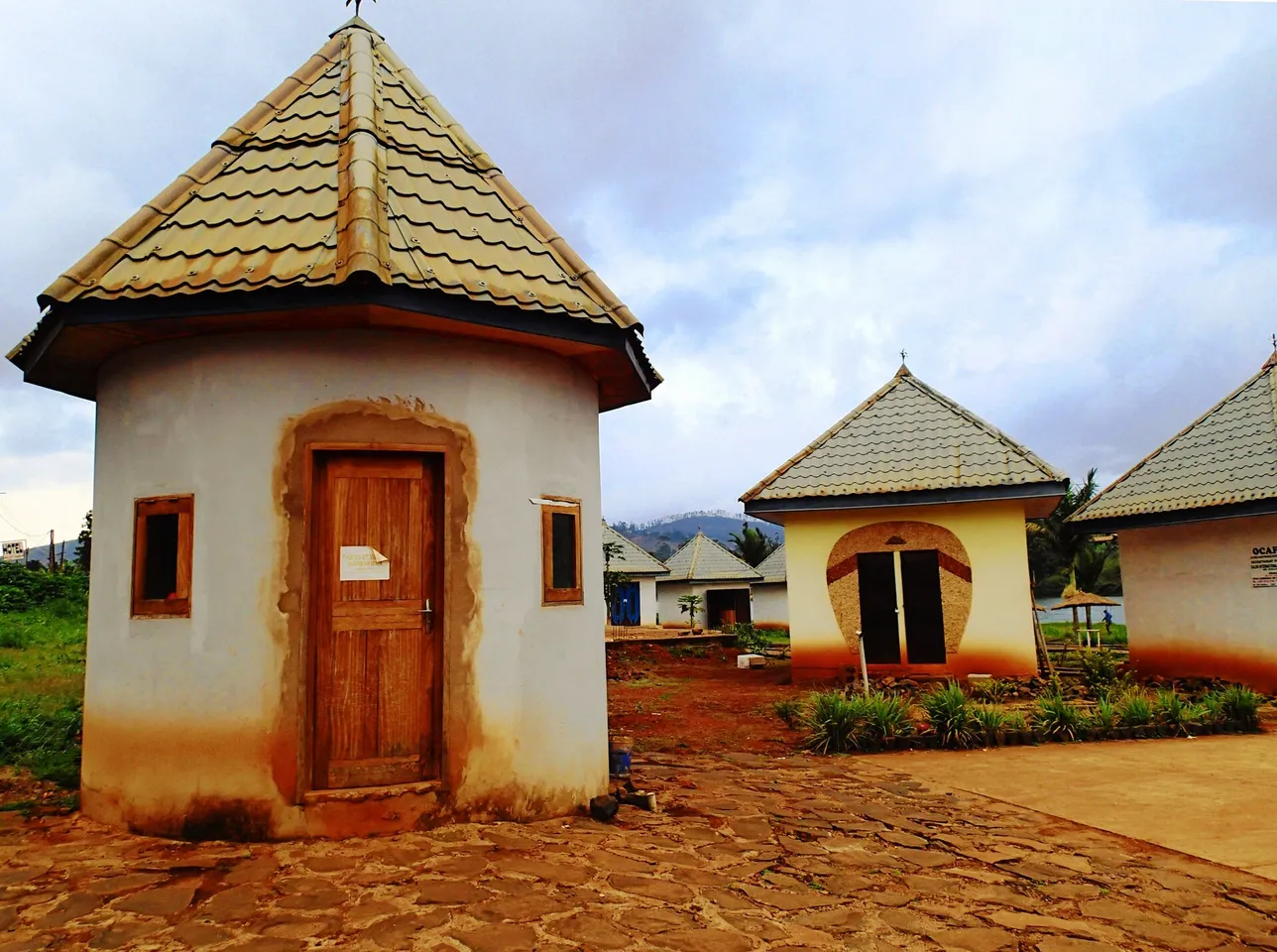
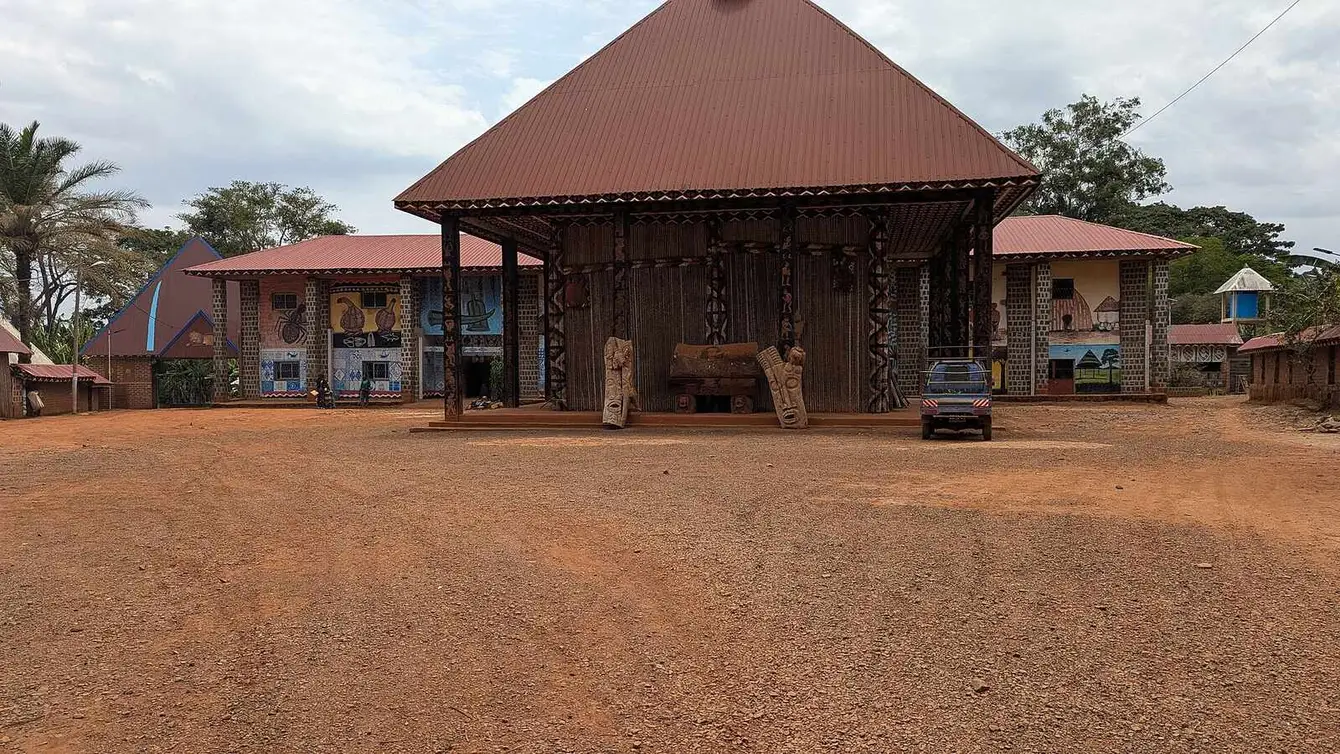 People's house, Batoufam. Photo: MELIH GLAGYS, CC BY-SA 4.0, via Wikimedia Commons.
Bamileke languages
Bamileke languages belong to the large Niger-Congo family. Each area has its own:
- Ghomala' in the Mifi, Koung-Khi and Hauts-Plateaux (Bafoussam, Bandjoun, Baham);
- Yemba in the Menoua, around Dschang;
- Medumba in the Ndé, around Bangangté and Tonga;
- Nufi (Fe'efe'e) in the Haut-Nkam, around Bafang;
- Ngiemboon, Mengaka and Ngombale in the Bamboutos.
French is the common language for visitors.
Farming and food
Family farming combines maize, beans, taro, cocoyam, yam, groundnuts, potatoes, bananas and vegetables, often on the same plot. The markets of the West's towns depend on it.
Signature Bamileke dishes include kondrè, nkui and yellow sauce.
Bamileke festivals
The chiefdoms hold major cultural festivals, often every two years:
- the Nyang Nyang in Bafoussam, which initiates young Fussep from November to February;
- the Medumba festival in Bangangté, a celebration of Medumba culture;
- the Msem Todjom in Bandjoun, an arts and culture festival whose 9th edition took place from 4 to 11 November 2023.
Funerals are also major moments of Bamileke life: families honour their ancestors, often long after a death.
Where to discover Bamileke culture
- The Dschang Museum of Civilisations, opened in 2010, has a space devoted to the Grassfields chiefdoms.
- The chiefdom museums of Bandjoun, Baham and Batoufam.
- Lake Baleng, a sacred site of the Baleng chiefdom.
- Bandjoun Station, for contemporary art.
To combine these visits, follow the Chiefdoms Route over three to five days.
 Museum of Civilisations, Dschang. Photo: SarahTz from Richmond, United Kingdom, CC BY 2.0, via Wikimedia Commons.
Visiting with respect
A chiefdom is a customary place: follow the guide, ask before taking photos and do not try to enter sacred forests or houses. The rites of customary societies are not shared with visitors.
On safety, France's Foreign Ministry (updated 05/11/2026, read 16/11/2026) advises against travel, unless strictly necessary, to the parts of the West bordering the North-West and South-West regions, the surroundings of Lake Bamendji (20 km from the shore) and the D66 road between Kouomboum and Kouhouat: this includes the Bamboutos and the parts of the Menoua near the South-West. Bafoussam, Bandjoun and Dschang are outside these areas.
A good way to understand Bamileke country is to spend a few days there, between Bafoussam, Bandjoun and Dschang, in the dry season from November to February. Follow our Chiefdoms Route itinerary and start with Bandjoun.
Questions Fréquemment Posées
Where do the Bamileke live?
In seven departments of Cameroon's West region (Bamboutos, Haut-Nkam, Hauts-Plateaux, Koung-Khi, Menoua, Mifi, Ndé), as well as in the big cities and abroad.
Are the Bamileke and the Bamoun the same people?
No. They are two neighbouring Grassfields peoples with shared features, but different kingdoms, languages and histories. The Bamoun live in the Noun, around Foumban.
Is the great house a UNESCO site?
Since 2 February 2018 it has been on the World Heritage Tentative List, with 14 Grassfields great houses. It is not yet inscribed.
What is ndop?
A cotton cloth dyed with indigo, with white patterns, worn at funerals and chiefs' ceremonies.
Which festivals can you see in Bamileke country?
The Nyang Nyang in Bafoussam, the Medumba festival in Bangangté and the Msem Todjom in Bandjoun, usually every two years.
Which languages are spoken in Bamileke country?
Several related languages: Ghomala' (Mifi, Koung-Khi, Hauts-Plateaux), Yemba (Menoua), Medumba (Ndé), Nufi (Haut-Nkam) and others in the Bamboutos. French is the common language.
What do people eat in Bamileke country?
Kondrè, nkui and yellow sauce are among the signature dishes; maize, taro and groundnuts are the base of farming.
Mots-clés
Ces articles peuvent vous intéresser
Catégorie
Culture
Réf: BGB0F0D
Avis (0)
Laisser un commentaire
Incluez l'indicatif pays, ex: +237 612345678