
Western Cameroon's Chiefdoms: Which Ones to Visit and How


In western Cameroon, the chiefdom is at once the seat of the chief's power, the heart of village life and, often, a museum. About a dozen are open to the public, linked by the Chiefdoms Route (Route des chefferies) run by the West Regional Tourism Office. Each one has chosen a theme: blacksmithing in Bandjoun, architecture in Batoufam, nature in Bapa. Here is which ones to visit, what you will see there, what it costs and how to behave.
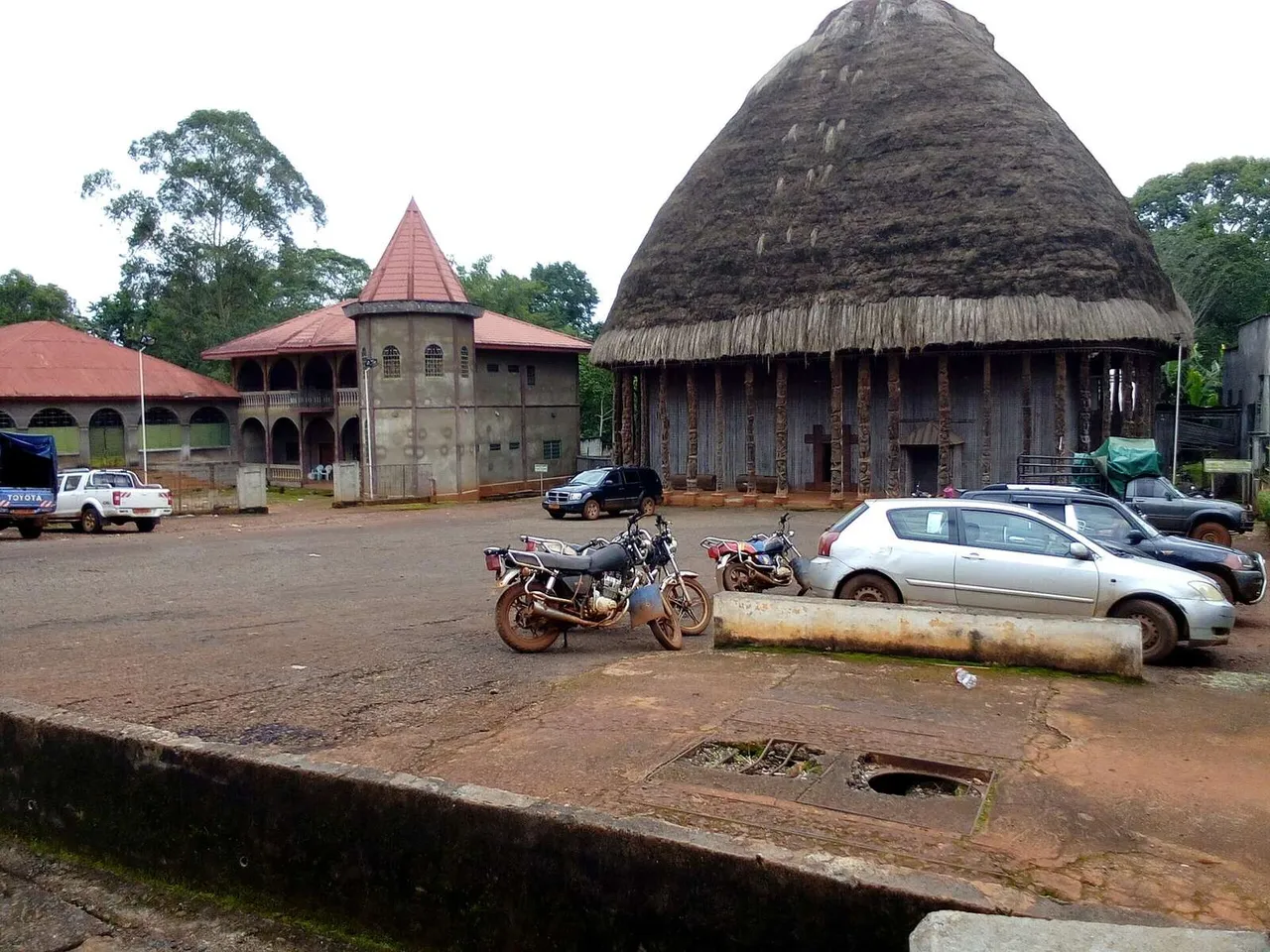
What is a chiefdom?
Chiefdoms are a living testimony to the country's history before colonization. They organize a society based on family and clan, around a chief. Each has its own rites, festivals and sacred objects, which community museums, called “heritage huts,” present to the public.
The great hut, heart of the chiefdom
In the Grassfields chiefdoms, the great hut (grande case) is a kind of sacred palace-temple. It can reach 30 m in height and 20 m in width. You can recognize it by its conical thatched roof, supported by a bamboo and raffia frame, and by its posts carved with geometric or mythological motifs.
The Chiefdoms Route
More than an itinerary, the Chiefdoms Route is a program of the West Region: it funds site maintenance, the conservation of collections and the promotion of crafts, so that the chiefdoms can welcome visitors. The Regional Tourism Office's catalog offers a five-day version of it, starting from Douala or Yaoundé.
The chiefdoms open to the public, in one table
| Chiefdom | Museum theme | Distance from Bafoussam | Adult admission (foreign visitor) | Opening hours |
|---|---|---|---|---|
| Bandjoun | Forge, art and power | 20 km | 2,000 FCFA | Monday–Friday 9 a.m.–5 p.m.; weekends 10 a.m.–5 p.m. |
| Batoufam | Architecture, power and social cohesion | 40 km | 5,000 FCFA (3,000 FCFA for Cameroonians) | Daily 9 a.m.–6 p.m. |
| Baham | Art, memory and power | 22 km | 3,000 FCFA (2,000 FCFA for nationals) | Monday–Friday 9 a.m.–5 p.m.; weekends 10 a.m.–5 p.m. |
| Bapa | Man, nature and beliefs | 35 km | 3,000 FCFA (2,000 FCFA for nationals) | Daily 9 a.m.–6 p.m. |
| Bamendjou | A chiefdom of creators | 30 km | 2,500 FCFA | Daily 8:30 a.m.–5:30 p.m. |
| Bamougoum | Calabashes | 15 km | 2,000 FCFA (1,000 FCFA for nationals) | Tuesday–Sunday 8:30 a.m.–6 p.m. |
| Bamendjinda | Arts, traditions, slavery | 20 km | 2,000 FCFA | Tuesday–Sunday 8:30 a.m.–5:30 p.m. |
| Bangoua (Bangwa) | Arts, hunting and traditions | 40 km | 2,000 FCFA | Tuesday–Sunday 9 a.m.–12 p.m. and 1 p.m.–5 p.m. |
| Bafoussam | Customs, nature, tradition and modernity | In town, opposite the bus station | 2,000 FCFA | Monday–Friday 9 a.m.–5 p.m.; weekends 10 a.m.–5 p.m. |
| Bafou | Totemism | 49 km | Not provided | Not provided |
| Bamesso | Mourning and funeral rites | Near Bamendjinda | Not provided | Not provided |
| Palace of the Bamoun kings (Foumban) | The history of the Bamoun kingdom | 70 km | 2,000 FCFA | Daily 8:30 a.m.–5:30 p.m. |
Sources: Catalogue Tourisme Ouest-Cameroun 2025-2026; Foumban and Bafoussam: indicative prices, to be checked locally. Cameras and video cameras are charged extra, from 1,000 to 10,000 FCFA depending on the chiefdom.
Bandjoun, Batoufam and Baham: the three most sought-after
Bandjoun: the Nemo great hut and the forge
Founded by Prince Notchwegom, who came from Baleng, the Bandjoun chiefdom lies about twenty kilometers south of Bafoussam. At the end of an avenue lined with more modest huts, the Nemo great hut is striking for its pointed-arch roof, supported by carved columns. After a fire, this roof was rebuilt in 2023, without a crane or scaffolding. The neighboring museum, on the theme “Forge, Art and Power,” brings together nearly 400 objects and 25 panels. The visit is guided; the sacred forest is off-limits to the public. Nearby, Bandjoun Station, a contemporary art center founded by Barthélémy Toguo, rounds out the day.
Batoufam: an open-air museum
Founded in the 18th century, the kingdom of Batoufam has turned its labyrinthine palace into an open-air museum dedicated to traditional architecture, to be visited alone or with a guide. The chiefdom also offers guest rooms, a restaurant overlooking the royal pond and a craft shop: it is one of the few where you can stay overnight.
Baham: art, memory and power
Burned several times between 1955 and 1960, the Baham chiefdom has kept its typical entrance, with carved doors and pillars. Its museum, opened in 2003 with an Italian NGO, presents nearly 300 objects and holds introductory craft workshops every summer. Baham still produces ndop, the traditional dyed cotton cloth of the West. Nearby, the Fovu cave is a remarkable field of rocks.
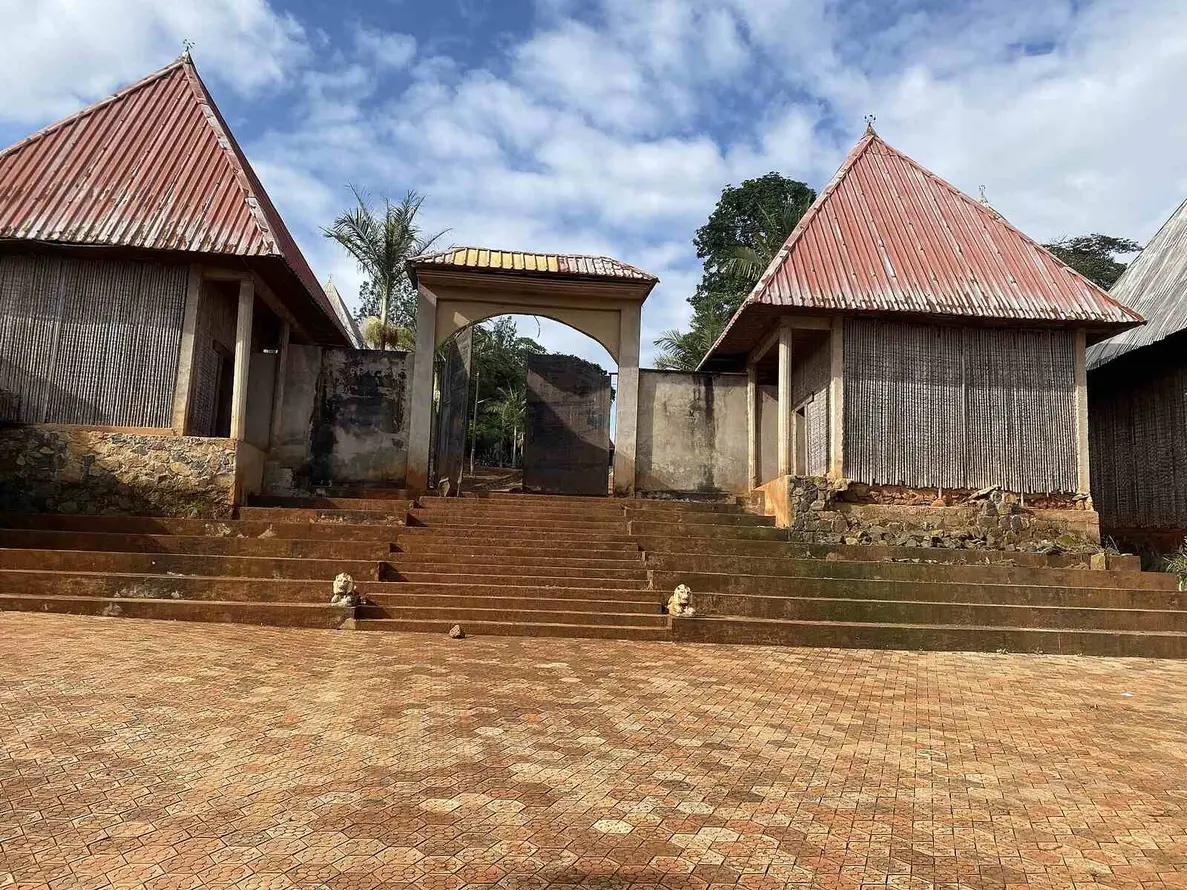 The entrance to the Baham chiefdom.
The other chiefdoms on the Route
Bapa: nature and the sacred tree
About fifteen kilometers from Baham, Bapa is recognizable by its pointed roofs painted green. Its museum is organized into seven areas, from the history of the chiefdom to traditional medicine, up to an area laid out around the sacred tree. Hikes in the village and a restaurant serving local specialties on site.
Bamougoum and Bamendjou: calabashes and creators
About 15 km west of Bafoussam, the Bamougoum heritage hut displays about a hundred calabashes, used for cooking, art or initiation. Farther along the same road, Bamendjou is the “chiefdom of creators”: its successive chiefs were weavers, blacksmiths or raffia craftsmen, and its museum presents these skills.
Bamendjinda and Bamesso: memory of slavery and funerals
Founded at the end of the 17th century by Chief Mbougong, Bamendjinda is home to a museum dedicated to slavery, both customary and transatlantic. Nearby, the Bamesso exhibition explains mourning and funeral rites, and the passage of the deceased to the rank of ancestor.
Bafou and Fongo-Tongo: totems and sacred forest
Founded around the 16th century by the hunter Tala, the Bafou chiefdom rebuilt its heritage hut after the looting during the independence struggles; its exhibition is about totemism. It can be combined with the Djutitsa tea plantations. Near Dschang, the sacred forest of the Fongo-Tongo chiefdom is home to the Mami Wata waterfall, 80 m high (access 2,000 FCFA).
Bangoua and Bafoussam
40 km south of Bafoussam, Bangoua (Bangwa) has hunting as its theme, in tribute to its founding ancestor Leukemegne; the visit continues along a trail of the hunter's plants. In town, opposite the bus station, the Bafoussam chiefdom shows its museum, the palace paths and the compounds of the notables.
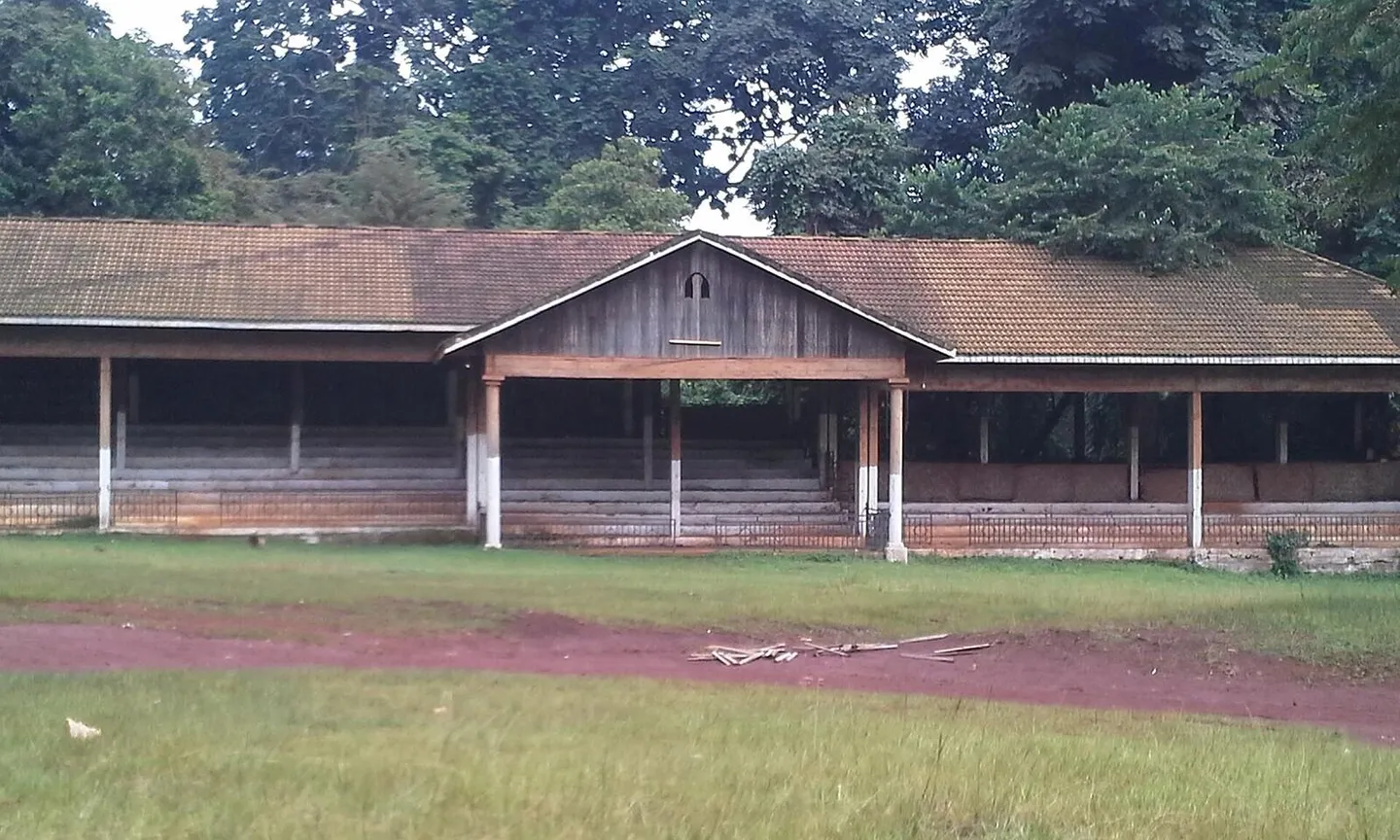 The public square of the Bafoussam chiefdom.
Foumban and the palace of the Bamoun kings
Foumban is not a Bamiléké chiefdom but the capital of the Bamoun kingdom, founded in 1394 by Ncharé Yen. King Njoya, who reigned from 1889 to 1933, created the shumom script, made up of more than 510 signs. His palace, built from 1917 to 1921, houses the royal museum: headdresses, masks, thrones, coronation robe. Open daily from 8:30 a.m. to 5:30 p.m.; admission 2,000 FCFA; photos outside only. Also take time for the artisans' street, where you can watch bronze being cast using the lost-wax method. Every two years, the Nguon brings the Bamoun people together around their sultan (see our article on the festival).
How to visit a chiefdom: the rules
- Check in at the reception: the visit is done with the chiefdom's guide, or with its consent.
- Photos are charged and regulated: from 1,000 to 3,000 FCFA for a camera in general, more for a video camera; in Foumban, photos outside only. Always ask before photographing a person or an object.
- Sacred forests and some huts are off-limits to visitors: follow the guide and do not stray from the route.
- Several chiefdoms close on Mondays (Bamougoum, Bamendjinda, Bangoua).
- Pay in cash, in FCFA. Most sites offer discounts for children, students and groups.
- Funerals and traditional festivals mostly take place in the dry season. If you are invited, follow your host.
How many days should you plan?
Allow about three days to see the main natural sites and the best-known chiefdoms. Allow five to six days, staying based in Bafoussam for example, to visit the 14 chiefdoms open to the public and take the walks in the surrounding area. Dschang is the other convenient base, with the Museum of Civilizations as a first visit to understand the chiefdoms.
Safety in the West
The West is not one of the regions advised against, except for the areas close to the Northwest and Southwest, the 20 km around Lake Bamendjing (including Lake Petpenoun) and the D66 road (France Diplomatie, update of November 5, 2026). Before heading toward Mbouda or west of Dschang, check the official map. Drive during the day.
For a first visit, start with the Museum of Civilizations in Dschang, then Bandjoun, Batoufam and Baham, before finishing in Foumban. Three days are enough for the essentials; five to six days for the whole Route.
Our day-by-day itinerary: the Chiefdoms Route in 3 to 5 days. To go further: Bamileke country, culture and traditions and things to do in Bandjoun.
Questions Fréquemment Posées
How many chiefdoms can you visit in the West?
About a dozen are open to the public. The Regional Tourism Office's catalog details ten of them, plus the palace of the Bamoun kings in Foumban.
Can you stay overnight in a chiefdom?
Yes, in Batoufam: the chiefdom offers guest rooms and a restaurant on the edge of the royal pond.
How much does a chiefdom visit cost?
From 2,000 to 5,000 FCFA for a foreign adult, less for Cameroonians and students, plus the photo fee.
Is there a list of chiefdoms in PDF?
Yes: the table in this article, with themes, prices, opening hours and distances, can be downloaded as a PDF at the bottom of the page.
Mots-clés
Ces articles peuvent vous intéresser
Catégorie
Culture
Réf: BGC33E5
Avis (0)
Laisser un commentaire
Incluez l'indicatif pays, ex: +237 612345678