
Kribi: The Pearl of the Gulf of Guinea Between Beaches and Industrial Growth
A coastal town in Cameroon's South Region, about 150 km from Douala, Kribi is the country's leading beach resort. It offers fine-sand beaches lined with coconut palms, the warm waters of the Atlantic, fish and seafood caught the same day, and one of Africa's rarest natural sights: the Lobé Waterfalls, which pour straight into the ocean. People come for a weekend from Douala or Yaoundé, or for a longer stay.
Kribi, Cameroon: beaches, waterfalls and sea turtles
The beaches stretch for kilometres on either side of town, from Londji in the north to Grand Batanga and Ebodjé in the south. The highlight is the mouth of the Lobé River, where the river cascades onto the sand before meeting the sea; local boatmen offer canoe trips upriver into the forest. Further south, the village of Ebodjé is known for sea turtle watching, as the turtles come ashore to lay their eggs during the nesting season. The nearby forest is home to Indigenous Bagyeli communities, whom visitors can meet with a local guide, respecting their rules.
From fishing port to economic hub
Once a fishing port, the town of Kribi has been transformed by its deep-water port, the first in the country, able to handle the largest ships. It serves as a transshipment hub for Central Africa and attracts industry (cocoa processing, cement, flour milling), and with it business travellers. Industrial activity stays around the port, away from the town centre, so the coast keeps its seaside character.
Where to stay
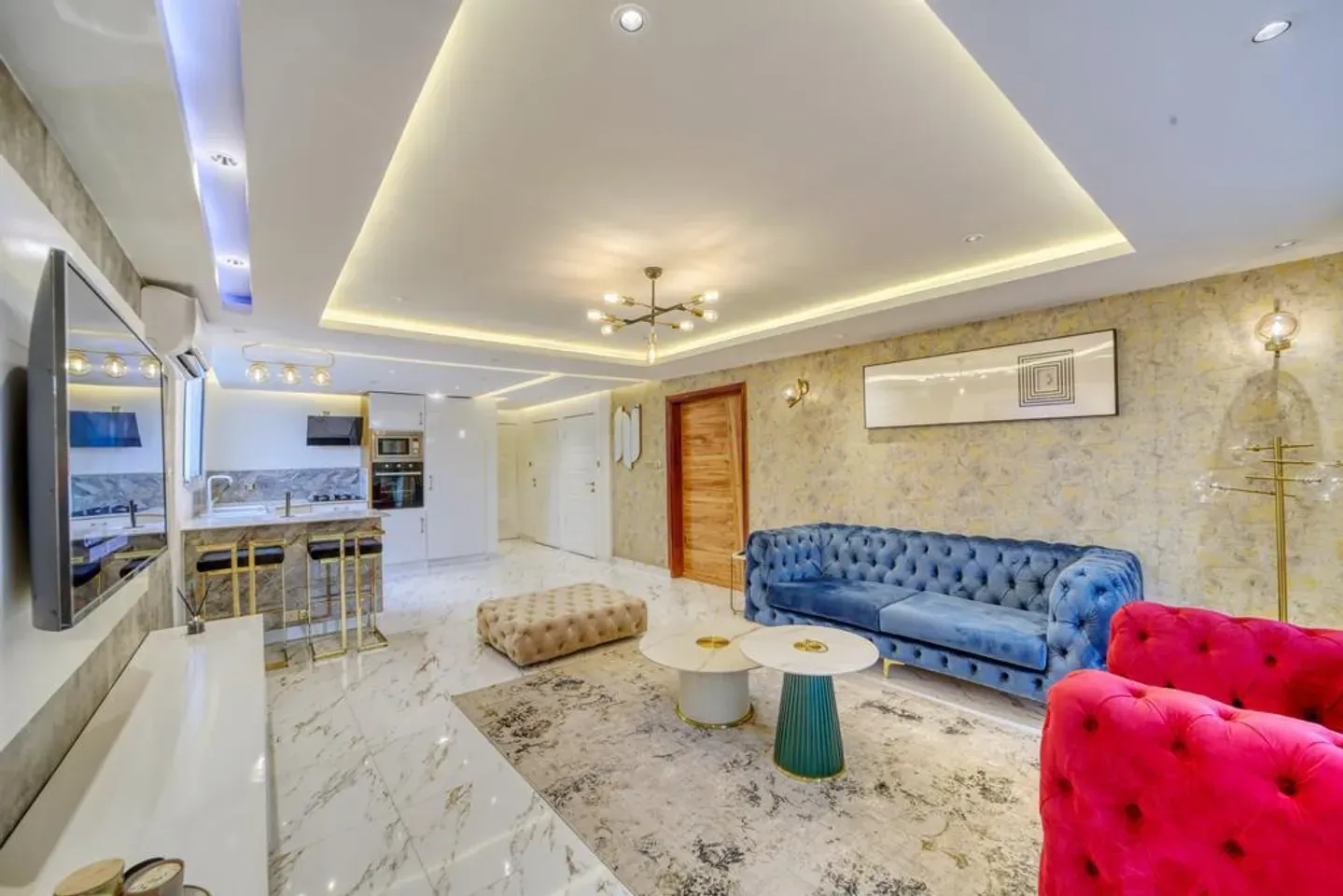
Accommodation is concentrated along the seafront: furnished apartments and residences for family stays, from studios to villas with sea views, beach hotels for weekends, and a few business addresses linked to the port. Before choosing, check the actual distance to the beach and the air conditioning, and watch the video tour when the listing has one.
Where to eat
The local speciality is charcoal-grilled fish and seafood caught the same day (prawns, lobster), served with your feet in the sand at beach huts or at the fishermen's landing stage in the late afternoon.
Getting there and around
By road from Douala, allow about 3 to 4 hours. In town, taxis and motorbike taxis are fine for short trips; a rental car is the most practical way to reach the more distant beaches, the falls and Ebodjé.
See the Lobé Waterfalls and take a canoe upriver; swim at Londji or Grand Batanga; watch sea turtles at Ebodjé; go out with local fishermen; meet Bagyeli communities with a guide. Enough to combine beach, nature and culture in a single trip.
Good to know before you go
Money: bring cash in CFA francs; mobile money (Orange Money, MTN MoMo) is widely used, bank cards much less so. Health: the whole region is a malaria area, so use repellent and sleep under a mosquito net. Swimming: the ocean can have strong currents; swim on busy beaches, never alone, and follow local advice. Electricity: power cuts happen; ask whether the accommodation has a generator.
Real estate
A fast-growing market driven by tourism and the port, with strong demand for seafront homes and land.
Getting to Kribi
All the usual routes go through Edéa: about 180 km from Douala (2 h 30 to 4 h depending on traffic), about 285 km from Yaoundé (3 h 30 to 5 h). Agencies serve Kribi all year round, by bus and bush taxi. The Edéa–Kribi road has been under rehabilitation since 2025: expect delays. All the details are in our article on getting to Kribi.
Getting around
Motorbike taxis are the most common option, about 200 FCFA a ride in town (indicative fare): ask the driver to go slowly. For the Lobé Falls, Grand Batanga or Londji, negotiate a taxi for half a day.
Weather and best time to visit
The climate is hot and humid all year round. For the beach, aim for the dry season, from November to March. The Lobé Falls are at their strongest from September to November, and sea turtles come to lay their eggs at Ebodjé from November to January.
Kribi's beaches, from north to south
Kribi's coastline is not a single beach but a string of sandy, palm-lined beaches, each with its own feel:
- Londji, 18 km to the north, by the toll station: a small-scale fishing village where grilled fish is served on the beach, facing the dugout canoes, with mangroves still in place.
- N'Goyé and Mboa Manga, in town: the liveliest beaches, close to the hotels and restaurants. At the Mboa Manga landing stage, fishermen come back in the morning.
- The Lobé Falls, about ten kilometers to the south: the river falls straight into the sea, over more than 100 m wide. A canoe ride at the foot of the falls is recommended; the flow is strongest from September to November.
- Grand Batanga, Eboundja and the Rocher du Loup: a wilder coast, with fine, wilder beaches; part of it has suffered from the port's trucks, but a few beaches are still good for a picnic.
- Ebodjé, about 50 km toward Campo: almost empty beaches and a protection site for leatherback and olive ridley turtles, which come to lay their eggs from November to January.
Currents vary from beach to beach and with the tides: ask the fishermen or your hotel where it is safe to swim. Each beach is described in our article on Kribi's beaches.
From the German lighthouse to the deep-sea port
Kribi is a town with a maritime history. The lighthouse, built in 1906 by the German colonial administration, stands on the south bank of the Kienké: a masonry tower of about fifteen meters that guided ships to the old river port, from which cocoa, timber, coffee, rubber and ivory were shipped.
More than a century later, the Port Autonome de Kribi, a deep-sea port located south of the town, about 35 km away, has been in service since March 2, 2018; its second phase was inaugurated on May 9, 2025. Kribi thus lives between two worlds: small-scale fishing and beach huts on one side, one of the country's largest port projects on the other. For a quiet stay, the beaches in the center and to the north are away from the port's activity.
Campo Ma'an, the forest by the ocean
South of Kribi, the Campo road leads to Campo Ma'an National Park, created by decree on January 6, 2000 over 264,064 hectares, in the Océan and Vallée du Ntem departments. Its dense forest is home to large mammals, including forest elephants and gorillas. Since 2018, the park has been on UNESCO's World Heritage tentative list: it is a candidate, not yet inscribed. A visit is best planned with a guide; other outings around Kribi are listed in things to do in Kribi.
FAQs
Showing 10 of 13 FAQs
What are the must-see sights?
The Lobé Waterfalls, the beaches of Londji and Grand Batanga, charcoal-grilled fish at the landing stage, the sea turtles of Ebodjé during the nesting season, and the fishing villages.
Why is the port so important?
Unlike Douala's, it is a natural deep-water port able to handle the largest ships. It serves as a transshipment hub for Central Africa and attracts industry, driving growth across the region.
Is it an industrial town?
Not at all. Kribi retains its soul as a coastal town. Industrial activity is concentrated around the port, while the city center and coastal areas to the south offer a peaceful living environment and preserved landscapes, creating a unique duality.
How do I get to Kribi from Douala?
By road, allow about 3 to 4 hours. A rental car is recommended to explore the coast.
What is the local food speciality?
Charcoal-grilled fish and fresh seafood, served on the beaches.
When is the best time to go?
Preferably in the dry season, to make the most of the beaches.
How far is Kribi from Douala?
About 180 km via Edéa, 2 h 30 to 4 h by road depending on traffic.
What is the weather like in Kribi?
Hot and humid all year round; the dry season, from November to March, is the best time for the beach.
How do I get around Kribi?
By motorbike taxi (about 200 FCFA a ride in town) or by negotiated taxi for outings.
What is the most beautiful beach in Kribi?
It depends on what you are looking for. For a lively atmosphere and grilled fish: N'Goyé and Mboa Manga, in town. For the spectacle: the Lobé Falls, which fall into the sea. For peace and quiet: Grand Batanga, Eboundja and Ebodjé.