
Deido roundabout, Douala: the district, its landmarks and where to stay
Deido is one of Douala's historic districts, north of Akwa, in the Douala I district. It is also one of the city's major Duala cantons, along with Akwa (Bonambela), Bell, Bele Bele (Bonabéri), Bakoko Wouri, Bassa. Working-class, dense and lively, it is known throughout Cameroon for its roundabout, through which much of the traffic heading for the bridges over the Wouri passes. For a traveller, it is a central, lively district close to the business centre, with furnished flats at reasonable prices.
The Deido roundabout and La Nouvelle Liberté
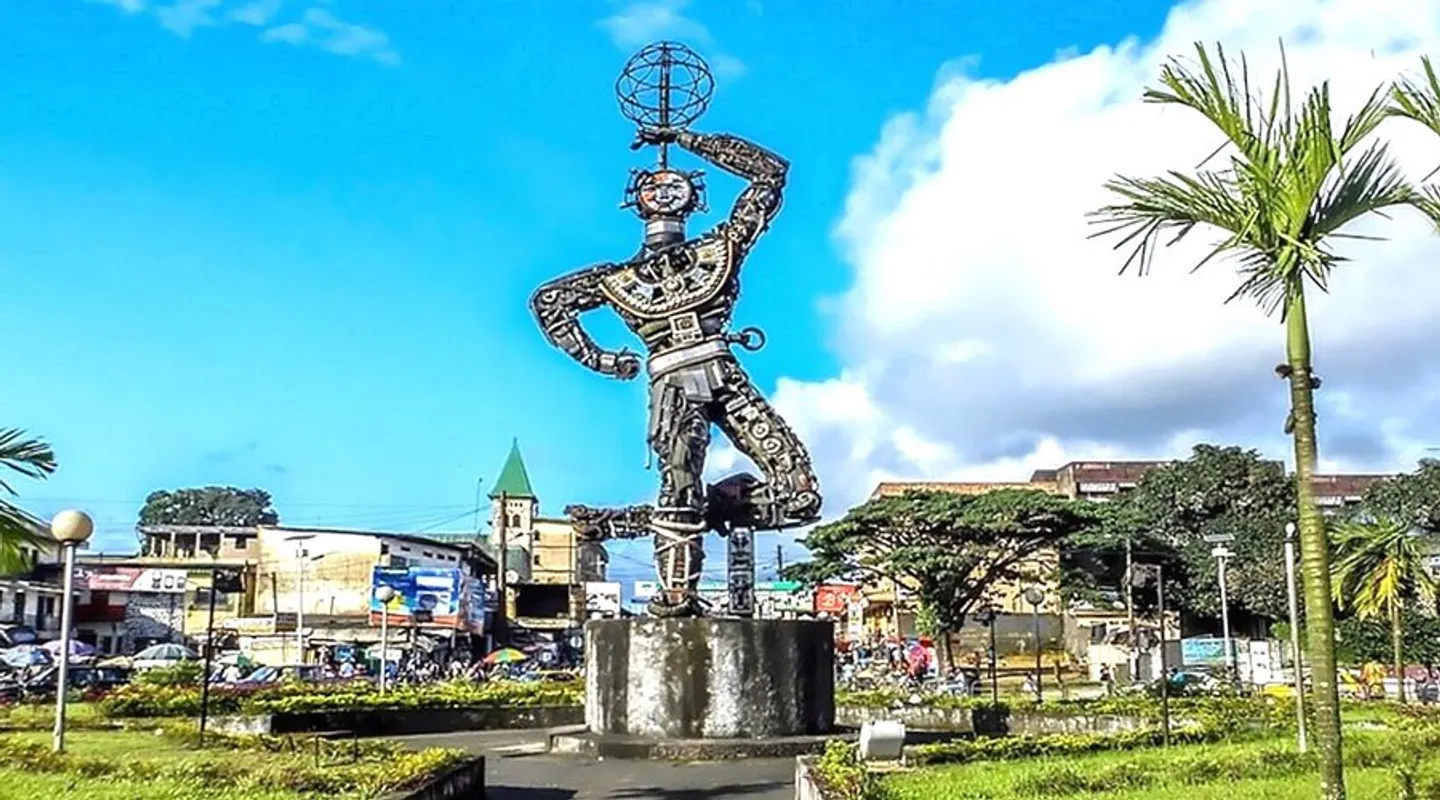
In the middle of the roundabout stands La Nouvelle Liberté, a monumental statue by the Cameroonian artist Joseph-Francis Sumégné, made from salvaged pieces of metal. Commissioned by the public art association doual'art, it was controversial at first before becoming one of Douala's symbols. The Deido roundabout is everyone's landmark: people meet there, and taxis and motorbike taxis use it to give directions. At rush hour, traffic towards the bridge can be very slow, so leave extra time if you are heading for Bonabéri, the airport or a coach station.
Finding your way: New-Deido, Bessengué, Bonamouti
The district is divided into several areas. Bessengué is known for its traffic lights, another landmark widely used to give an address. In Bonamouti, the Jardin sonore, an open-air sound art installation supported by doual'art, is worth a detour. The Deido chieftaincy is a reminder that the district is still Duala land, with its families, traditions and ceremonies. As everywhere in Douala, addresses are given by landmarks rather than street numbers: note the junction, traffic lights or well-known building closest to your accommodation.
Local life
The district's market supplies the whole northern part of the city centre. Collège Alfred Saker, one of the city's well-known schools, is located here. In the evening, Rue de la Joie takes over: bars, grills and music until late at night. It is one of Douala's liveliest places for a night out, if you like noise and crowds.
Where to stay
The district suits those who want to be central without paying Bonapriso or Bonanjo prices: Akwa is a few minutes away, and so are the bridges. Options range from furnished studios to family flats, with a few hotels. If you want quiet, avoid the streets near Rue de la Joie and the roundabout, and ask whether the accommodation has a generator and a water tank.
Where to eat
Grilled fish, soya (spiced grilled meat) and Cameroonian dishes in the district's small restaurants and maquis; for a quieter evening, Akwa's restaurants are close by.
Getting around
Taxis and motorbike taxis are everywhere; always give a landmark (Deido roundabout, Bessengué traffic lights, the market) rather than a street. At rush hour, allow plenty of time to cross the Wouri or reach the airport.
Good to know
Money: mobile money (Orange Money, MTN MoMo) is accepted almost everywhere, cards rarely; keep a little cash for taxis and markets. In the evening: to get back from Rue de la Joie, take a taxi rather than walking, and carry only what you need. Electricity and water: cuts happen; a generator and a water tank make all the difference on a long stay.
FAQs
Showing 4 of 4 FAQs
Why is the Deido roundabout so well known?
It is one of Douala's busiest junctions, on the road to the Wouri bridges, and it holds La Nouvelle Liberté, Joseph-Francis Sumégné's statue that has become a symbol of the city.
What is there to see in the district?
La Nouvelle Liberté on the roundabout, the Deido chieftaincy, the Jardin sonore in Bonamouti and the market. In the evening, Rue de la Joie.
Is it a good district to stay in?
Yes, if you want a central, lively district that is cheaper than Bonapriso or Bonanjo. You have to accept noise and traffic, especially near the roundabout.
How do I give an address in the district?
By landmarks: Deido roundabout, Bessengué traffic lights, the market. Taxis and motorbike taxis find their way like this.