
The Ngondo, the Sawa Worship of Water Oracles: Humanity's Heritage Explained


Every year, from September to the first Sunday of December, the Sawa of the Cameroonian coast celebrate the Ngondo. For weeks, a caravan travels through the cantons; then, on the banks of the Wouri River in Douala, a priest dives with a sacred vase and returns with the message of the water oracles, which will guide the community until the following year.
In December 2024, UNESCO inscribed "Ngondo, worship of water oracles and associated cultural traditions among the Sawa" on the Representative List of the Intangible Cultural Heritage of Humanity. This article draws on the official nomination file, the national inventory record and the Committee's decision to explain what the Ngondo is, who keeps it alive, what it means and how to attend it respectfully.
What UNESCO recognized in December 2024
The Intergovernmental Committee for the Safeguarding of the Intangible Cultural Heritage, meeting for its 19th session in Asunción (Paraguay) in early December 2024, decided to inscribe the Ngondo on the Representative List (decision 19.COM 7.B.28, file No. 02140 submitted by Cameroon). It is the second Cameroonian element inscribed, after the Nguon of the Bamoun people in 2023.
The Committee found all five criteria of the List met: the Ngondo is living heritage carried by the whole Sawa community; its inscription raises the visibility of intangible heritage; safeguarding measures are planned; the nomination was the community's own initiative; and the element has been on the national inventory since November 2019. UNESCO links it to two domains of the 2003 Convention: social practices, rituals and festive events, and knowledge and practices concerning nature and the universe.
The official record is online on UNESCO's intangible cultural heritage website.
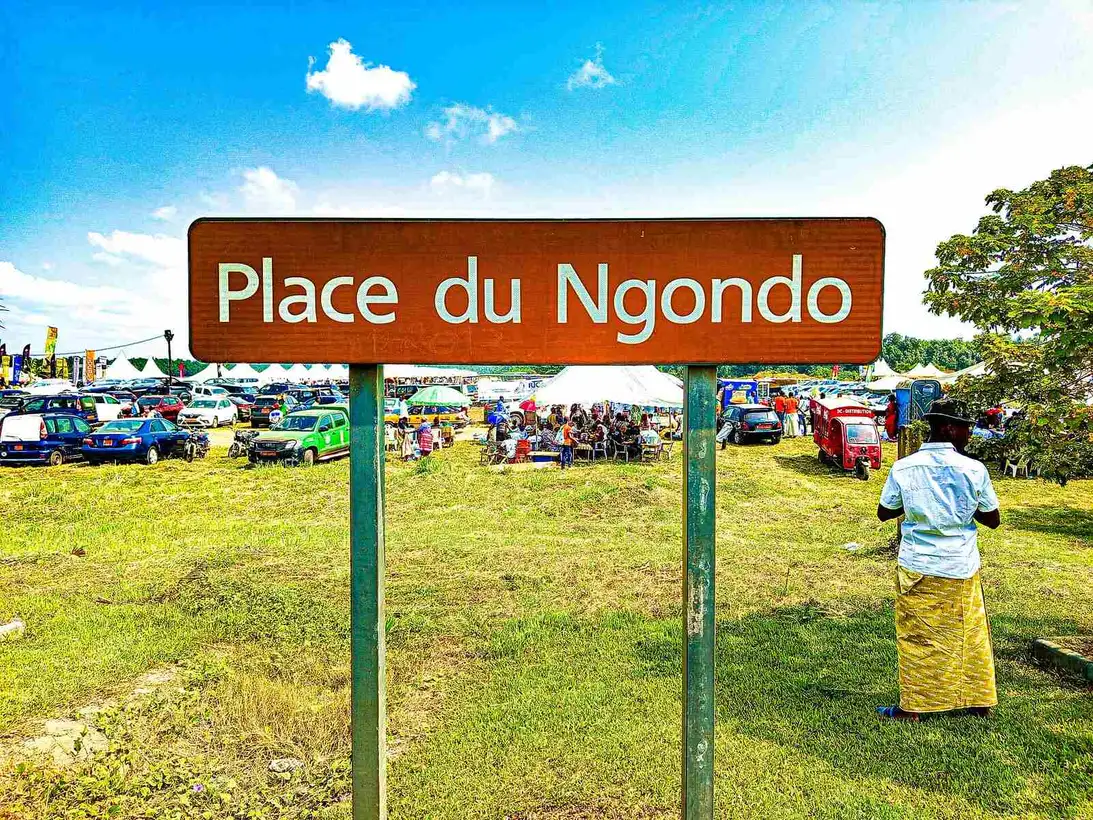 The Ngondo square on the banks of the Wouri, where the rite takes place, in 2024.
The Sawa, a people of the water
According to the nomination file, the Sawa are a community of about five million people, made up of ethnolinguistic groups living along the Cameroonian coast, from Campo to Mamfé, in the Littoral, South-West and South regions. They share a common language of communication, Duala, and a common identity, culture and worship.
Eighteen cantons take part directly in the Ngondo: Bell, Akwa, Deïdo, Bèlè-Bèlè, Bassa'a, Bakoko, Bonkeng, Bodiman, Wouri-Bwele, Wouri-Bosua, Bakweri, Nkongsamba, Malimba, Yabassi, Mongo, Limbe, Batanga and Bakossi. But the file insists that today, Douala residents of every origin, people of the Littoral, of Cameroon and of the diaspora identify with the Ngondo and also await the oracles' message.
For the Sawa, water is the "nurturing mother" and the home of the deities. The Ngondo is described as the cord that binds every Sawa, whatever their origin, religion or opinions, to that water.
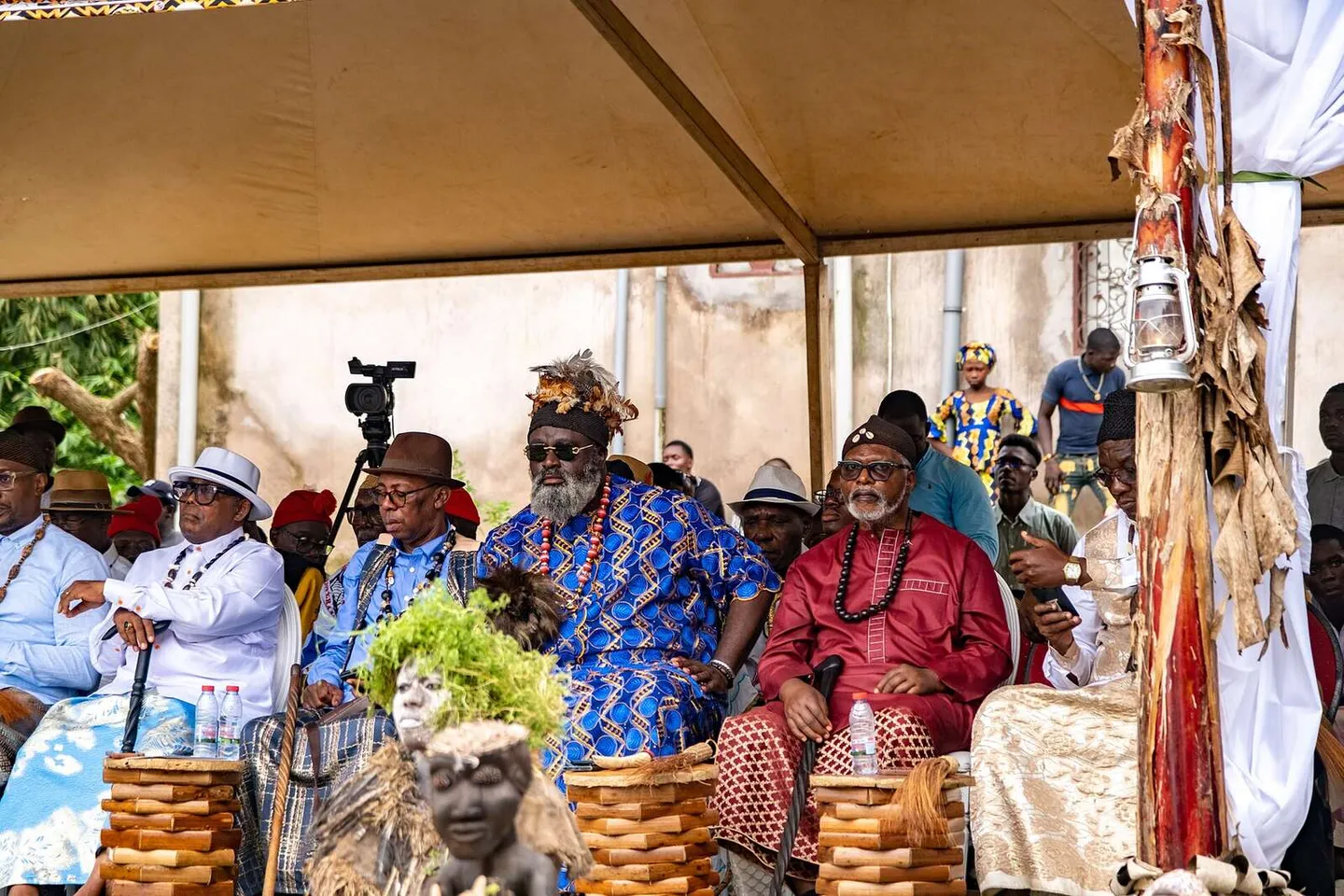 Sawa traditional chiefs during the 2025 Ngondo
A calendar in two parts
The Ngondo opens with a traditional assembly open to all Sawa, then unfolds in two parts:
- a popular, festive part, from September to November, with a caravan touring the cantons;
- a sacred, ritual part, which begins on the eve of the first Sunday of December and peaks that Sunday on the banks of the Wouri.
The rite takes place at the site known as the Ngondo square, on the riverbank in Douala.
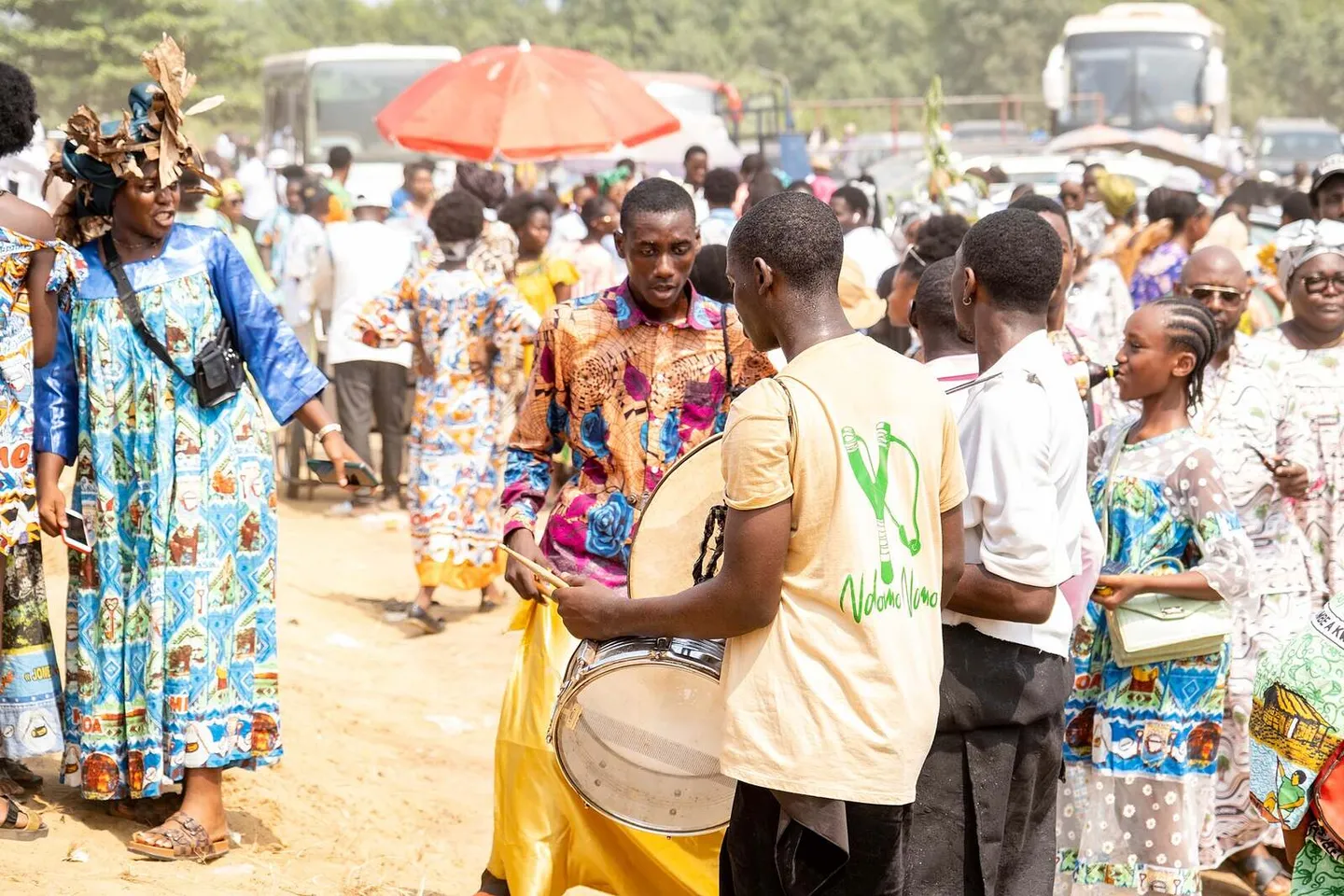 Crowd and musicians during the 2024 Ngondo festivities.
The popular part: the caravan of the cantons
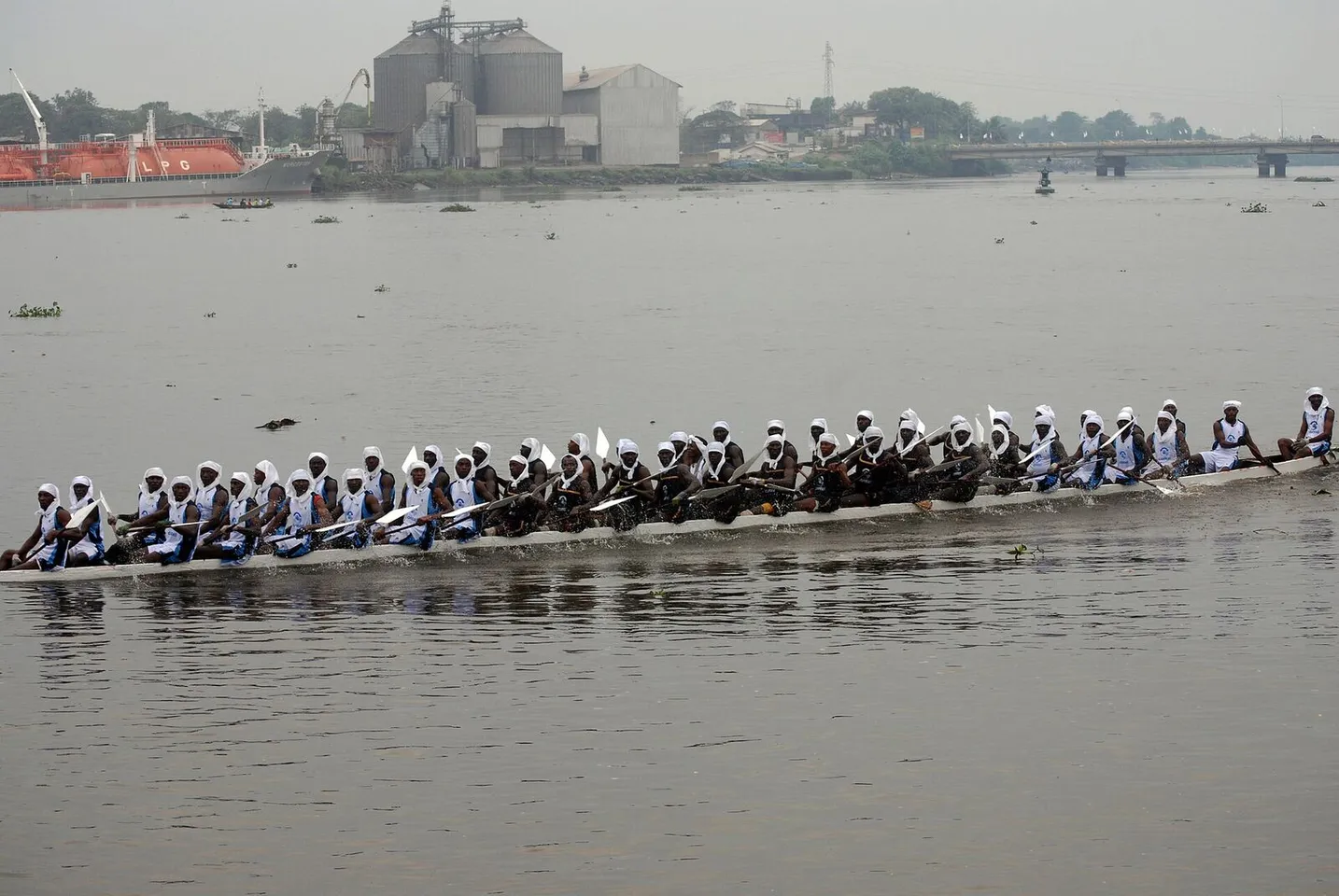
Until November, the Ngondo caravan travels from canton to canton. It brings artistic shows, traditional wrestling competitions, a large crafts and trade fair and the heats of the Miss Ngondo contest. On the final weekend, canoe races pit the crews of the cantons against each other on the Wouri, in front of thousands of spectators.
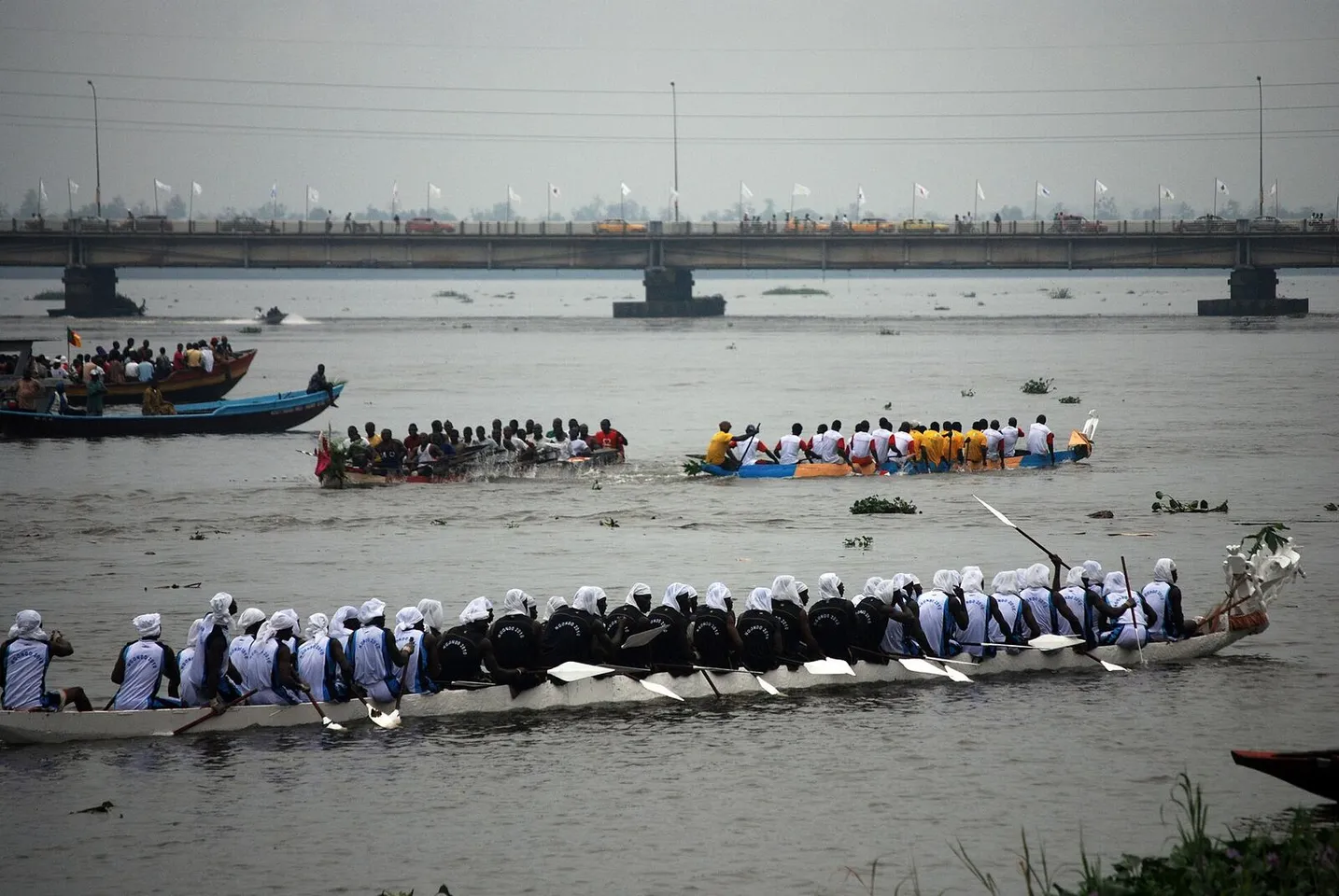 The cantons' canoes on the Wouri during the Ngondo
Traditional wrestling
The wrestlers, called "Ngum", represent their cantons. Wrestling is one of the components the community has committed to preserve, along with the canoe race and the Miss Ngondo contest.
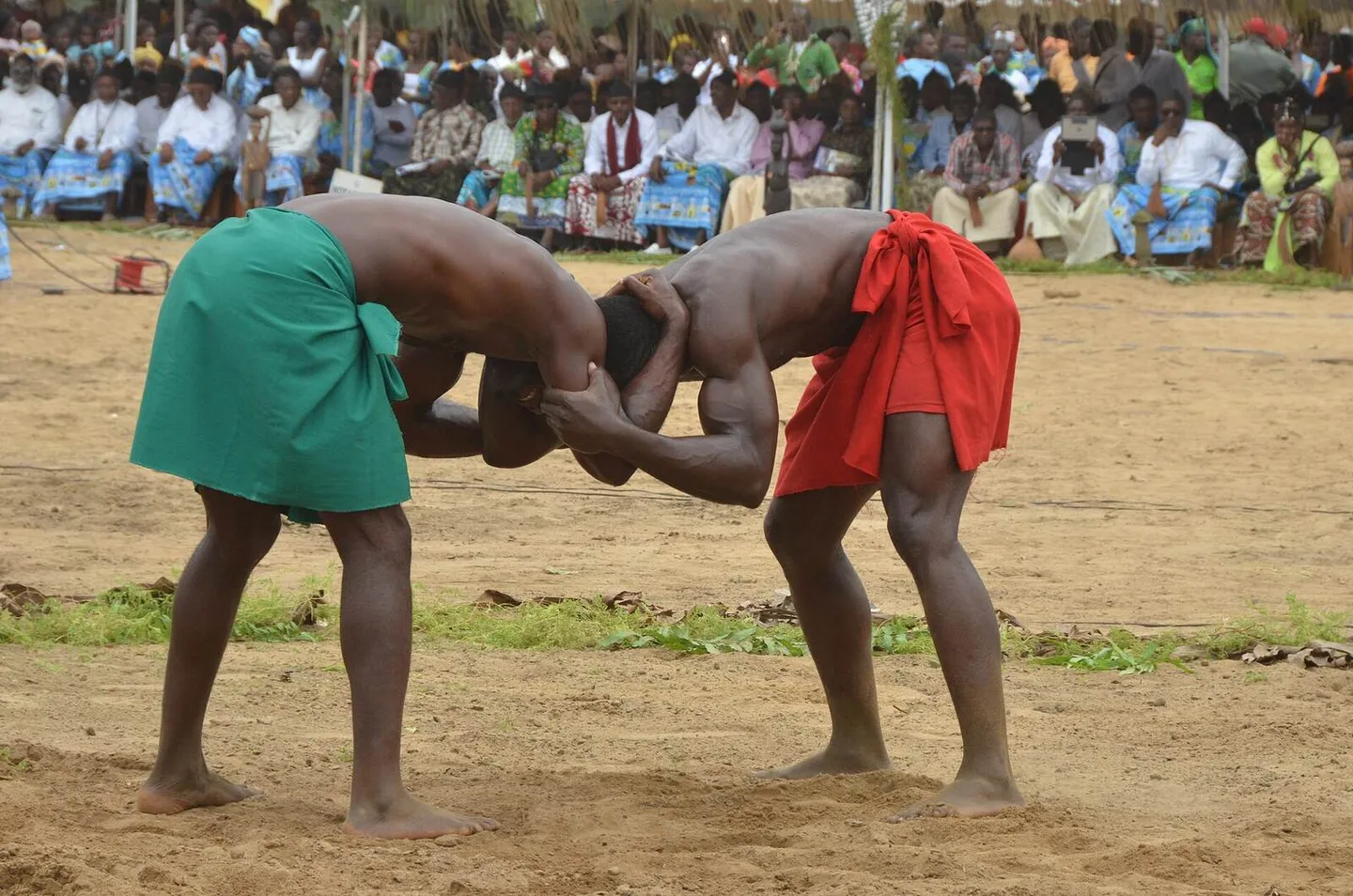 A traditional wrestling bout during the Ngondo
The Miss Ngondo contest
The candidates, the "Tolè", are not judged on looks alone: each must present a traditional herbal remedy based on medicinal plants, which UNESCO cites among the Ngondo's contributions to health.
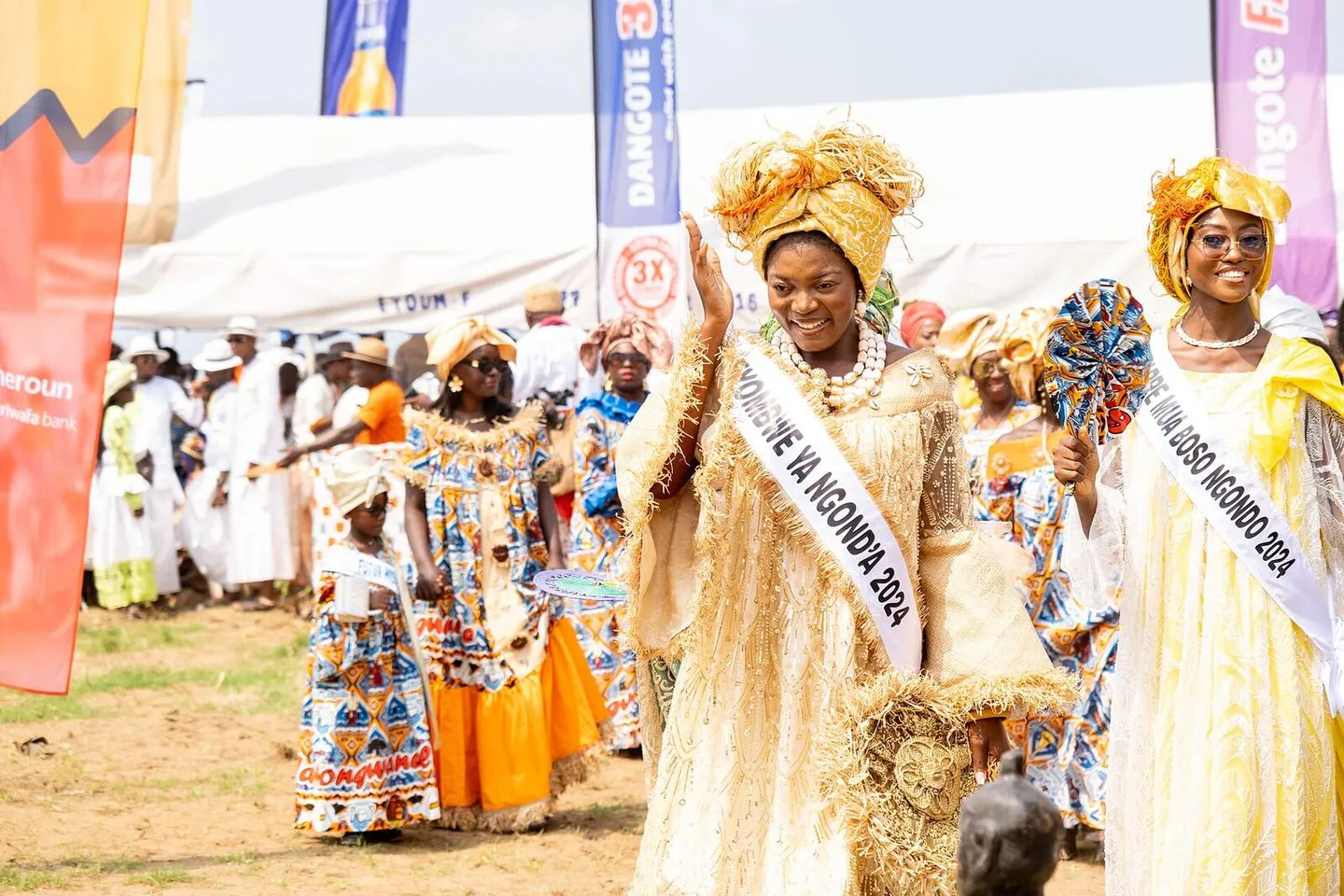 Miss Ngondo 2024
The fair and the rowers
The large fair creates temporary jobs and income for local people. On the water, the rowers of the racing canoes, the "Baduedi", defend the colors of their canton.
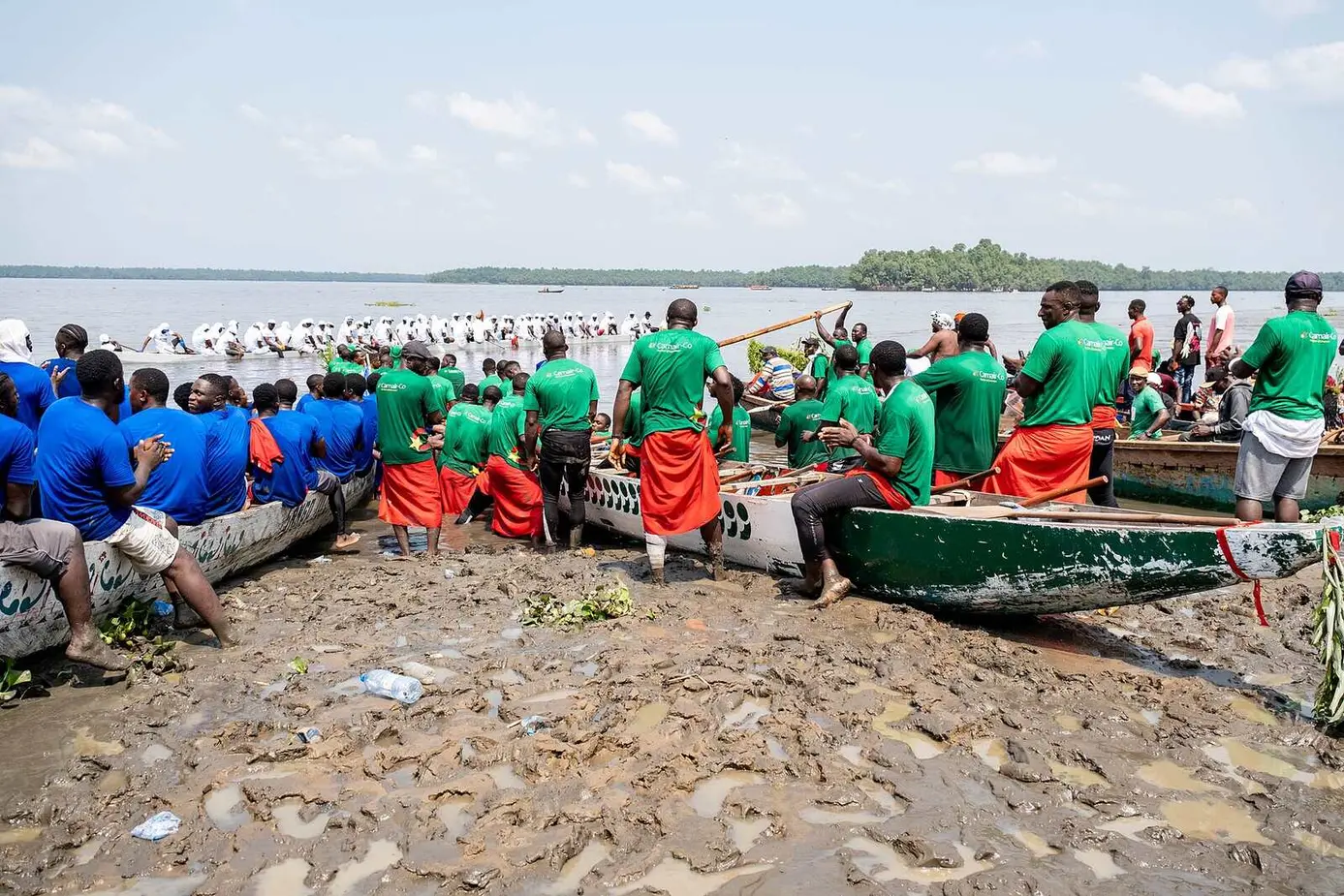 Canton crews and their canoes on the riverbank, 2024 Ngondo
The sacred part: the worship of water oracles
This is the heart of the Ngondo, and what makes it unique: the national inventory record states that no other cultural area in Cameroon practices this rite. According to Sawa belief, the water deities are the Miengu (singular Jengu), who give their name to the Jengu cult.
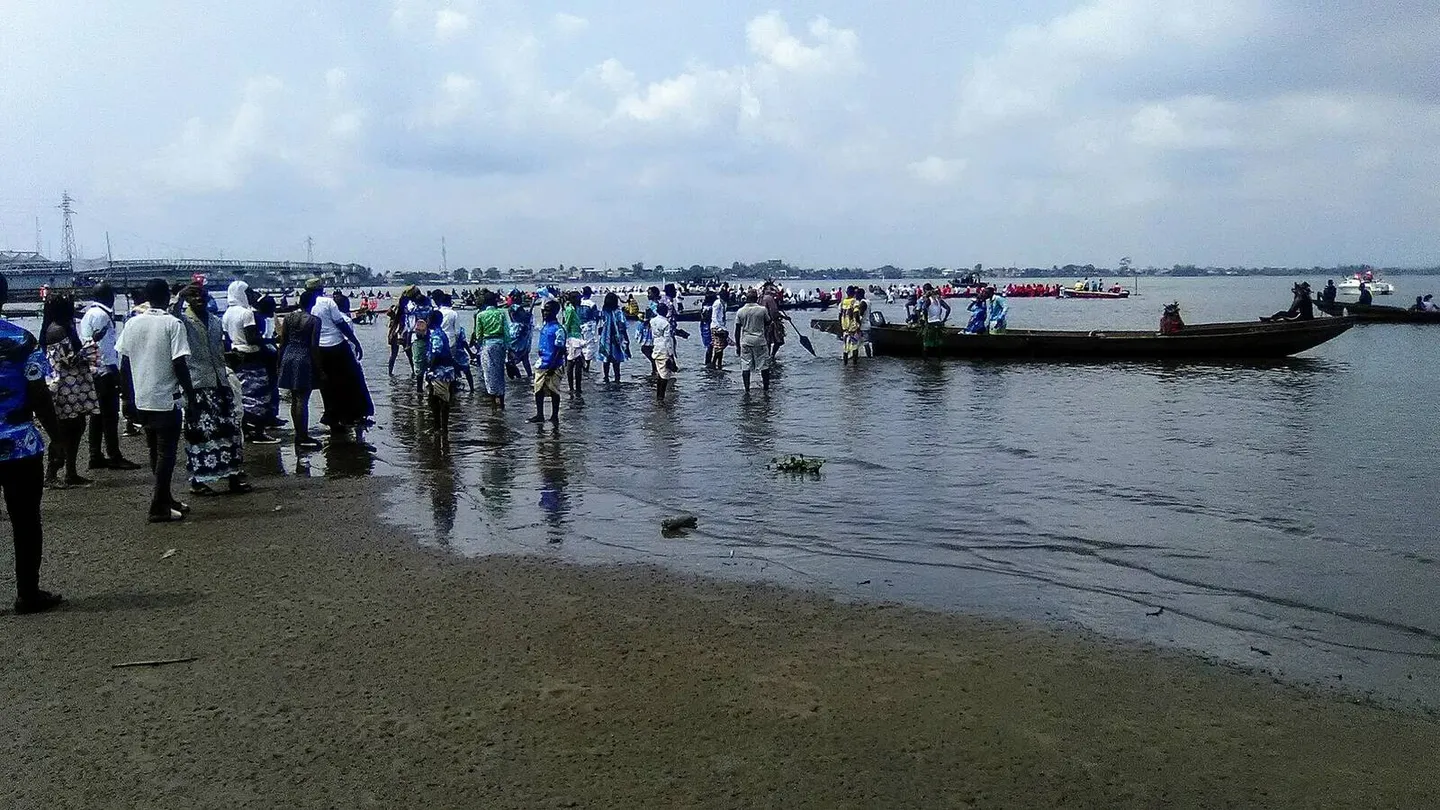 The banks of the Wouri in Douala, where the community gathers.
The eve, on Jébalè island
On the eve of the first Sunday of December, the officiants of the Jengu cult withdraw to Jébalè island, in the Wouri estuary. They prepare the sacred hut, the sacred canoe and the sacred vase, and record the community's wishes and grievances to be addressed to the deities. This retreat is reserved for the paramount chiefs and senior initiates.
The first Sunday of December
The community and its guests gather on the riverbanks. After the start of the canoe race, the sacred canoe heads to the immersion site. An initiated priest from Jébalè dives with the vase and comes back up after a while, carrying the oracles' message. According to tradition, reported by many witnesses, he comes out of the water dry.
The oracles' message
The message is first deciphered in the sacred hut, then passed on to the canton chiefs, and finally to the public. It guides the life of the community until the next Ngondo. The inventory record notes that these messages have always spoken to current events, as a stance or a possible way forward on the issues of the day.
Who does what: the roles of the Ngondo
The whole Sawa people takes part, but the nomination file describes specific responsibilities.
| Duala title | Role | Effect on the community |
|---|---|---|
| M'boko ma Banedi | Paramount chiefs of the cantons; the only ones admitted, with the senior initiates, to the Jébalè retreat. | Receive the oracles' message; every year, invite the chiefs of other communities in Cameroon. |
| Mutiledi Nundènè | Spokesperson of the Ngondo. | Speaks for the Ngondo. |
| Bolo bwa Jengu | Priests and priestess in charge of the sacred vase immersion rite. | Bring back the oracles' message, which guides the community until the next Ngondo. |
| Ndum la Muwaso mwa Dimbambè | The guardians of tradition, who formulate the wishes. | The community's wishes and grievances are addressed to the deities. |
| Mangon | Priestess of each paramount chief; makes, maintains and keeps the garments of the ritual canoe's crew, and protects the crew during the immersion. | Embodies the central place of women in Sawa society. |
| Epep'a Bito na Ngon | The women's department. | Guides women and girls. |
| Makando ma Ngoso | Groups that lead the ceremonies' entertainment. | Bring the ceremonies to life. |
| Fontélé and Mbidi | Fire-eaters and guards who protect the sacred hut (Dibala). | Ensure the sacred spaces are respected, together with the police. |
| Baduedi, Ngum and Tolè | Rowers, wrestlers and Miss Ngondo candidates. | Defend the colors of their canton; the Tolè present a traditional herbal remedy. |
The objects of worship also come from the community: according to the inventory record, the ritual canoe and its paddles are made by a family from Jébalè, and the crew's garments are made and kept by the Mangon.
Women at the heart of the Ngondo
The file describes a Sawa society in which women hold a central place. Each paramount chief has his Mangon, a priestess honored by all. It is a Mangon who prepares the vase and the ritual dishes and who protects the crew during the immersion. The ritual ceremonies even open with the rallying cry "Ekwamwato!", the sacred feminine. UNESCO cites this role of women among the Ngondo's contributions.
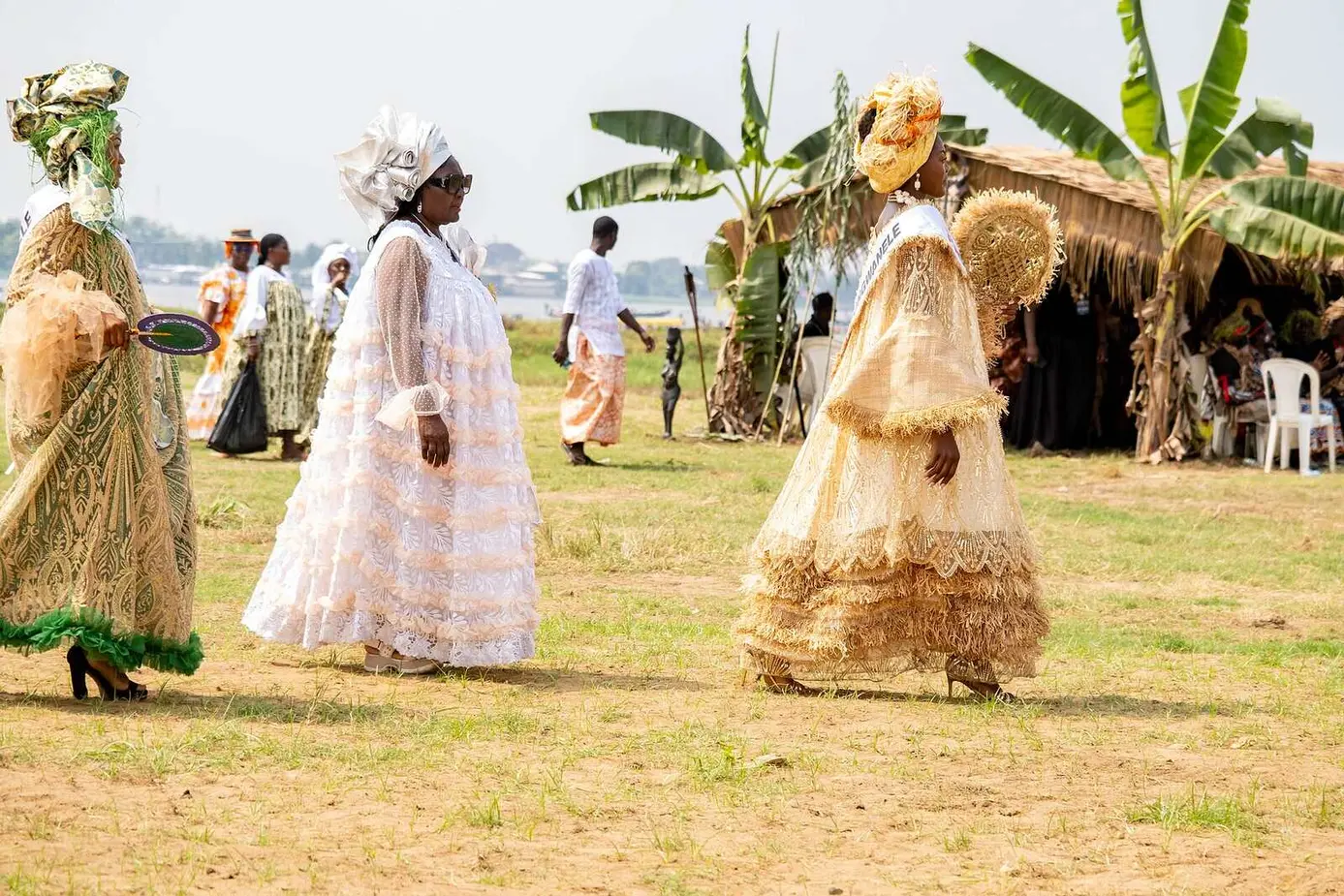 Sawa women in traditional dress, 2024 Ngondo
Brotherhood, justice and openness: the values of the Ngondo
The Ngondo is presented as the soul of the Sawa community. It fosters brotherhood, solidarity, social cohesion and tolerance, and was originally founded on social justice and fairness between communities.
It is also an open festival: every year, the paramount chiefs invite their counterparts from other communities in Cameroon, and sister communities attend the proclamation of the oracles' message. The Ngondo has even set up, in the cantons, a program that rewards the best pupils and students.
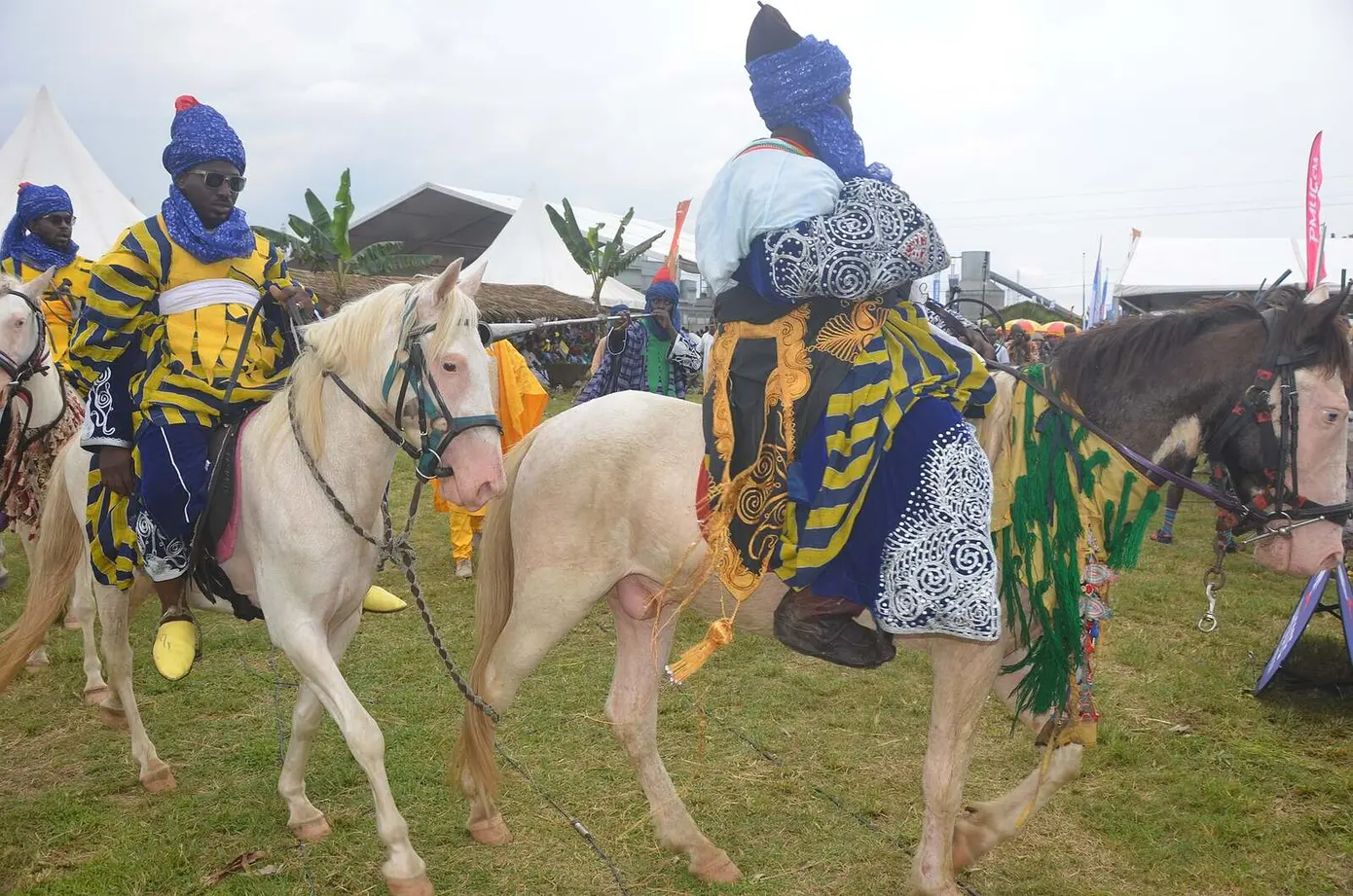 Horsemen from the North region, guests of the Ngondo in Douala
The river, the mangroves and the water hyacinth
Without the Wouri and its mangroves, there is no Ngondo: the canoes, paddles, herbs and objects of worship all come from nature. The file and the inventory record therefore identify the threats to the ecosystem: deforestation, silting, riverbank development and the spread of water hyacinth. The community has committed to a large mangrove regeneration project and to fighting water hyacinth, with the city of Douala and the Ministry of the Environment.
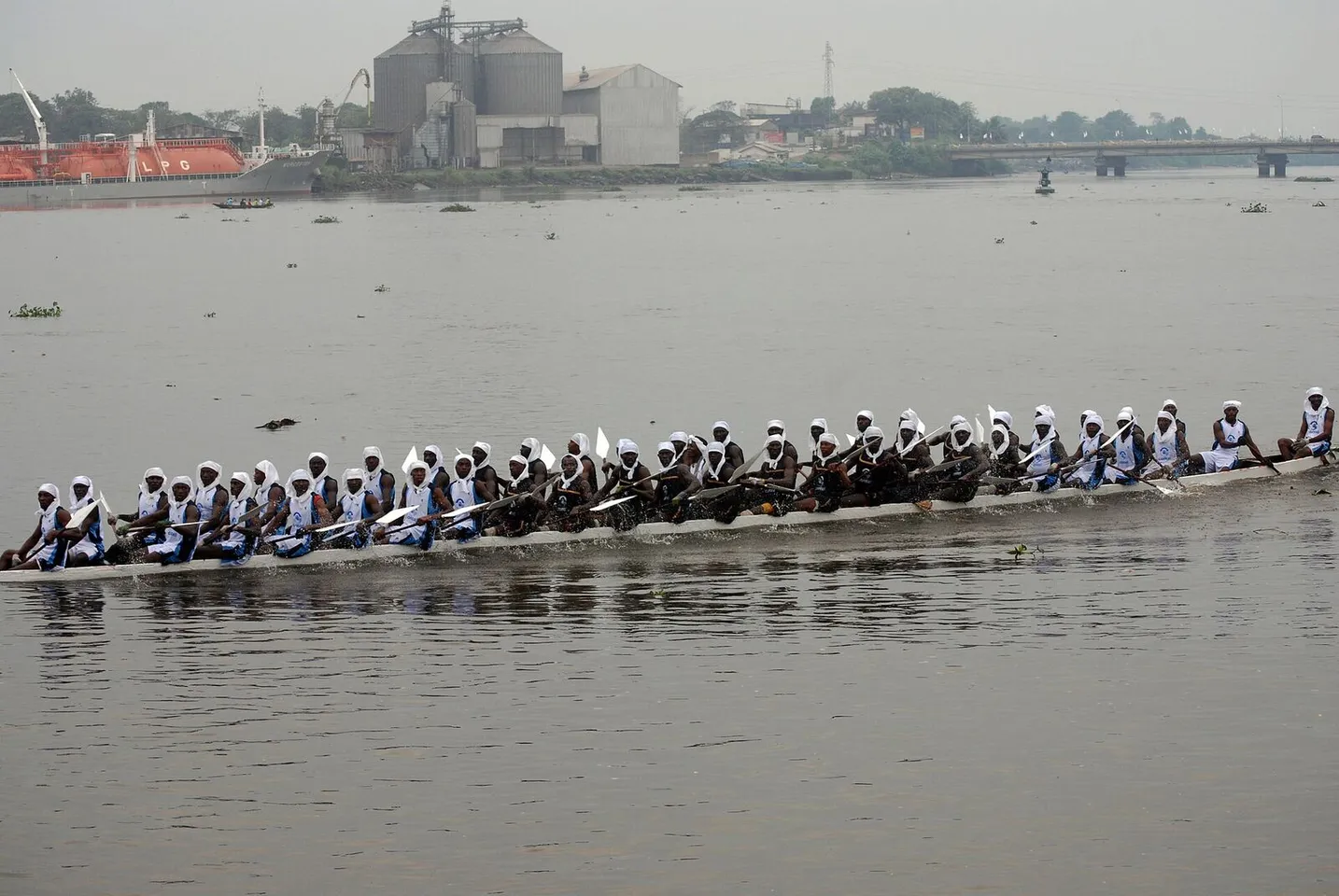 A racing canoe on the Wouri: without the river, there is no Ngondo
How the knowledge is passed on
The family is the first circle: it is there that young Sawa discover the Ngondo, take part in it and learn its skills. For the sacred roles, each group of actors identifies future holders, who go through a multi-stage initiation (Mungi, Jengu…). The inventory record states that the cult is passed on from mother to daughter and from father to son.
The safeguarding measures planned by the community and the Ministry of Arts and Culture go further:
- teaching Sawa heritage at school, from primary to secondary level, and training teachers;
- a Ngondo documentation and research center at the Sawa House of Culture, an inventory and a database with universities;
- programs explaining the rites on the Penya Mundi community radio;
- heritage arts contests: cooking, dance, song, sculpture, weaving.
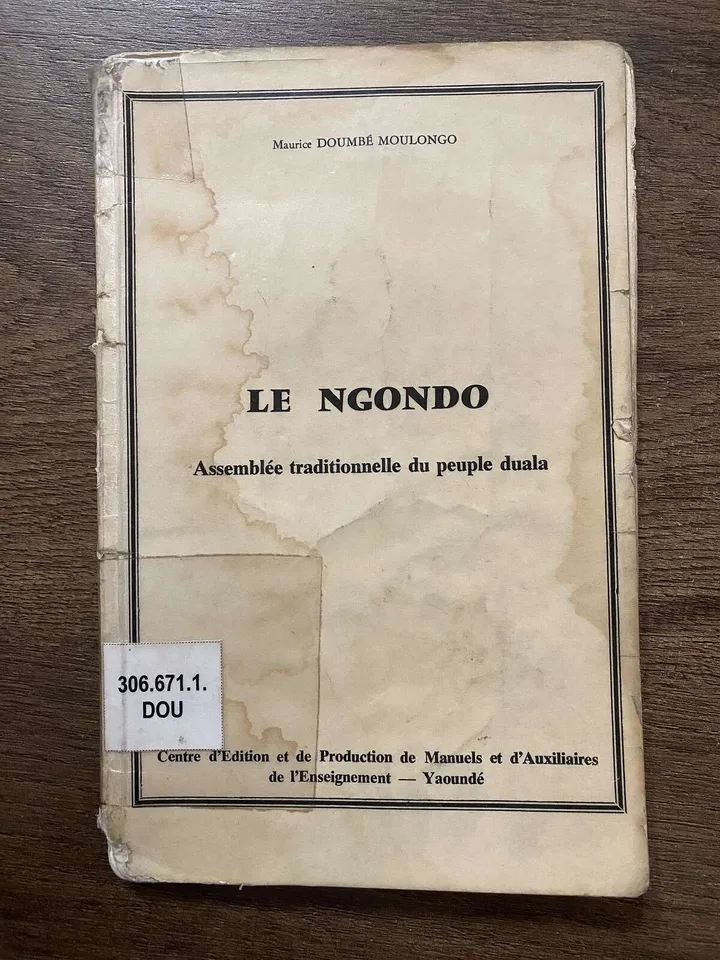 An old book on the Ngondo, the traditional assembly of the Duala people.
More than two centuries of history
Originally, the Ngondo was an assembly of the Sawa that allowed them to unite in the face of outside threats. The national inventory record states that the worship of water oracles has been practiced for more than two hundred years. It was banned three times in the past, and each time came back stronger.
The UNESCO nomination came from the community itself: first steps with the national inventory launched in 2016, entry in the inventory in November 2019, a workshop at the Douala Maritime Museum in December 2020, consents gathered in 2021, drafting of the file in 2022, and signature by the Minister of Arts and Culture on March 27, 2023. The slogan "Ngondo O Unesco" became the rallying sign.
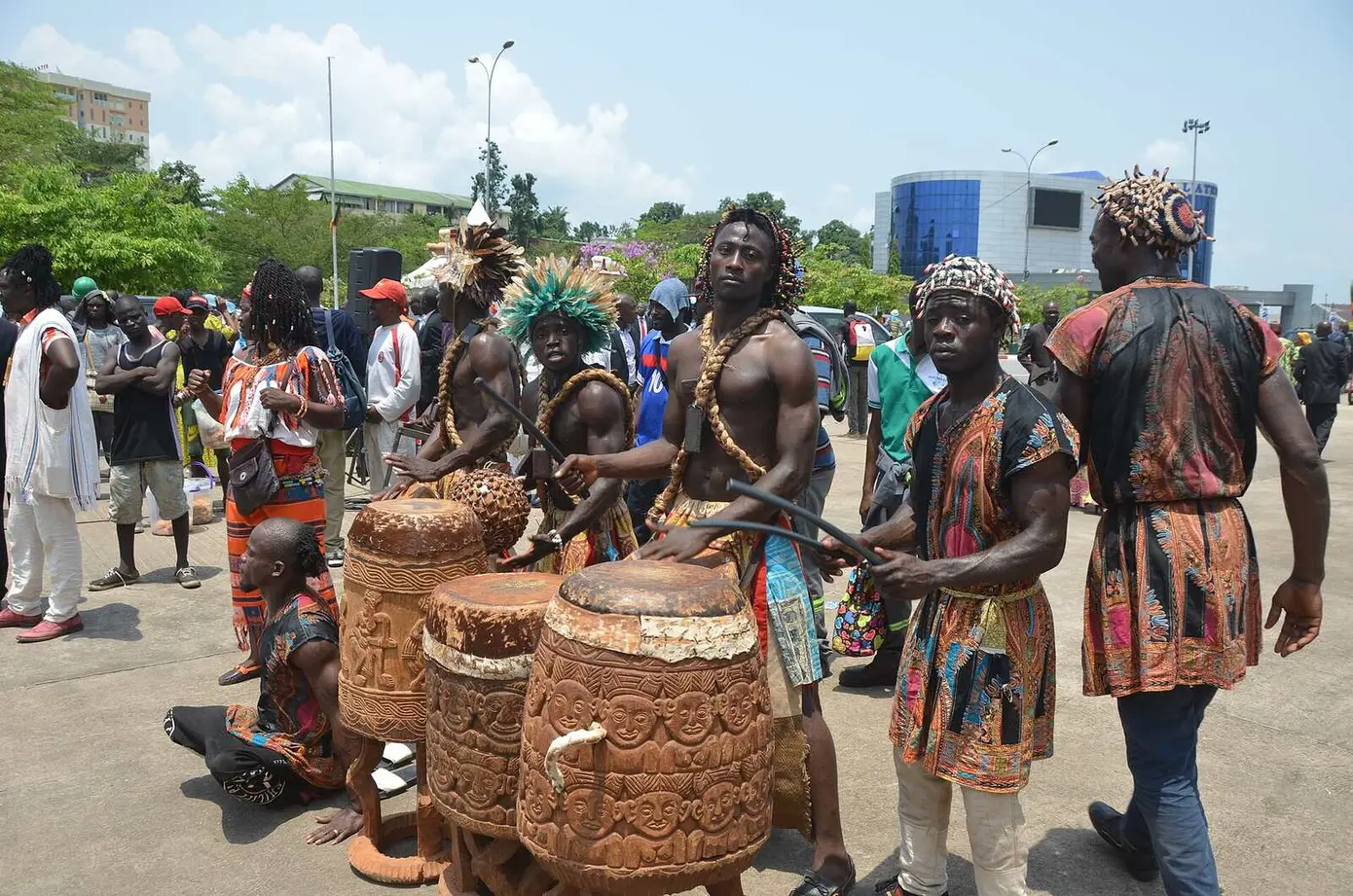 Traditional drums during the Ngondo.
Since the inscription
The UNESCO certificate was presented on July 5, 2025 at the Sawa House of Culture in Douala by the Minister of Arts and Culture (Cameroon Tribune, 07/07/2025). In December 2025, the Ngondo celebrated the first anniversary of its inscription in front of thousands of people; the patriarchs interviewed saw it as one more responsibility: passing the culture on to children (The Star, 09/12/2025).
The 2026 edition
The announced theme is "The Awakening of the Sawa People" (CRTV, June 2026). According to Cameroon Tribune, quoted by The Rio Times (October 23, 2026), the final festivities are expected on December 5 and 6, 2026 on the banks of the Wouri, with the river rite on Sunday, December 6, the first Sunday of the month. Dates to be confirmed: we will update them as soon as the official program is announced.
Attending the Ngondo respectfully
A few practical tips for the day of the rite on the Wouri:
- Where to stay: the easiest option is to stay in Akwa or Bonanjo, close to the banks of the Wouri. See our furnished rentals in Akwa and our furnished rentals in Bonanjo, or all our furnished rentals in Douala. The Bonanjo neighborhood guide and our Douala guide will help you plan your stay.
- Come on foot: the Bonanjo district is cordoned off on the day of the rite. Leave the car and walk, for example from Akwa.
- Arrive early: come at dawn to the banks of the Wouri, the crowd is large.
- Stay on the bank: do not follow the ritual canoe's crew and do not approach Jébalè island by canoe. The Jébalè retreat and the crew are reserved for specific actors; traditional guards, the Mbidi and the Fontélé, watch over them with the police.
- Photos: ask before photographing a person or a ritual moment, and lower your camera at the moment of the immersion if the protocol asks you to.
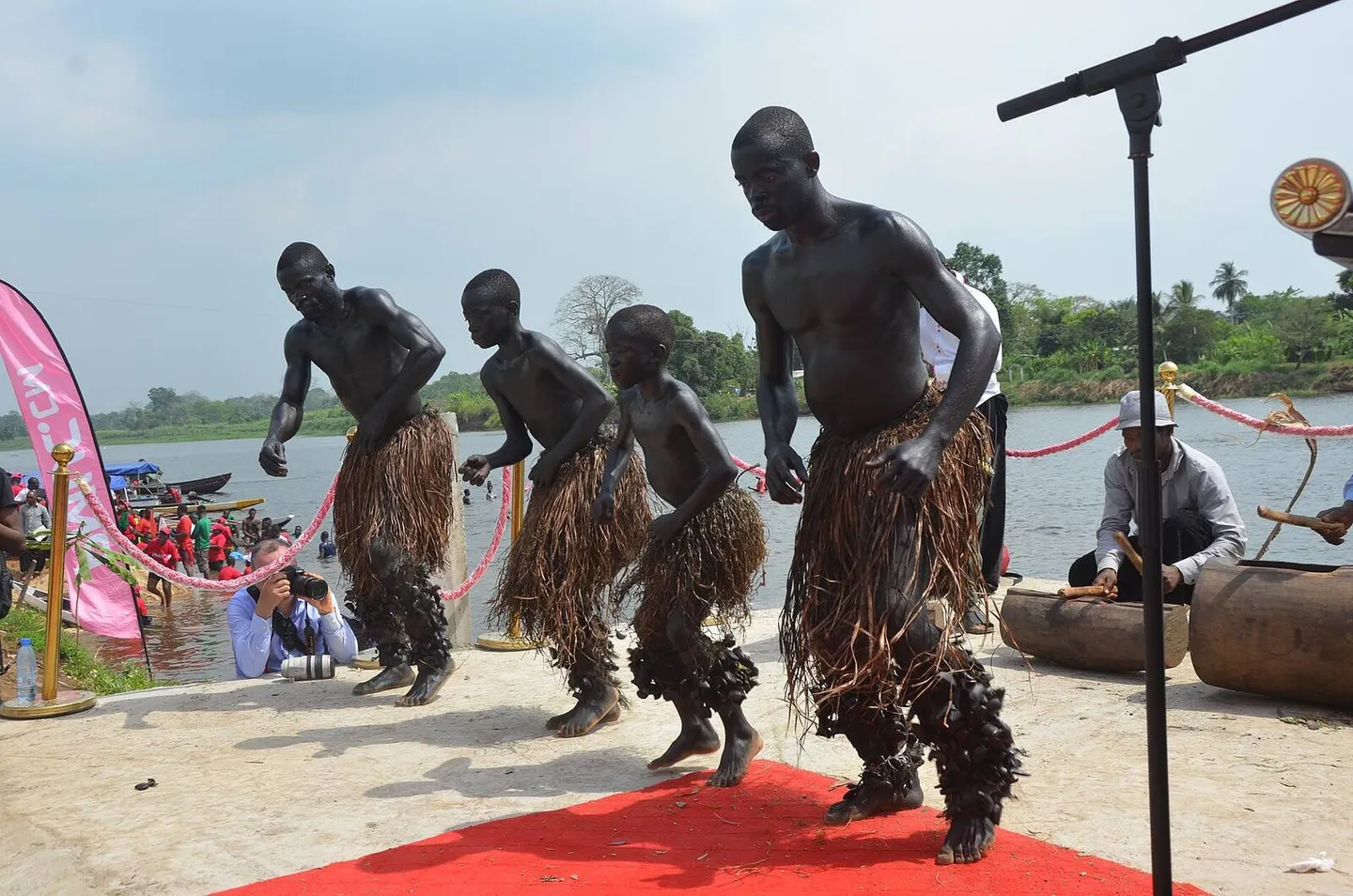 Dancers during the Ngondo activities, by the Wouri.
The Ngondo is not a show: it is how a people of the water comes together, holds itself to account, passes on its knowledge and listens, once a year, to what the river tells it. Its UNESCO inscription commits the Sawa community and Cameroon to keeping it alive, and everyone who attends to respecting it.
Questions Fréquemment Posées
What is the Ngondo?
The great annual festival of the Sawa of the Cameroonian coast: a festive caravan through the cantons, then the worship of water oracles on the Wouri, in Douala, on the first Sunday of December.
When does the Ngondo take place?
From September to the first Sunday of December. In 2026, according to the Cameroonian press, the final festivities are expected on December 5 and 6 (to be confirmed).
Is the Ngondo on the UNESCO list?
Yes, since December 2024, on the Representative List of the Intangible Cultural Heritage of Humanity (decision 19.COM 7.B.28).
What happens during the Wouri rite?
An initiated priest dives from the sacred canoe with a vase holding the community's wishes and returns with the oracles' message, which is deciphered and then announced to the chiefs and the public.
Who are the Sawa?
A community of about five million people living on the Cameroonian coast, from Campo to Mamfé, united by the Duala language and the Ngondo.
Can visitors attend the Ngondo?
Yes, the caravan, the canoe races and the ceremony on the riverbanks are public. Some rites, such as the retreat on Jébalè island, are reserved for initiates.
Mots-clés
Ces articles peuvent vous intéresser
Catégorie
Culture
Réf: BGC33E2
Avis (0)
Laisser un commentaire
Incluez l'indicatif pays, ex: +237 612345678