Chargement...

Chargement...


Ivory Coast has a great many festivals, because each people keeps its own calendar. The best known are the Abissa in Grand-Bassam in late October or early November, the Popo Carnival in Bonoua after Easter, Paquinou among the Baoulé and the yam festival in the east. Here is the year's calendar, month by month, based on published calendars (dates to be confirmed each year). One rule first: dates change every year, depending on rites, seasons and community decisions. Note "variable, to be confirmed locally" in your notebook, and always ask the organisers or chiefs for agreement before attending or photographing a ceremony.
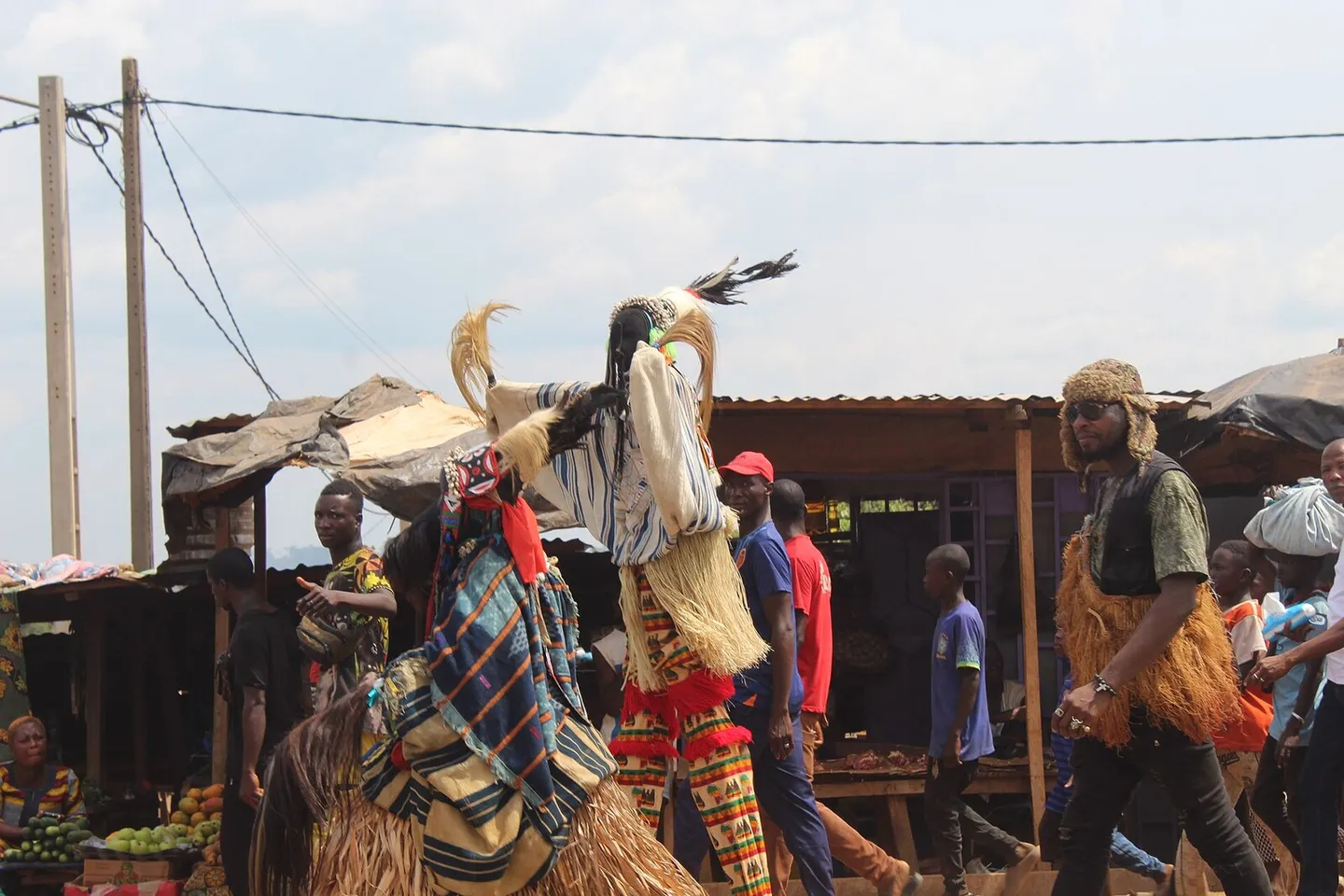
This table follows the guide's agenda. It gives a usual period, not a guaranteed date.
| Period | Festival | Place | People or kind |
|---|---|---|---|
| December-January | Yam festival | East, near the Ghana border | Akan |
| December | Tonkpi Nihidaley Festival | Man | Dan |
| February-March | Abidjan Capitale du Jazz | Abidjan | Jazz festival |
| March-April | Bouaké Carnival | Bouaké | Carnival |
| April | Paquinou and Goli dance | Baoulé villages | Baoulé |
| After Easter Monday | Popo Carnival | Bonoua | Abouré |
| April | Dipri festival | Gomon | Abidji |
| May | FEMUA | Abidjan | Urban music |
| July or August | Festagni | Changing village, Agni country | Agni |
| Late October, early November | Abissa | Grand-Bassam | N'zima |
| Around 1 November | Harrist festival | Brègbo | Harrist church |
The yam festival is celebrated at the start of each year by the Akan in the east of the country, mostly in December, but also in Abengourou in January. It honours the yam, the tuber said to have fed the Ashanti during their exodus from former Ghana. During the festival, eating yam is forbidden: it is used only in purification rites. It marks the new year and reaffirms the bond between the living and the dead.
In Man, in December, the Tonkpi Nihidaley Festival highlights Dan culture: mask dances, costumes and traditions over about six days. The Abidjan Capitale du Jazz festival runs in February-March over two weeks, with a Women in Jazz evening on 8 March (2024 programme, to be updated). The Bouaké Carnival, created in 1964, lasts a week in March-April, with a fair, a parade of floats and majorettes, a masked ball and a beauty contest; it ends with the burning of the carnival statue.
These festivals move, because they depend on the date of Easter.
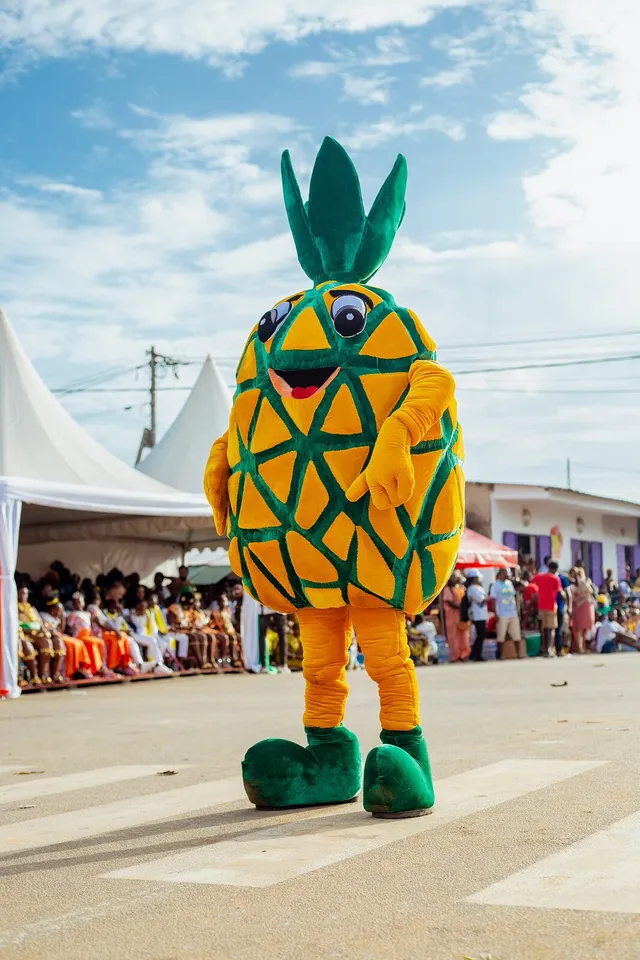 The mascot of the Bonoua Popo Carnival (44th edition, 2025). Photo: Aman ADO, CC BY-SA 4.0, via Wikimedia Commons.
Paquinou is the Baoulé Easter festival, lasting three days in the villages. Families gather to talk about reconciliation and recall harvests and happy or sad events. The guide also describes it as the feast of meat and wine, and as the occasion for the Goli mask to come out. This appearance is rare: watch it discreetly.
It runs for two weeks from Easter Monday, in Bonoua, among the Abouré. It is famous for its masked parade on Saturday and the burning of the Roi Popo. Our article "Popo Carnival in Bonoua" gives the programme.
The Festival des Musiques Urbaines d'Anoumabo, created in 2008 in Abidjan by a member of the group Magic System, lasts five days in May. According to the guide, it has helped fund schools and hospital refurbishment.
The Dipri festival, or Kpon, is an Abidji rite, held in Gomon in April, and in Sikensi in May. It commemorates the sacrifice an ancestor made to save the people from famine. It is an intense religious ceremony that includes ritual sacrifices. It is not a show: attend only with the agreement of the organisers and elders, and photograph nothing without permission. If you are not invited, it is better not to go.
The Festagni, the festival of Agni arts and culture, lasts about a week and is held each year in a different village of Agni country. The guide puts it in August in its agenda, and in July in its chart: the date is to be confirmed. It celebrates popular Ivorian music. The guide also mentions initiations in the west, among the Wobé, Guéré and Niaboua. These are rites reserved for initiates: do not try to attend without an invitation.
The Abissa is the great festival of the N'zima, in Grand-Bassam, in late October or early November. The guide recommends it strongly. It ends with a carnival-style brass band. Our article "Abissa festival in Grand-Bassam" gives the programme. Around 1 November, followers of the Harrist church make a pilgrimage to Brègbo, on the Ébrié lagoon, for the festival of the spiritual freedom of the Black people. It is a religious gathering: stay discreet and at a distance if you are not a member.
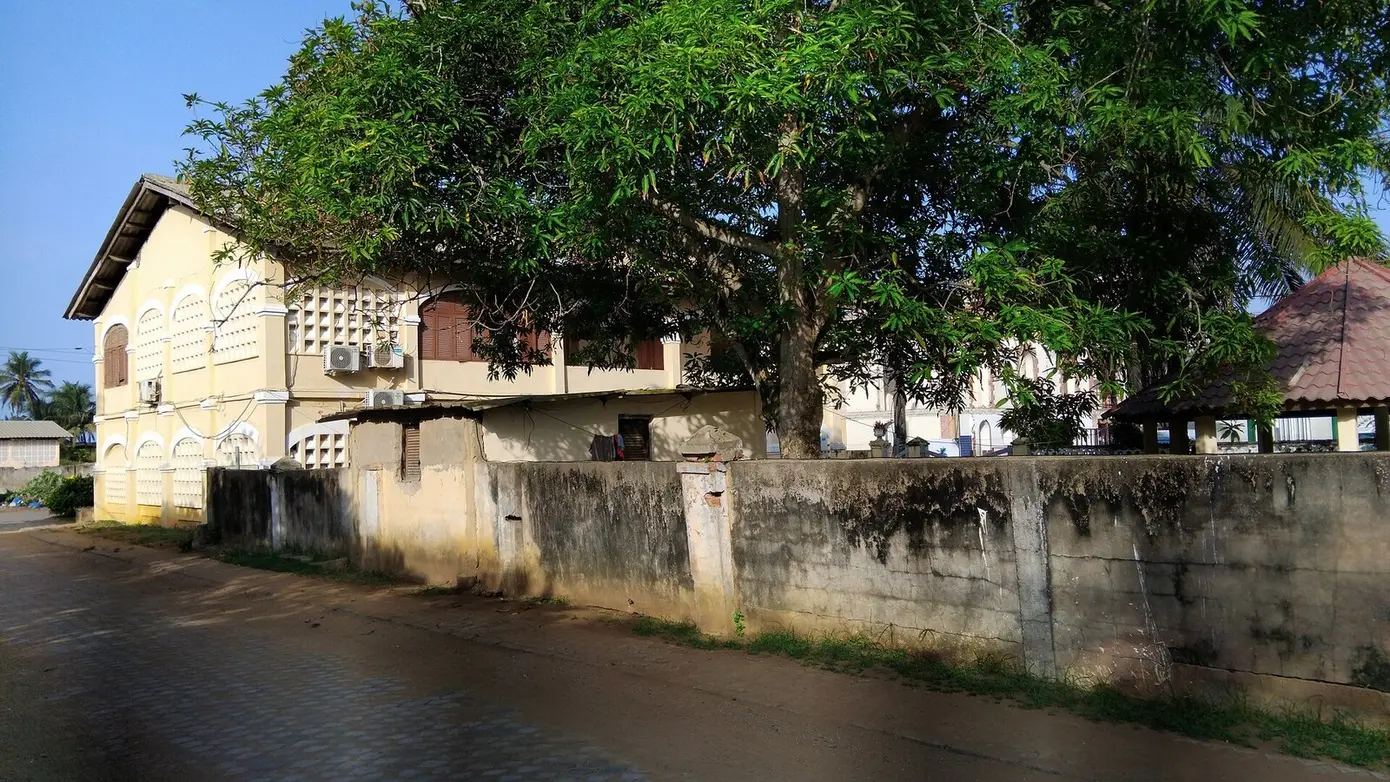 The bishop's house in the Quartier France, Grand-Bassam. Photo: Ismaelsanogo752, CC0, via Wikimedia Commons.
The guide also mentions the exit of the Tchologo initiates, a ceremony held every seven years in each village, the last in late March 2024: do not plan it without local information. There are also Christian and Muslim religious holidays, and Independence Day on 7 August. For mask ceremonies in the north and west, the guide advises going through a local guide.
Ask the tourist office, the town hall or your host before you go. Dress properly: the guide notes that Ivorians take care over their appearance. Ask permission before photographing or filming. Pay only what is announced. And do not enter a restricted place, such as a sacred grove, without an invitation.
To catch a festival, aim for November for the Abissa, Easter for Paquinou and the Popo Carnival, or December for the yam festival and Man. Keep a day of margin, confirm the date locally and come with respect. See also our article "Best time to visit Ivory Coast" for the seasons.
What are the main traditional festivals of Ivory Coast?
Among the main ones: the Abissa in Grand-Bassam, the Popo Carnival in Bonoua, Paquinou among the Baoulé, the yam festival in the east, Tonkpi Nihidaley in Man and Festagni among the Agni.
When is the Abissa festival?
In late October or early November, in Grand-Bassam. The date changes every year: confirm it locally.
When is the Popo Carnival?
Every year in Bonoua, for two weeks from Easter Monday. The date of Easter varies.
Can visitors attend every festival?
No. Some rites, like the Dipri or initiations, are not shows: you need the agreement of the organisers or elders.
May I photograph ceremonies?
Always ask the organisers, the village or the court before taking a photo or filming.
Where can I find the exact dates?
From the organisers, town halls or local tourist offices. The guide says the best course is to ask locally.
Ces articles peuvent vous intéresser
Culture
Réf: BGB7E1C
Avis (0)
Laisser un commentaire
Incluez l'indicatif pays, ex: +237 612345678