Chargement...

Chargement...


Ivory Coast (Côte d'Ivoire) is best explored from the south: Abidjan, the lagoon and the coast from Grand-Bassam to Sassandra, then Yamoussoukro in the centre, the mountains around Man in the west and the craft villages near Korhogo in the north. Here are the sites worth knowing, region by region, with a summary table. One point first: some areas are formally advised against by the French foreign ministry (see the last section). Prices and opening hours quoted are indicative and should be checked before you go.
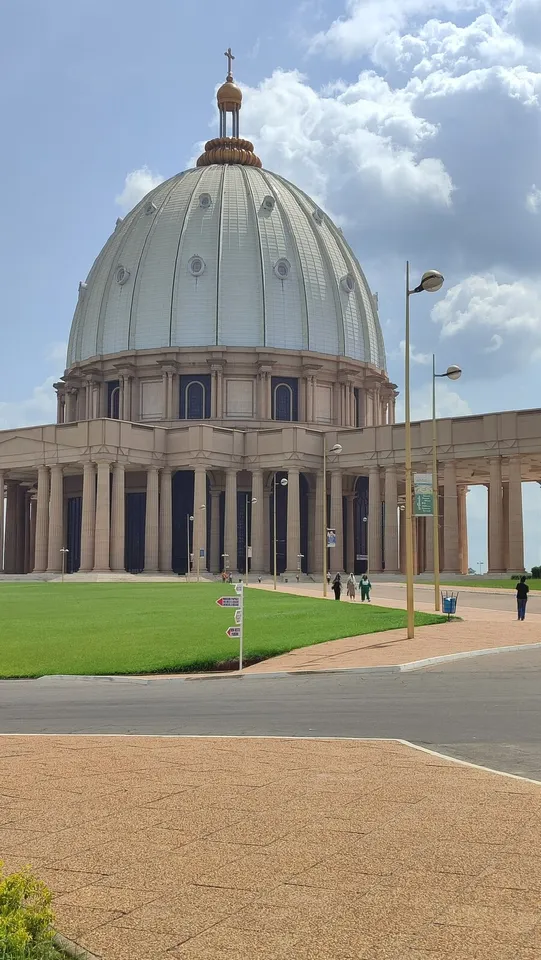
This table sums up the stops that come back most often in the guide, from south to north.
| Region | Sites to note | Good for |
|---|---|---|
| Abidjan and surroundings | St Paul's cathedral, museum of civilisations, Banco park, Boulay island, Bingerville botanical garden | City, art, nature in one day |
| East coast | Grand-Bassam, Assinie beach, Ehotilé islands | History, beach, lagoon |
| West coast | Tiagba, Azagny park, Sassandra, Mermaid Bay | Lagoons, bays, fishing |
| Centre | Yamoussoukro, Ahouakro | Architecture, lakes, sacred rocks |
| West | Man, Ypou waterfall, Nawa falls | Mountains, waterfalls |
| North | Korhogo and its craft villages | Weaving, cloth painting |
| East | Bondoukou and surroundings | Markets, old mosques |
Abidjan is the gateway to the country. The guide advises against limiting your visit to the Plateau, the business district.
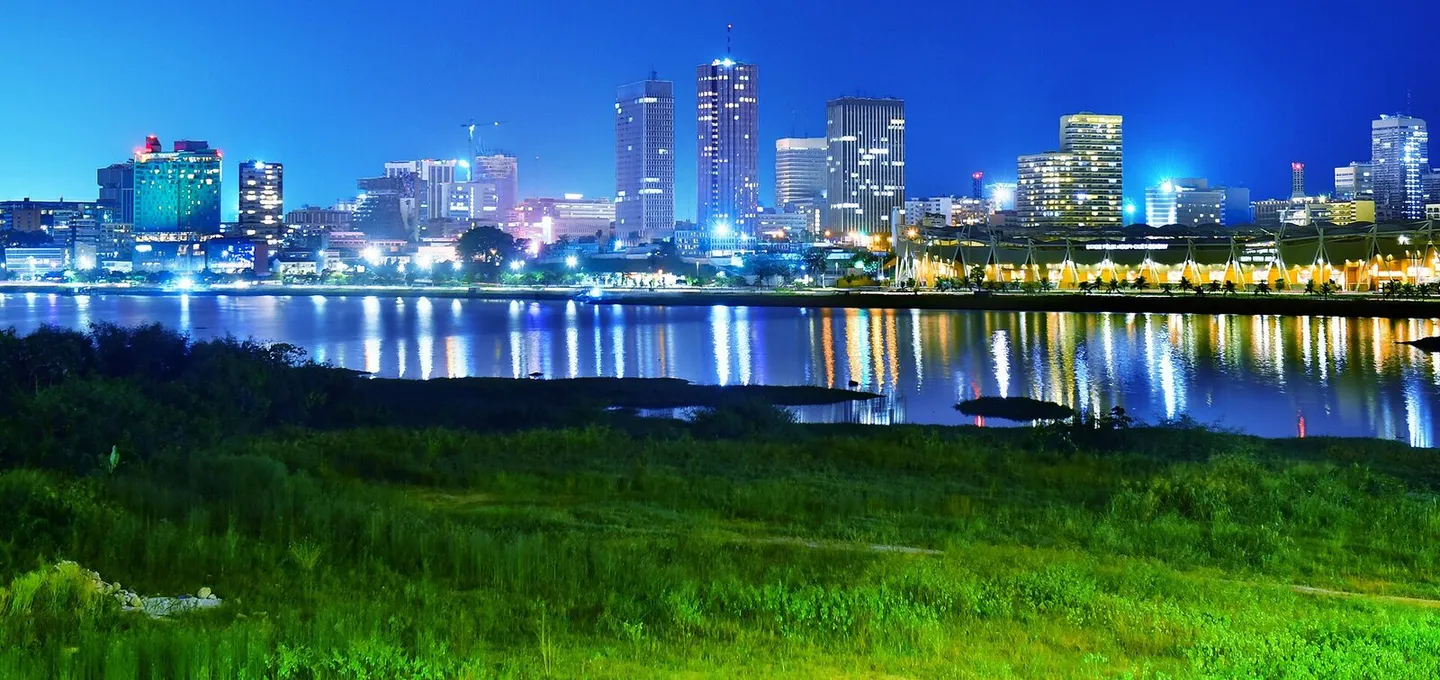 The Plateau, Abidjan's business district, on the Ébrié lagoon. Photo: Edison McCullen, CC BY 4.0, via Wikimedia Commons.
St Paul's cathedral, built between 1983 and 1985 by the Italian architect Aldo Spirito, is recognisable by its large cross leaning toward the lagoon. The Museum of Civilisations of Côte d'Ivoire, in the Plateau, shows a collection of about 15,000 pieces in six spaces (per the guide, entry 2,000 FCFA). Banco National Park, a forest in the middle of the city, has trails and tall trees; it is managed by the OIPR, the national parks authority.
Boulay island, on the Ébrié lagoon, is a day trip 15 to 20 minutes by boat. In Bingerville, east of Abidjan, the botanical garden, created in 1904, covers about 56 hectares and nearly 300 species; a guided visit is advised because signage is weak.
Grand-Bassam, east of Abidjan, is a former colonial capital. Its historic town (the French quarter and the N'zima fishing village) has been on the UNESCO World Heritage List since 2012. Visit with a guide, starting at the Maison du patrimoine culturel, and add the National Costume Museum, housed in the former governor's palace.
Further east, Assinie offers about twenty kilometres of beach between ocean and lagoon. Ehotilé Islands National Park, on the Aby lagoon, is reached by boat from Assinie; it is a Ramsar site, not a UNESCO World Heritage property. It protects six islands, more than a hundred bird species and fishing villages. Warning: the sea is dangerous along much of the coast (see below).
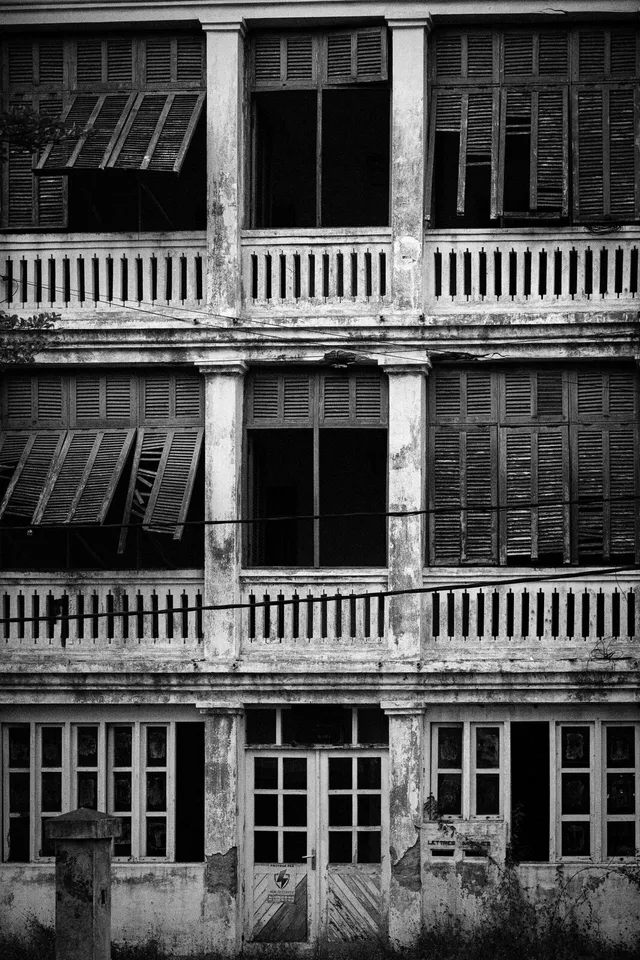 A colonial building in the Quartier France, Grand-Bassam. Photo: Milequem Diarassouba, CC BY-SA 4.0, via Wikimedia Commons.
West of Abidjan, the coastal road leads to Tiagba, a stilt village on the Ébrié lagoon, reached by track and dugout canoe, preferably outside the rainy season. Azagny National Park, a Ramsar site that is two-thirds mangrove, is visited with an OIPR agent. Further on, Sassandra charms with its bay, wooded peninsula and colourful pirogues. In the south-west, Mermaid Bay (baie des Sirènes), at Grand-Béréby, is a beach sheltered from the swell with a restaurant right on the sand. Check the security map before going: the Liberian border strip is in the orange zone.
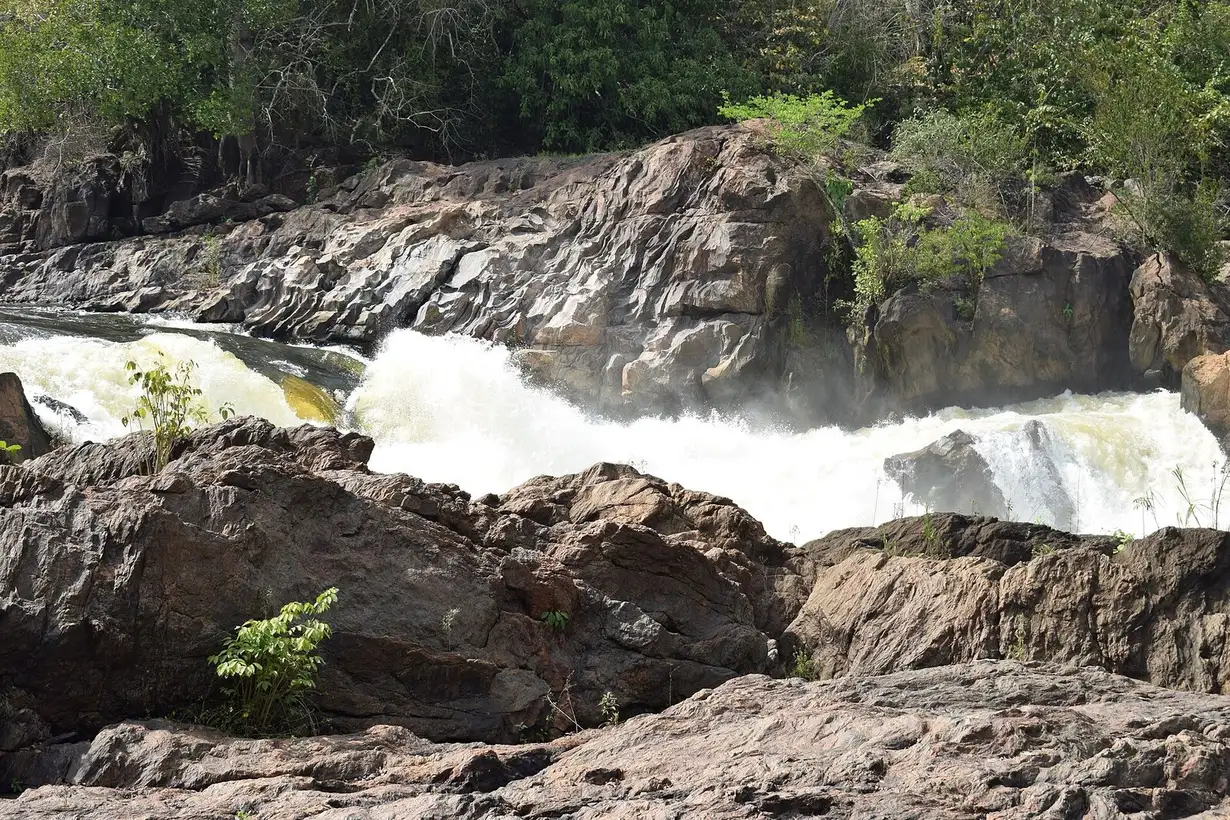 The Nawa Falls, Soubré. Photo: Guy-Fab.D, CC BY-SA 4.0, via Wikimedia Commons.
Yamoussoukro, hometown of the first president, Félix Houphouët-Boigny, is known for its Basilica of Our Lady of Peace, consecrated in 1990 and inspired by St Peter's in Rome. It stands in a 37-hectare French-style garden; the guided visit lasts about 45 minutes. Other stops: the Houphouët-Boigny Foundation for Peace Research and the lake of Nile crocodiles near the presidential palace, where walking along the water is forbidden. About 150 km from Abidjan, the Ahouakro archaeological park is a sacred site of granite rocks, on UNESCO's tentative list, which is not World Heritage inscription. Visiting depends on the agreement of the site's keepers.
Around Man the land is hilly. The Ypou waterfall, 5 km from town, drops about 20 m into a natural pool; it is weaker in the dry season. Mount Tonkpi (or Tonkoui), at about 1,189 m, is reached by a winding track. For the Dent de Man, starting from Glongouin, allow about four hours return with a guide. At Soubré, the Nawa falls, about 5 to 6 m high, are a holy place of the Magwé: offerings are respected. Taï National Park, inscribed as World Heritage in 1982, lies in an orange zone for the ministry: get informed before planning anything.
Around Korhogo, craft villages can be visited in a day: at Waraniéné, weavers make sewn strips of cotton; other villages are known for cloth painting or forging. In the north, UNESCO inscribed the "Sudanese-style mosques of northern Côte d'Ivoire" in 2021; the guide cites the Kong mosque as listed, but the exact list of mosques should be read on the UNESCO site. Kong lies in an area near the border: check the official advice before any idea of travelling. In the east, Bondoukou, nicknamed the town of a "thousand mosques", keeps an old Sudanese-style market turned into a museum. Comoé National Park, inscribed as World Heritage in 1983, is now formally advised against: we mention it as heritage, not as a destination.
According to the French foreign ministry travel advice (page of 15 September 2026, zones of 5 March 2026), the following are red, meaning formally advised against: the border with Mali and Burkina Faso, the north of Zanzan, the east of Savanes and Comoé park. The border regions with Liberia (Tabou, Taï, Grabo) are orange. The rest of the country is yellow, heightened vigilance. Also read our article "Ivory Coast travel safety".
On the coast, the sea and the lagoons are dangerous and often unsupervised: the surf bar and currents catch even good swimmers, says the guide. Swim in a hotel pool instead, or ask locals for advice.
For a first visit, start with Abidjan, add Grand-Bassam and a day on the lagoon, then choose a direction: the centre with Yamoussoukro, or the west with the waterfalls of Man. Keep the official safety advice at hand, and prepare your visa in advance.
What are the must-see sites in Ivory Coast?
The main ones are usually: Abidjan, the historic town of Grand-Bassam, Assinie beach, the Yamoussoukro basilica, the waterfalls of Man and the craft villages of Korhogo.
Which Ivorian sites are UNESCO World Heritage?
Five: the historic town of Grand-Bassam (2012), Taï National Park (1982), Comoé National Park (1983), the Mount Nimba strict nature reserve (1981, shared with Guinea) and the Sudanese-style mosques of northern Côte d'Ivoire (2021).
Can I visit Comoé National Park?
No: it is in the red zone, formally advised against by the French foreign ministry.
Can I swim at Grand-Bassam or Assinie?
The sea is dangerous along much of the Ivorian coast and rarely supervised. The guide recommends the hotel pool at Grand-Bassam. Only enter the water on the advice of local people.
How many days do I need?
Allow three to four days for Abidjan and Grand-Bassam, and a week more to add Yamoussoukro and Man. The guide notes that journeys are long in the rainy season.
When is the best time to go?
The dry season, from December to February, according to the guide. See our article "Best time to visit Ivory Coast".
Ces articles peuvent vous intéresser
Tourisme
Réf: BGB7E1B
Avis (0)
Laisser un commentaire
Incluez l'indicatif pays, ex: +237 612345678