Chargement...

Chargement...


Ivory Coast's coastline stretches from Ghana to Liberia, from Grand-Bassam to Grand-Béréby, with very different beaches: resorts close to Abidjan, sheltered bays in the west and coves reachable by 4x4. One rule applies everywhere: according to the French foreign ministry, the sea and lagoons are dangerous and often unsupervised. Here are the beaches from east to west: how to get there, the atmosphere, swimming conditions and a summary table.
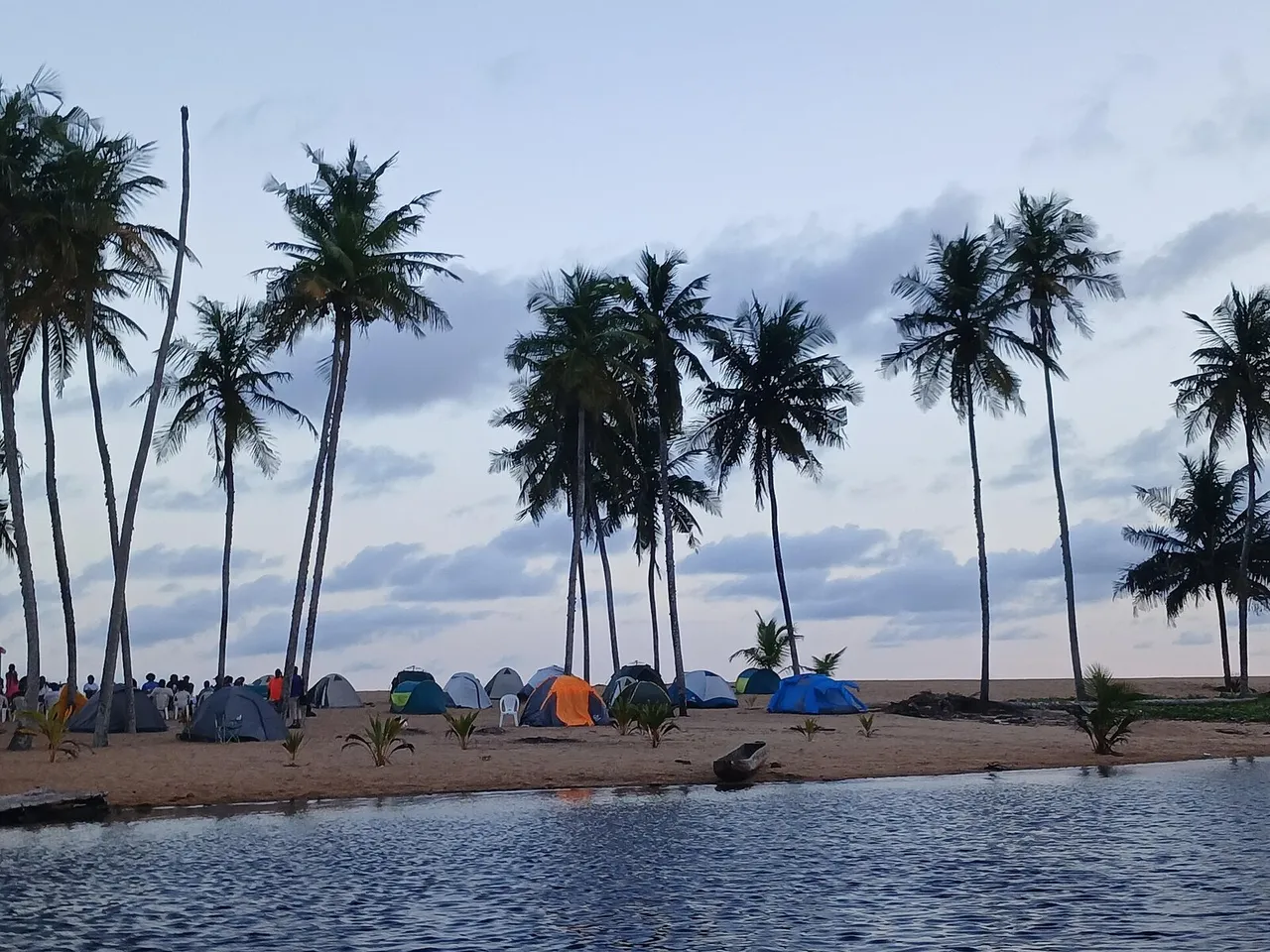
Key point: on the Ivorian coast the sea and lagoons are dangerous and often unsupervised. The surf line (breaking waves) and currents sweep away even good swimmers. Return currents, sometimes called baïnes, are not always visible from the shore.
Never swim alone, avoid swimming in the evening, watch children constantly and ask locals or staff of an establishment before entering the water. If in doubt, choose a hotel pool. See the ministry's travel advice (page of 15 September 2026, zones of 5 March 2026) and our article “Travelling safely in Ivory Coast”.
Times and remarks come from the guide. They are indicative and start from Abidjan.
| Beach | Distance or time from Abidjan | Atmosphere | Swimming according to the guide |
|---|---|---|---|
| Grand-Bassam | about 40 km | Popular weekend resort, beach restaurants | Sea very dangerous, no lifeguard |
| Assinie (Assouindé, Mafia) | about 90 km, about 2 h | Chic resort, calm on weekdays | Flat beach, judged safer, still be careful |
| Jacqueville | about 1 h 30 | Weekend getaway, beaches and lagoon | Dangerous ocean, pool advised |
| Grand-Lahou | about 2 h | City of three waters, Bandama mouth | Erosion, pirogue trips rather than swimming |
| Sassandra (Niéga, Drewin) | about 3 h 30 | Bay, pirogues, surf | Bay beaches protected from the surf line |
| San Pedro (Madame Lan, Taki, Monogaga) | about 4 h 30 | Port, bays, 4x4 for the coves | Madame Lan and Taki sheltered, swell at Monogaga |
| Grand-Béréby (Bay of Sirens) | just under 1 h from San Pedro | Quiet bay, ecolodges, turtles | Bay sheltered from the swell |
At Grand-Bassam the coconut-lined beach is easy to reach and very busy for day trips at weekends. The guide is blunt: the sea is very dangerous and there is no lifeguard. It advises using a hotel pool to swim. The rest of the pleasure is around it: beach restaurants, walks, the historic town. Our article “Getting to Grand-Bassam from Abidjan” covers the trip.
Further east, Assinie offers some 20 km of beach between Assouindé, a lively village with more affordable lodging, and Mafia, a fishing village. The guide describes a flat beach with regular rollers, judged safer than Bassam. Quad bikes have been banned on the beach since 2024, but jet skis are numerous at weekends. The resort is almost empty on weekdays. A boat trip to the Ehotilé islands, a Ramsar site, completes a stay. See “Getting to Assinie from Abidjan”.
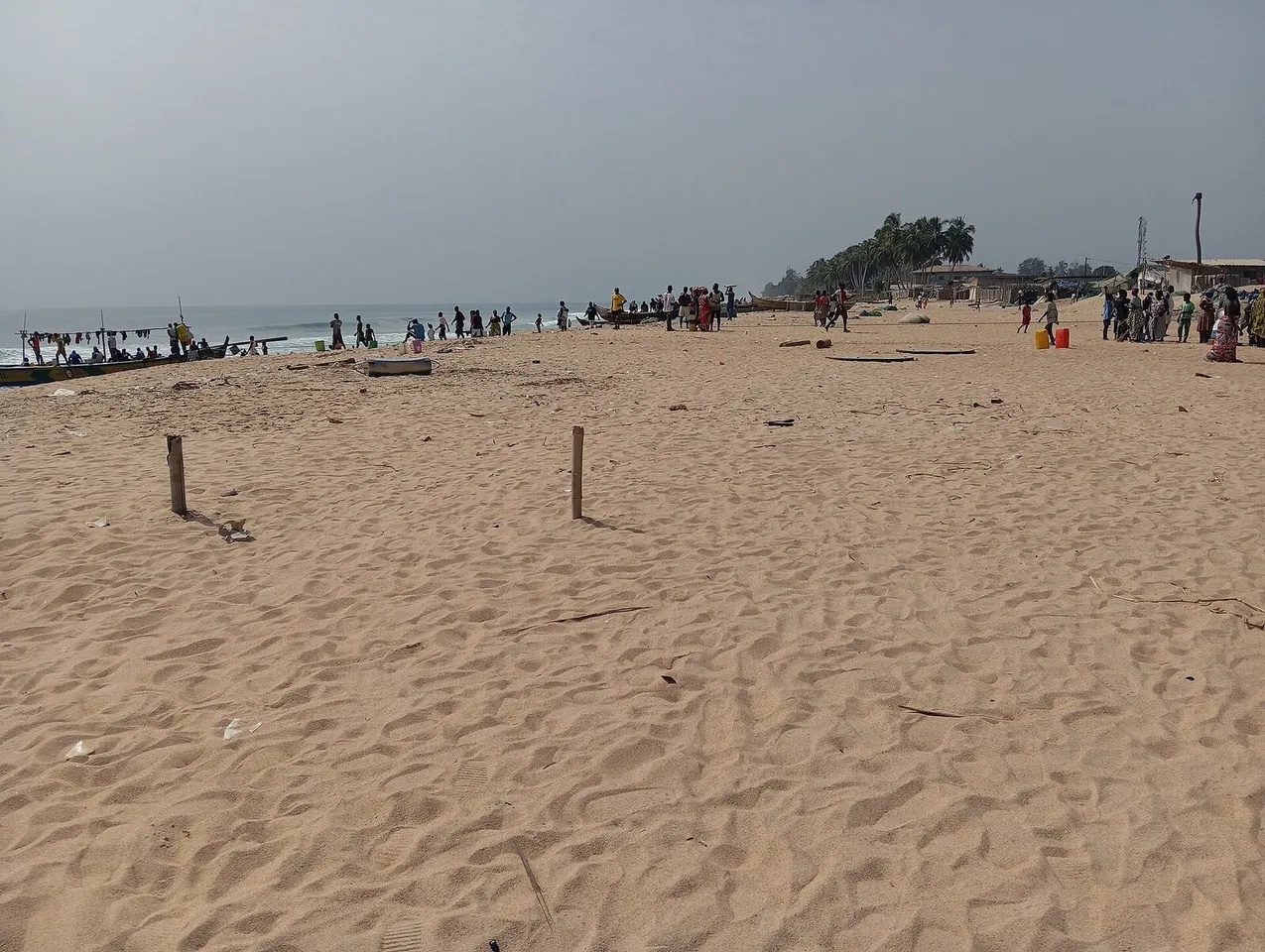 The seafront in Grand-Bassam. Photo: Kod B, CC0, via Wikimedia Commons.
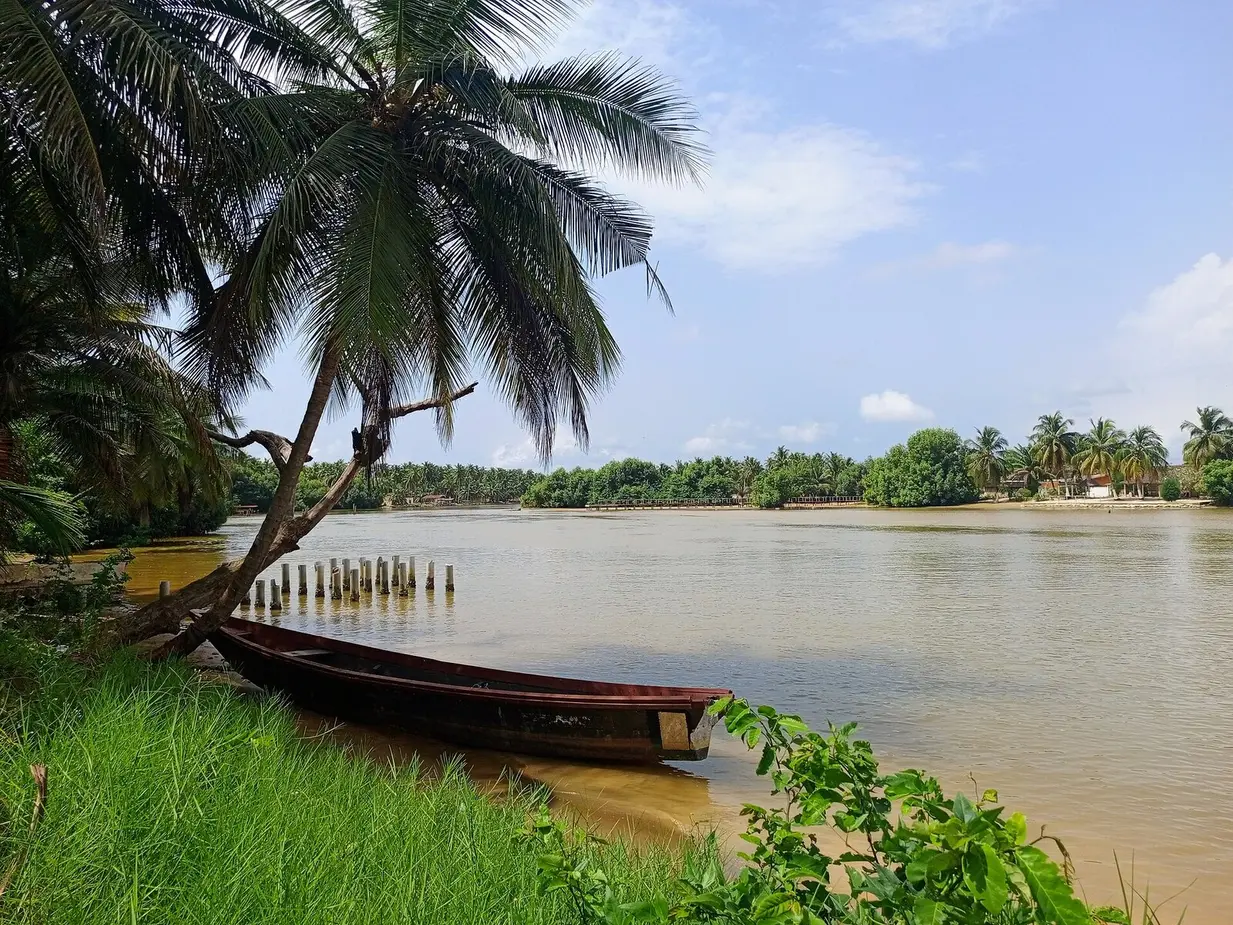 Assinie landscape. Photo: Dadrik, CC BY-SA 4.0, via Wikimedia Commons.
Jacqueville is a peninsula between lagoon, lake and ocean, about 1 h 30 from Abidjan via Songon and the 2015 bridge. It has about 15 km of shoreline, with beaches and beach bars. The guide speaks of the ocean's danger on this coast: a pool is welcome. The Christ peninsula, a strip of fine sand linked to the land by a path, is tricky to reach, with a risk of getting stuck in the sand; a tuk-tuk costs about 500 FCFA from the centre per the guide.
Grand-Lahou, about 2 hours by road, is the “city of three waters”: ocean, lagoon and the Bandama river. People come for the pirogue ride to the river mouth and for Azagny park more than to swim. The old Lahou-Kpanda site is threatened by erosion, and the crumbling sandbar changes fast: stay careful.
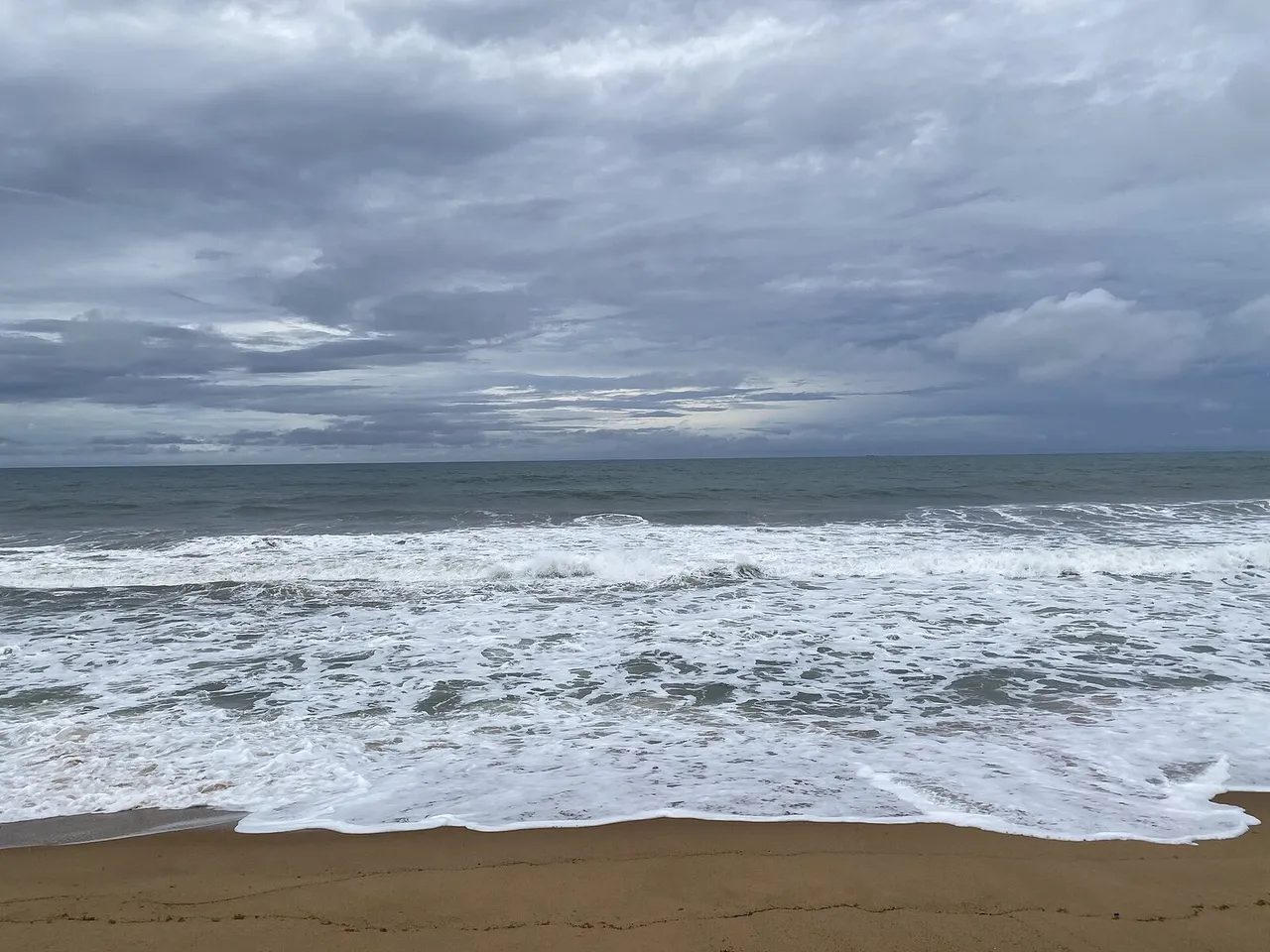 A beach in Jacqueville. Photo: Dadrik, CC BY-SA 4.0, via Wikimedia Commons.
Sassandra is a little under 300 km from Abidjan, about 3 h 30 by the coastal road, according to the guide. The bay, with its wooded peninsula and colourful pirogues, has beaches protected from the surf line, where the guide says you can swim safely. As everywhere, check the day's conditions locally.
About twenty minutes of track away, Niéga beach has a natural pool and a fishing village. Further on, Drewin is a hotspot of Ivorian surfing, with diving and basic lodging; the waves are strong, so it is not a beach for relaxed swimming. East of town, small wild beaches are hard to reach. In Sassandra as in San Pedro, beach attendants may ask for a small “passe-droit” fee: carry a few coins.
San Pedro, about 4 h 30 from Abidjan by the coastal road according to the guide, is a large port. Madame Lan bay is, per the guide, a good place to swim, surf or bodyboard, with official municipal guides on the beach.
For more secluded coves you need a 4x4. Taki point, about 27 km inland including 15 km of track, has a sheltered clear-water bay for peaceful bathing. Monogaga beach, about 35 km away including 11 km of track (about 2 hours), is sheltered but has a good surf spot in big swell; avoid the track in the rain. The guide judges a 4x4 and a driver essential for these beaches.
Grand-Béréby is a former roadstead turned quiet seaside resort, a little under an hour from San Pedro. The Bay of Sirens (baie des Sirènes) is there (the guide's table of contents wrongly places it at Sassandra): a bay sheltered from the swell, with rocks and a beach where you can eat with your feet in the sand. Around it, wild beaches such as Dawa, Mani, Mékéné or Ménéké have rocky coves and natural pools.
On Mani beach, sea turtles come to nest from October to mid-February, with hatchings from November to mid-April, according to the guide. Watching happens at night, with a local guide, without torches or flash.
Mind the borders: the ministry classes the Liberian border regions (Tabou, Taï, Grabo) in orange. Grand-Béréby is not far from that strip: check the 5 March 2026 zone map and the ministry's advice before planning the trip, and prefer a daytime drive.
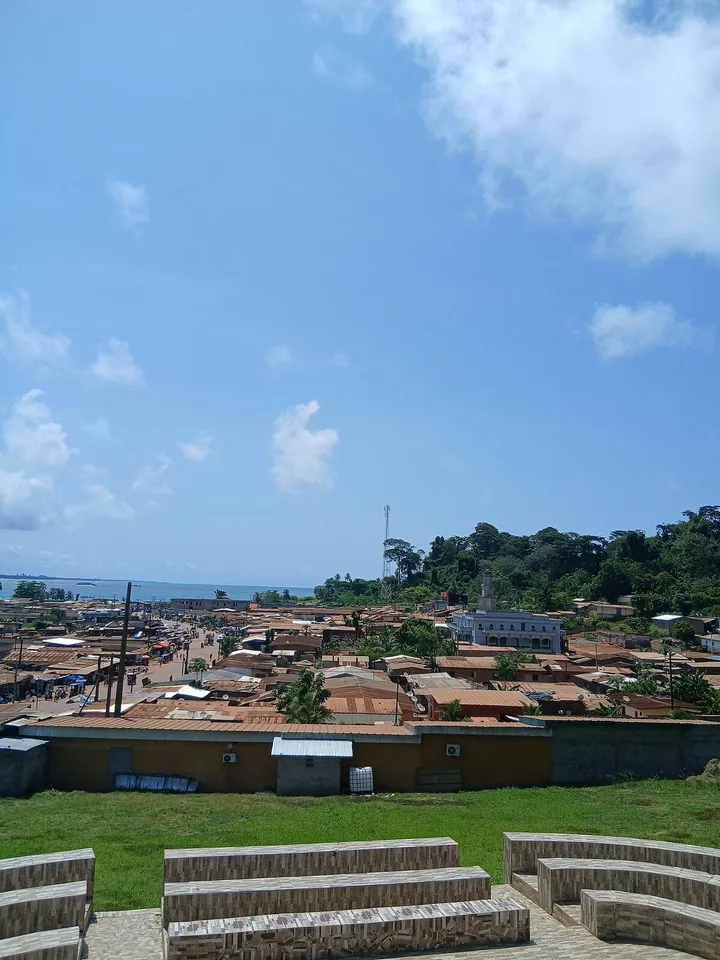 Grand-Béréby, on the west coast, seen from the heights. Photo: LIPARUS18, CC0, via Wikimedia Commons.
For the beach the guide advises the dry season, mid-December to mid-April, or more broadly mid-November to mid-May. The west is rainier, even in December. See our article “Best time to visit Ivory Coast”. Bring cash, sunscreen and water, as wild beaches have almost no services. For beaches near Abidjan, read “Beaches near Abidjan”.
The Ivorian coast offers beaches for every kind of trip, from half a day at Bassam to a long journey to Grand-Béréby. Keep the basic rule in mind: the sea is dangerous, so choose a sheltered bay, swim with company and ask locally. For a short stay, start with the beaches near Abidjan.
Which beaches in Ivory Coast should I know?
From east to west: Grand-Bassam, Assinie, Jacqueville, Grand-Lahou, Sassandra, San Pedro and Grand-Béréby.
Can you swim at Grand-Bassam?
The guide says the sea is very dangerous with no lifeguard. It advises a hotel pool.
Which beach is safest for swimming?
The guide cites Assinie, Madame Lan, Taki, Sassandra bay and the Bay of Sirens as more sheltered. But the ministry reminds travellers that the sea and lagoons are dangerous: stay careful everywhere.
How long from Abidjan to Sassandra or San Pedro?
About 3 h 30 to Sassandra and about 4 h 30 to San Pedro by the coastal road, according to the guide (2026).
When can you see sea turtles?
At Grand-Béréby, nesting runs from October to mid-February and hatchings from November to mid-April, per the guide.
Are there areas to avoid near Grand-Béréby?
The ministry puts the Liberian border regions (Tabou, Taï, Grabo) in orange. Check the 5 March 2026 map before travelling.
Ces articles peuvent vous intéresser
Tourisme
Réf: BGB7E1A
Avis (0)
Laisser un commentaire
Incluez l'indicatif pays, ex: +237 612345678