
Ivorian Food: Attiéké, Alloco, Garba, Kédjénou and Maquis Culture


Ivorian cooking rests on starches (cassava, yam, plantain, rice), fish, grilled chicken and a large family of sauces. Its best-known dishes are attiéké, alloco, garba and kédjénou, and they are often eaten in a maquis, the casual local restaurant at the heart of Ivorian social life. This article presents these dishes, explains briefly how they are made, gives price guides and lists a few precautions. It is not a recipe collection: for cooking, look for a full recipe.
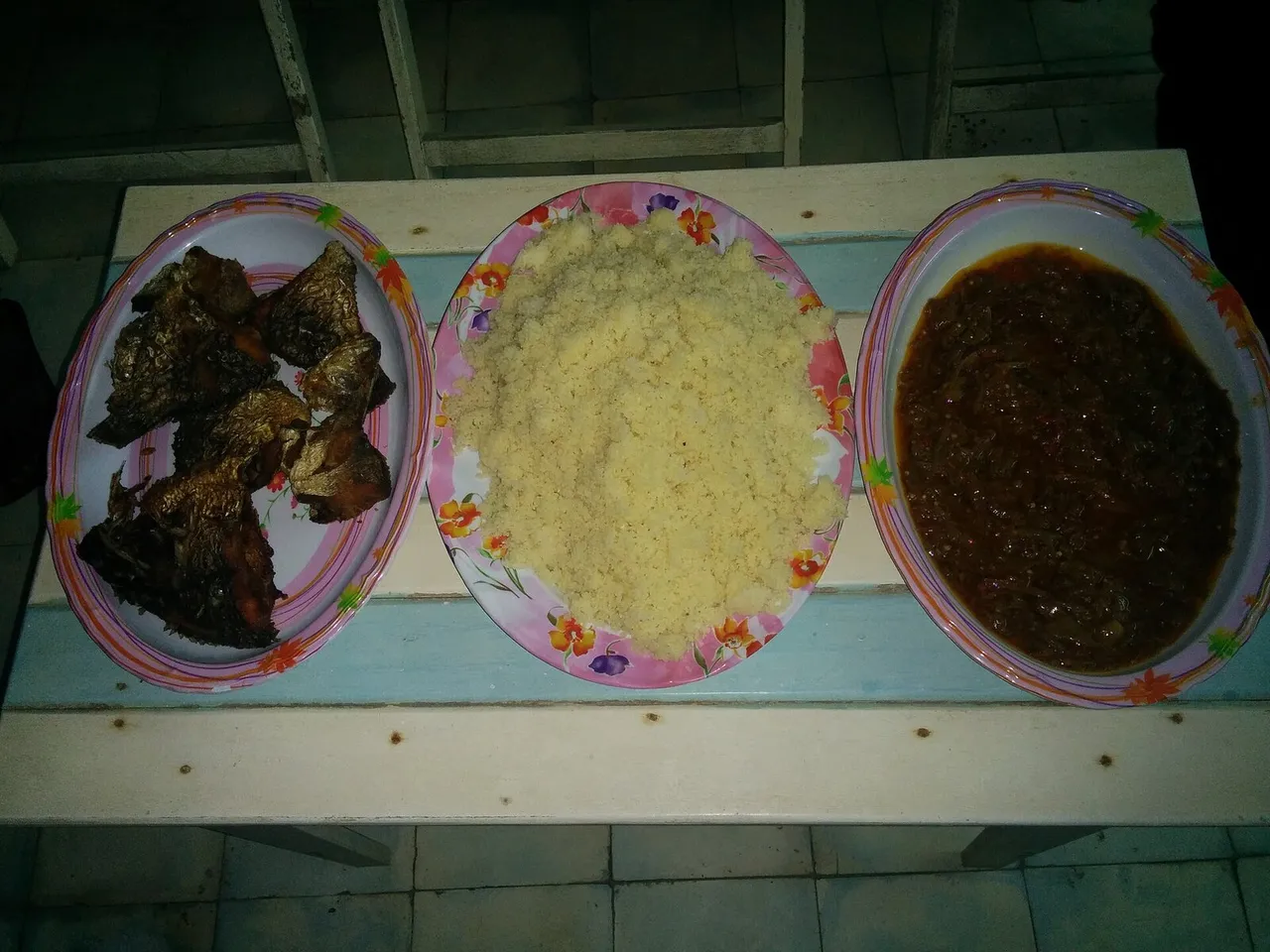
One country, several cuisines
According to the guide, food changes by region. In the south, on the Gulf of Guinea, seafood dominates. In the east, in Akan country, it is yam. In the west, rice is very popular. In the north, Sahelian culture favours millet, groundnuts and mangoes. Everywhere, meals combine a starch, grilled or boiled meat or fish, and a spicy sauce.
The dishes to try first
Here are the dishes people talk about most, with an idea of how they are prepared.
| Dish | What it is | How it is made, briefly |
|---|---|---|
| Attiéké | Cassava semolina, lighter than couscous | Cassava ferments in water for several days, dries in the sun, is ground, sifted and steamed |
| Alloco | Fried plantain slices | Plantain is cut into pieces then fried in oil |
| Garba | Attiéké, fried tuna, onions and fresh chili | Everything is assembled on a plate or in a bag |
| Kédjénou | Poultry stew, sometimes giant snail | The meat simmers a long time with vegetables and spices |
| Grilled fish or chicken | Grills served with attiéké, alloco or yam | Cooked over embers, with an onion and tomato salad |
Attiéké and alloco: the two essentials
Attiéké is the speciality of the lower coast. Traditionally it is sold in small plastic bags, little "balls" of about 100 g, often 100 FCFA each according to the guide, and eaten with fish or meat. Alloco is an institution: some maquis stand next to "allocodromes". The best known in Abidjan is the Cocody allocodrome, open roughly from 9:30 am to half past midnight, where the guide gives 3,000 to 5,000 FCFA per person.
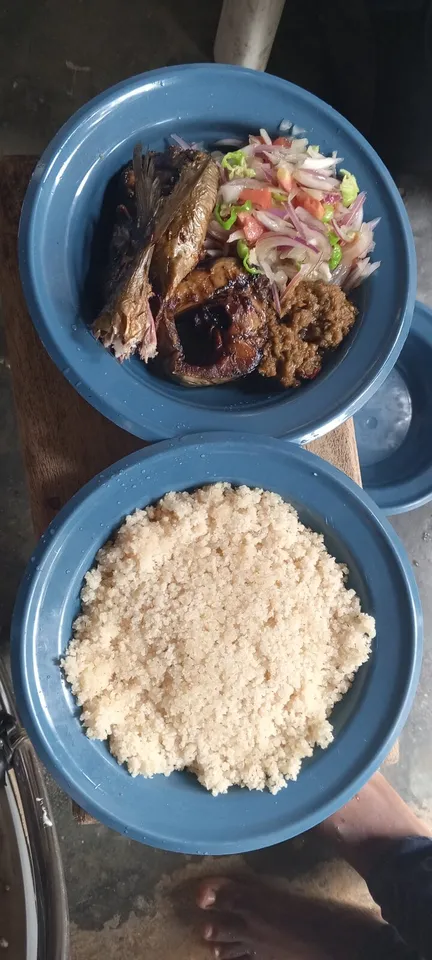 Attiéké with smoked fish. Photo: Samigolden07, CC0, via Wikimedia Commons.
Garba and kédjénou: everyday and festive dishes
The guide calls garba the national dish, quick and cheap, around 700 FCFA (price to be checked). It is sold in small street maquis and is especially popular with young people. Kédjénou is more of a sit-down dish: poultry simmered with vegetables and spices. Another festive dish is fish in clear sauce, flavoured with akpi, a forest almond.
Starches and sauces
Around these stars you will find foutou, a soft ball of boiled cassava, plantain or yam, tôh, a maize-flour paste eaten mostly in the north, and placali, its cassava version. Sauces are many: palm-nut sauce, clear sauce, groundnut sauce, okra sauce. Rice cooked with tomato and chili (riz gras) is often served with chicken.
Drinks and desserts
Bissap, a hibiscus flower drink, is made with boiled flowers then diluted with sugar. Ginger, pineapple, baobab and passion fruit juices are common. Bandji, or palm wine, is a fermented drink of 7.5 to 11.5% alcohol according to the guide, and tchapalo is a maize beer. Mangoes are in season from February to June.
Maquis culture
The maquis is the Ivorian restaurant par excellence: yard or terrace, plastic chairs, skewers and grilled dishes. There are all kinds, from street maquis to smarter ones. The guide gives three tips. First, do not go with the mindset of a hygiene inspector: comfort is basic. Second, dishes are cooked to order and the wait can be long, especially for grills. Third, the menu is sometimes wider than what is really available: the waiter may come back to tell you a dish is no longer served.
Where to go out in Abidjan
In Marcory, Zone 4 gathers more than 70 restaurants, bars and clubs in a square about 1 km on each side, according to the guide. Rue des Mille Maquis is known for its lively evenings. At night, go home by taxi or ride app rather than on foot. We name no specific venues: places change and close.
Before you eat: a few precautions
The guide recommends drinking sealed bottled water, avoiding ice of uncertain origin and raw or undercooked food. It also notes that water from the Abidjan lagoon, used by some street maquis, can contaminate food. Choose busy places with hot food prepared in front of you.
Bushmeat: avoid it
Some maquis serve "bushmeat", meaning hunted wild animals: cane rat, antelope, porcupine and sometimes protected species. The guide advises tourists against it: it can carry serious diseases and threatens wildlife. The state officially banned its consumption in 2020, according to the guide. Choose chicken, fish or beef.
To taste Ivory Coast, start with garba or grilled fish with attiéké and alloco in a busy maquis, then a kédjénou sitting at a table. Drink bottled water, avoid bushmeat and keep small change. To plan your food stops, start with the Abidjan guide.
Questions Fréquemment Posées
What is the national dish of Ivory Coast?
Garba, a dish of attiéké and fried tuna, is often presented as the national dish.
What is attiéké?
A semolina of fermented cassava, dried, ground, sifted and steamed. It is eaten with fish, chicken or meat.
What is alloco?
Fried plantain slices, served as a side or as a street dish.
How much does a meal in a maquis cost?
The guide gives price guides: about 3,000 to 8,000 FCFA in a kiosk or simple maquis, and from 10,000 to 15,000 FCFA for a full meal in a restaurant-maquis. Prices should be checked.
Can you eat bushmeat in Ivory Coast?
The guide advises against it, and its consumption has been officially banned since 2020. Choose chicken or fish instead.
Where can I eat alloco in Abidjan?
The guide names the Cocody allocodrome as the best known in the city. Check opening hours before going.
Can I pay by card in a maquis?
Rarely. The guide advises keeping cash and small change, and notes that Orange Money mobile payment is widespread.
Ces articles peuvent vous intéresser
Catégorie
Culture
Réf: BGB7E19
Avis (0)
Laisser un commentaire
Incluez l'indicatif pays, ex: +237 612345678