
Abidjan: city guide, neighborhoods and practical information
Abidjan, Côte d'Ivoire's economic capital, spreads around the arms of the Ébrié Lagoon. It has several million inhabitants and is nicknamed "Babi" or "little Manhattan of Africa". Each district has its own mood: the business Plateau, residential Cocody and its art galleries, the port district of Treichville, festive Marcory, and the working-class areas of Abobo and Yopougon.
This guide covers the essentials for arriving, finding your way, getting around and choosing where to stay. For sightseeing, see things to do in Abidjan. The guide advises against limiting your visit to the Plateau.
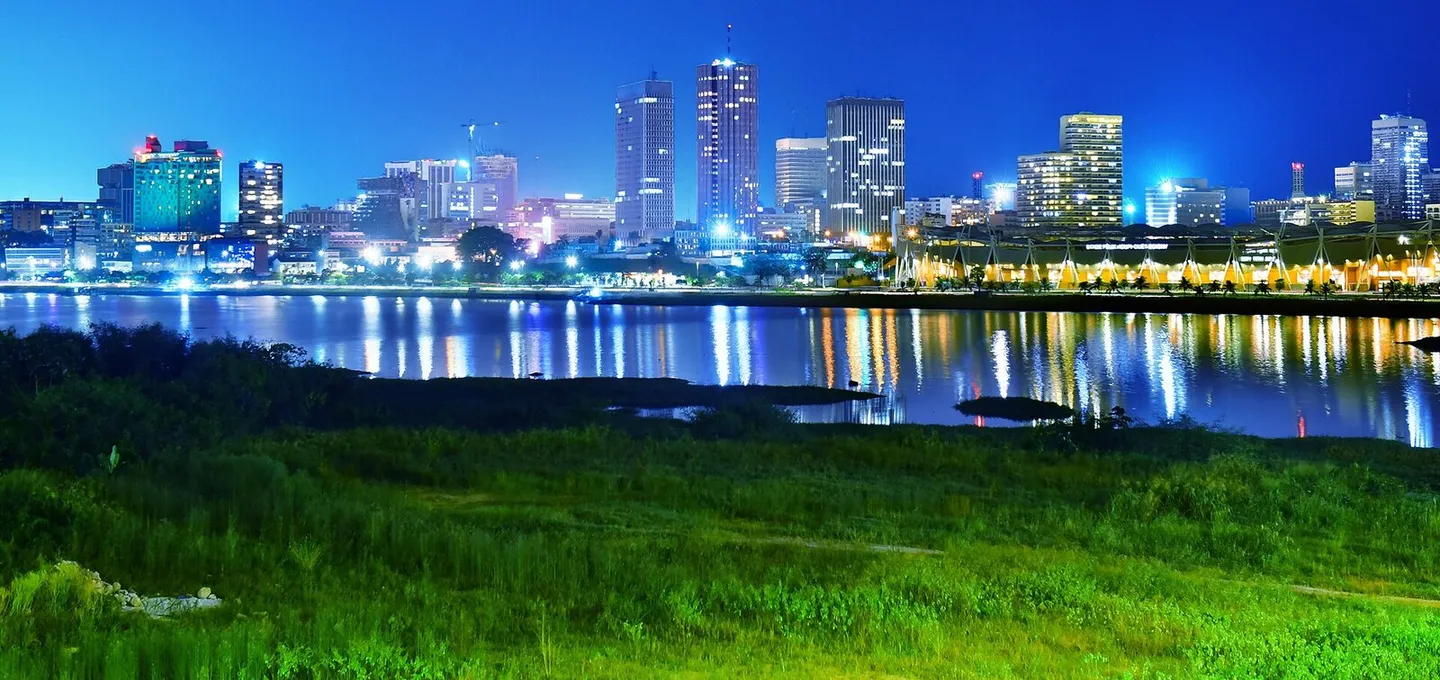
Header photo: Edison McCullen, CC BY 4.0, via Wikimedia Commons.
Getting to Abidjan
- By air: Félix Houphouët-Boigny International Airport, in Port-Bouët, is 10 to 30 minutes from the Plateau depending on traffic; allow the widest margin. It has direct flights from Paris, among others, and two terminals (international and domestic). There are cash machines, currency exchange and local SIM cards.
- From the airport: official red taxi (about 5,000 FCFA to the Plateau, to be agreed before getting in), Yango ride-hailing (price estimated in the app; about 2,500 to 3,000 FCFA to Marcory or the Plateau, up to 5,500 FCFA to Cocody, according to the 2026 guide) or Sotra bus line 6. Many business hotels offer a shuttle.
- By road: the motorway links Abidjan to Grand-Bassam and Yamoussoukro; see getting to Grand-Bassam from Abidjan and getting to Yamoussoukro from Abidjan. Intercity buses leave from the Adjamé, Koumassi and Yopougon stations.
Fares and timetables come from the 2026 guide: check them before you travel.
Finding your way and getting around
Abidjan is very spread out and traffic is heavy, especially on the airport road and in the Plateau. Avoid rush hours (early morning, midday and late afternoon). The toll bridges between Cocody and Marcory (500 FCFA) save time.
- Ride-hailing: Yango is the most used app; the price is estimated when you order. It is the option to favor at night.
- Red metered taxis: there is a meter, but the fare is agreed before the ride (for example about 2,000 FCFA from Zone 4 to the Plateau according to the guide). Avoid unlicensed taxis.
- Woro-woro: shared taxis for short trips within one district, from 200 to 1,500 FCFA according to the guide.
- Gbakas: minibuses with a fixed fare; the guide advises against them if you do not know the city well.
- Water buses: several companies (Aqualines, STL, Sotra) cross the lagoon, for example between the Plateau and Treichville, for 200 to 1,000 FCFA depending on the company and comfort.
Neighborhoods to know
- Plateau: the business and government district, nicknamed "Manhattan of the tropics". Very busy by day, almost empty in the evening and on Sundays. Here you will find St Paul's Cathedral and the Museum of Civilisations of Côte d'Ivoire.
- Cocody: residential and leafy, with embassies, art galleries, guesthouses and the lively sub-districts of Deux Plateaux, Angré and Riviera.
- Marcory: a peninsula in the middle of the lagoon; Zone 4 for its restaurants, bars and clubs, Biétry for its waterside hotels.
- Treichville: a port district born with the railway in 1910, working-class by day and lively at night, with its markets, craft center and the Palais de la Culture.
- Adjamé: the crossroads of the bus stations and a big market; go preferably with a local person.
- Yopougon and Abobo: vast working-class districts, known for their open-air restaurants and music.
 Le sud du Plateau, à Abidjan. Photo : Citizen59, CC BY 3.0, via Wikimedia Commons.
Around Abidjan
Several outings can be done in a day: Banco National Park, a protected forest in the heart of the urban area; Boulay Island, 15 to 30 minutes by boat; the Bingerville botanical garden, about twenty kilometers away. For a weekend, Grand-Bassam, Assinie and Jacqueville are one to two hours by road.
Where to stay
The guide says you can stay comfortably from about 35,000 FCFA a night; the top end is around 100,000 to 140,000 FCFA and more (2026 prices, to be confirmed). Cocody and Marcory have the most residences, guesthouses and hotels; the Plateau has the business hotels; Zone 4 and Biétry are handy for going out. There are no youth hostels. Plan ahead during conferences and festivals. See our places to stay in Abidjan.
Where to eat
Abidjan is the city of the maquis, open-air restaurants where you eat grilled fish or chicken with attiéké or alloco. There is also street food and restaurants for every budget. For the dishes, see our article on Ivorian dishes. At the Treichville fish market, the catch arrives from about 6 am and grill cooks prepare the fish on the spot. The guide advises choosing places that use filtered water.
Climate and best time to visit
The climate is hot and humid, with 25 to 30 °C all year. The main dry season runs from December to April, a short dry season comes in August-September, and rain falls mostly from May to July and in October-November. For the coast, the guide gives mid-December to mid-April as the best period. See when to visit Côte d'Ivoire.
Safety and health
According to the French Foreign Ministry's travel advice (zones of 05/03/2026), Abidjan is in the yellow zone: heightened vigilance. The guide considers busy districts safe by day and advises caution in Abobo, Adjamé and Yopougon, especially at night. Avoid displaying wealth, keep valuables out of sight in a car, and avoid crowds and demonstrations. At Port-Bouët the sea is dangerous (strong currents) and unsupervised. Malaria is present: ask a doctor for advice before you leave. Numbers given by the guide: police emergency 110, 111 or 170; medical emergencies 180 or 185. See traveling in Côte d'Ivoire safely.
FAQs
Showing 5 of 5 FAQs
How long is the trip from Abidjan airport to the center?
Between 10 and 30 minutes to the Plateau depending on traffic. Allow the widest margin at rush hour.
Which district should I choose to stay in Abidjan?
Cocody and Marcory for residences, guesthouses and hotels; the Plateau for a business trip; Zone 4 or Biétry to be close to restaurants, bars and the lagoon.
How do I get around Abidjan?
By ride-hailing (Yango) or red taxi, agreeing the fare before the ride; woro-woro suit short trips within a district. At night, prefer ride-hailing.
When should I visit Abidjan?
The dry season, from December to April, is the most pleasant; the guide gives mid-December to mid-April as the best period on the coast.
Can I swim in Abidjan?
The sea is dangerous at Port-Bouët (strong currents) and the lagoons are unsupervised: prefer a swimming pool. For beaches within two hours, see our beaches near Abidjan.